Favourite albums of 2018

My favourite album of 2018 is Double Negative by Low. Low are a fine band with a discography built up over 25 years that, while unshowy, must surely make any other band weep. Like the songs of, for example, Leonard Cohen, beneath what may appear like superficial gloominess has always been a beating heart of optimism and beauty. Double Negative is a departure, and my favourite Low album since Secret Name. Alan Sparhawk’s and Mimi Parker’s ordinarily ice-clear harmonies are buried within fuzz and distortion, often squeezed out as a Sparky’s Magic Piano-esque squelch. I’m a fan of deteriorated sound, that’s for sure, but amidst all this degradation the occasional surfacing of untampered-with vocals feel like glimpses of something divine. It’s the most wonderful album, and ‘Tempest’ is my favourite song of the year.
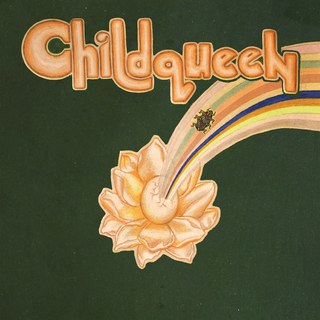
Modern soul isn’t usually my thing, but Childqueen by Kadhja Bonet absolutely is, filled as it is with gorgeous melodies and lush orchestration. For the most part, the best aural (as opposed to vocal) comparison I can think of is Marvin Gaye’s What’s Going On, though there are shades of Kamasi Washington’s The Epic and Stevie Wonder’s Songs in the Key of Life, and the slick production of ‘Mother Maybe’ reminds me strongly of one of my 80s guilty pleasures, Sade’s ‘Smooth Operator’. I can’t think of another 2018 album that feels so pleasurable throughout its running time. In addition, Kadhja Bonet was responsible for the entirety of the album; everything written, sung and played, and she produced and mixed it too, which I find incredible.

The drone album I’ve enjoyed most this year is Rausch by GAS. It’s difficult to describe why one lengthy drone is preferable to another, but there’s a depth to these seven tracks that just, I don’t know, takes me away… It’s only now, listening carefully and attempting to analyse it, that I’m able to identify particular elements: tapping hi-hats, bass thrums, reversed cymbals. Previously, I wouldn’t have been able to describe what produced the effect, only that’s the whole is absorbing and hypnotic. For me, this album is up there with Biokinetics by Porter Ricks and What?? by Folke Rabe.

Click ‘Continue reading’ for lots more picks and a playlist.

Continue reading “Favourite albums of 2018”

Musical milestones

I’m pretty sure that by now everybody’s seen the recent Facebook meme of showing the 10 albums that you find important, right? Now that I’ve finished my 10-album, 10-day list I thought I’d post it here for posterity. I’m afraid I wasn’t able to stick to the rule of omitting any explanation of my choices…

#1 Victor Borge – Phonetic punctuation / A Mozart opera
I’ve chosen this album to represent my parents’ record collection, and the fact that when I was a kid I was more likely to listen to comedy than music. But also, I still think it’s hysterically funny, and the album cover is still one of my all-time favourites, and also matches my writing/editing occupation. I have the LP version framed and ready to hang once I get my attic office in order.

#2 The Beatles – 1967–1970
It’d be disingenuous to pretend that this album wasn’t the keystone of my discovering music when I was a kid. I’d heard ‘Penny Lane’ via a compilation tape (chosen because I liked fire engines) and ‘Let It Be’ on a French campsite (as close to a musical epiphany as a seven-year-old can have). I listened to the ‘Blue Album’ endlessly while I was growing up; it’s part of me.


#3 Tortoise – TNT   /   Gastr Del Sol – Camoufleur
TNT by Tortoise was responsible for shifting my listening from rock to post-rock and experimental music. And that self-effacing album cover! Tortoise were an important band to me, partly because they had so many side projects that would lead me into other areas. In fact, two members of Tortoise were in the original lineup of Gastr Del Sol, though by the time of CAMOUFLEUR the lineup was David Grubbs and Jim O’Rourke (with contributions from Markus Popp of Oval). Jim O’Rourke would lead me into new areas – via his indie stuff and then into far stranger listening territory. Gastr Del Sol’s CAMOUFLEUR came a little later, but is probably my favourite post-rock album.

 #4 Nick Cave – And No More Shall We Part
I know that many people would argue for other Nick Cave albums being more immediate, more visceral, plain better than this, but I adore it unconditionally. It’s one of the most literate and darkly funny albums I can think of, and it inspired my early attempts to write short stories as much as, say, John Updike’s RABBIT series of books did.

#5 Herman Düne – Not On Top
For the longest time, I considered Herman Düne my favourite band. They were charming, witty and, unlike most of the music I listened to, they were alive and there were lots of opportunities to see them play live – which I did, perhaps five or six times in total. I listened to a lot of ‘anti-folk’ at the beginning of this century, though few of the performers still have the same resonance for me as Herman Düne, who have soundtracked some of the happiest moments of my life.


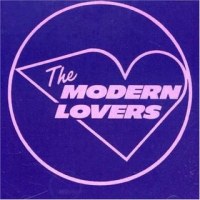
#6 The Modern Lovers  – The Modern Lovers   /   Jonathan Richman – Jonathan Goes Country
Around 2005 I listened to little other than Jonathan Richman’s vast back catalogue, from his snotty Velvet-Underground-ish origins to his latter-day embarrassing-dad persona – both equally loveable. THE MODERN LOVERS and JONATHAN GOES COUNTRY were on constant rotation when I was working alone for long stretches in California. The former is one of the great proto-punk albums, and a tantalising suggestion of a path that Richman would decide not to take; the latter is a goofy experiment that shouldn’t work, but succeeds through its wholehearted charm. It’s my favourite music to drive to.
(My favourite detail about the change in direction after the release of The Modern Lovers in 1976: David Robinson left the group ‘due to frustration with Richman’s quest for lower volume levels’.)

#7 Lonnie Donegan – Rock Island Line: The Singles Anthology 1955–1967
Lonnie Donegan’s early singles are some of the most thrilling songs I know of: catchy, funny, utterly wild. When I discovered this fantastic compilation set in 2006 I described it as follows in a blog post:
“I can’t get enough of Lonnie’s rasping, distorted, chuckling voice. I love that he addresses his songs to ‘the boys’. I love his rambling introductions to the simplest of songs. I love the way that his songs feel spontaneous, and that when the band cuts loose it doesn’t even sound like they’re playing musical instruments. They’re beating on the walls and stamping on the floor and Lonnie is wailing through the white noise…”

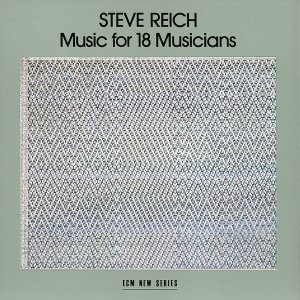
#8 Steve Reich – Music for 18 Musicians
This was a total revelation to me when I first heard it around fifteen years ago, and set me off listening to modern composition and minimalist pieces. I think it’s utterly perfect.

#9 Gavin Bryars – Jesus’ Blood Never Failed Me Yet
One of the most emotional musical experiences I’ve had was the American Contemporary Music Ensemble’s performance of ‘Jesus’ Blood Never Failed Me Yet’ at the All Tomorrow’s Parties festival curated by Jeff Mangum in 2012. Rose and I had recently decided to start a family, and for whatever reason the repeated words of Bryars’ piece struck me as advice from a parent to a child. By the end I was in pieces.

#10 Oren Ambarchi – Grapes from the Estate
If any artist sums up my current listening preferences, it’s Oren Ambarchi. (Jim O’Rourke’s experimental work would come close second.) These days I most often listen to music while working, so it’s almost all instrumental. Aside from being absurdly beautiful, GRAPES FROM THE ESTATE is the most wonderful background to achieving a trance-like mindset.

100 films I love right now

I’ve made a top 100 film list. I’ve tried to avoid objectivity or the temptation to pick ‘greatest’ films – instead I’ve tried to capture a snapshot of my tastes right now. I’ve tried not to pay attention to what would be my usual choices or agonise too much over my selection. I use Flickchart, so I had a starting point of a list of pretty much all the films I’ve seen, theoretically in ranked order – but to make this list I’ve cherry-picked only the films that are currently on my mind or that, when I see their titles, I want to rewatch immediately. It’s a skewed list, featuring lots of films I’ve seen for the first time in the last year or so – if I made a similar list next year, I’d guess that more than a quarter of the titles would be different. It’ll be interesting to see whether e.g. A Cottage on Dartmoor or The Swimmer stay with me.

I’ve listed the films in chronological order, which reveals a surprise: 11 of the films in this list were released this century. It’s notable that most of these recent titles are very downbeat and slow-paced – I hadn’t quite realised this is so clearly a factor in my tastes in modern cinema.

The director who appears most is Hitchcock, predictably. There are three by: Ingmar Bergman, Francis Ford Coppola, Luis Buñuel, F.W. Murnau and Nicholas Ray. There are two each by: Buster Keaton, Carl Theodor Dreyer, David Lynch, Henri-Georges Clouzot, Jacques Tourneur, Jerzy Skolimowski, Robert Bresson, Roman Polanski, Thomas Vinterberg, Werner Herzog, Wim Wenders and Andrei Tarkovsky.

Here’s the full list:

Continue reading “100 films I love right now”

Favourite albums of 2017

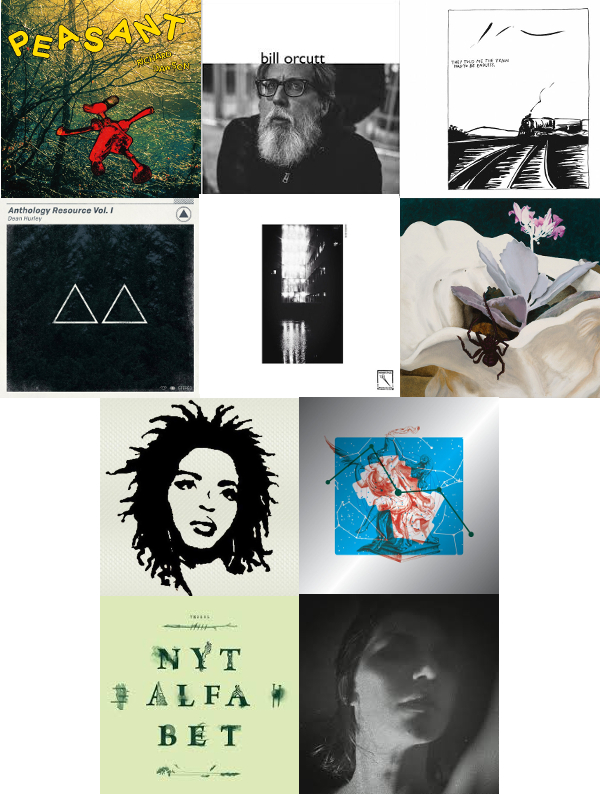
RICHARD DAWSON – Peasant (Domino). A departure from his previous work, in that he’s accompanied by a band, but Dawson’s ramshackle weirdness and Beefheartian tendencies are intact. ‘Soldier’ is my favourite song of the year, and includes my favourite lyric too: ‘Let’s betroth without delay / Pack the horse and ride away / Find some better place / Where we might raise a family / My heart is full of hope / I am tired, I am afraid / My heart is full of hope’.

BILL ORCUTT – Bill Orcutt (Palillia). Orcutt goes electric! Shimmering and abstract covers album with melodies I can never quite fathom. ‘Christmas on Earth’ is my favourite.

ROB NOYES – The Feudal Spirit (Poon Village). A traditional Fahey-style fingerpicking counterpart to Orcutt’s out-there album.

DEAN HURLEY – Anthology Resource Vol. 1 (Sacred Bones). Not only do they recall the happy, woozy weeks of David Lynch’s mind trip masterpiece, these soundscapes from Twin Peaks: The Return are incredible in their own right.

DEDEKIND CUT – American Zen (Ninja Tune). Wonderful washes of noise and hints of techno.

F INGERS – Awkwardly Blissing Out (Blackest Ever Black). Barely-there dark dreams.

BLUE IVERSON – Hotep (World Music). Twenty minutes of Dean Blunt’s soul and R&B doodlings. Far more compelling than that might sound.

HANNAH PEEL – Mary Casio: Journey to Cassiopeia (self-published). Is it my imagination, or has there been a glut of albums featuring synths and colliery brass bands this year? This was the best.

VESSEL – Nyt Alfabet (DME). Shakily soporific in the best possible way. And that voice! I’m melting.

ALDOUS HARDING – Party (4AD). Speaking of voices… I predict that next year Aldous Harding will conquer the world.

The Ginger Nuts of Horror best novels of 2017

Well, this is a good start to the day…

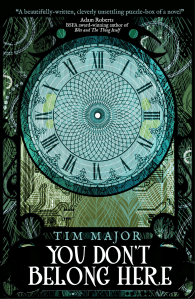
Jim McLeod at The Ginger Nuts of Horror has picked YOU DON’T BELONG HERE as one of his favourite novels of 2017!

‘Time travel is a funny old game, so many novels and stories are written using time travel as theme, but so many of them fail to understand the complexities and consequences of it.  Luckily for us we have writers like Tim Major who are capable of writing an enthralling novel that uses time travel in a logical and well thought way.  “you don’t Belong Here” Is an exciting rollercoaster ride across time that challenges the reader to pay attention.’

Thanks so much Jim! Despite the cold up here in my attic office, I’m glowing.

Click here for the full article.

Book soundtrack: You Don’t Belong Here

I’ve created book soundtracks for all of my longer fiction (novels and novellas, both published and as-yet-unpublished), partly as a way of consolidating the tone, partly as an indulgence and a pat on the back and partly, typically, as a distraction activity during the final draft. The idea is to provide a musical teaser before reading the novel, or a soundtrack of a theoretical film adaptation, but not simply a background playlist.

Today Ginger Nuts of Horror published my article about book soundtracks, including the rules of my nerdy game (yes, there are rules and no, I don’t always stick to them. I won’t repeat the rules here (because you can read the full article instead), or the stories behind some of the track choices, but I don’t think it’s bad form to repost the Spotify playlist:

Favourite albums of 2016

oren-ambarchi-villalobos-hubris

I know, I know. It’s too late for roundup lists. But a) the end of 2016 was crazy busy, and b) I love lists. So here are the albums I most enjoyed listening to in 2016, in no order:

  • KLARA LEWIS – Too
  • KAITLIN AURELIA SMITH – EARS
  • SARAH DAVACHI – Vergers
  • B/B/S – Palace
  • OREN AMBARCHI – Hubris
  • FENNESZ – It’s Hard for Me to Say I’m Sorry
  • LAMBCHOP – Flotus
  • DRONE – Reversing into the Future
  • JAN ST WERNER – Felder
  • GEORGIA – All Kind Music
  • MICA LEVI & OLIVER COATES – Remain Calm
  • KATIE GATELY – Color
  • NURSE WITH WOUND – Dark Fat

And my favourite 2016 reissues:

  • ANNA HOMLER – Breadwoman & Other Tales
  • LOW – The Exit Papers
  • THURSTON MOORE & TOM SURGAL – Not Me
  • ENNIO MORRICONE – Veruschka OST

Book soundtrack: BLIGHTERS

I had fun creating a soundtrack to BLIGHTERS.

The first couple of tracks and the final one are choices made by the main character, Becky, rather than me – she inherited her dad’s passion for 70s prog rock. Three of the tracks are actually named in the book (‘The Temples of Syrinx’, ‘Cat Man’, ‘Hocus Pocus’). The rest simulate the woozy experience of coming close to an alien slug that, though terrifying in appearance, produces a radius effect of utter contentment. I think it’s fair to say there’s no right answer about the correct musical accompaniment to that.

You can read more about the musical influences behind BLIGHTERS in my guest blog post on the Abaddon website.

Buy BLIGHTERS: UK|US|Rebellion Store


Favourite tracks of 2015

  • Chorus by Holly Herndon – the catchiest pop tune that emerges only in glimpses, sung by a group of otters
  • A Walk Down Chapel by Jam City – woozy 1986ish tune from a BP garage compilation tape, half-heard from the back seat of my dad’s VW Polo
  • Price Tag by Sleater-Kinney – effortless, focussed, cool and cynical as fuck
  • Era of Manifestations by People of the North – seven and a half minutes of Kid Millions’ manic drumming, culminating in a squelchy frenzy that can only end with an abrupt—
  • Letter by Blood Warrior – sometimes just being lovely is OK and the ‘Oh Lord we were naked’ transition is wonderful
  • Against Archives by Felicia Atkinson – Carter Tutti Void laptop thumps from the next room along and wise whispering in this one
  • The Rest of Us by Colin Stetson and Sarah Neufeld – the album track that allows Stetson the freest rein, but Neufeld is vital to keeping the momentum
  • Shatter You Through by Daughn Gibson – his ‘Take on Me’, but better
  • In Service by David Thomas Broughton & Juice Vocal Ensemble – my favourite lyric of the year: “I deeply regret all events that did pass / I killed a man wi’ a broken glass”
  • My Love, My Love by Julia Holter – Julia Holter singing Karen Dalton’s lost lyrics is much as you’d expect until the oboe or an organ comes in and is that a train and it builds and builds and now there’s feedback and birdsong and maybe someone making a cup of tea and that was bloody beautiful
  • no.harm.do.no.wrong.Do.No.Harm.Do.No.Wrong.DO.NO.HARM.DO.NO.WRONG by Big Brave – simply enormous
  • Venus Fly by Grimes & Janelle Monáe – you should see my son dance to the bassy parts
  • Brickfielder by Mind Over Mirrors – best drone of the year; it’s so calm and still that you can hear what you like in there

Favourite albums of 2015

Jam_City_Dream_A_Garden_Cover_Art

Dream a Garden by Jam City (Night Slugs)
A few years ago my friend Charley and I did a series of Spotify mix swaps, with each one based on an agreed theme. It was good fun, but the theme that killed off the game for good was titled ‘Found a c90 on the floor of my dad’s VW Polo’ – that is, recent songs that sounded like they could have been released circa 1986 and therefore have been part of our childhoods. Every song on Dream a Garden could have been included in that mix. On first listen, I could have sworn I’d heard these songs before, or versions of them. They’re dated without being self-consciously retro, sweet enough to have been plausible FM hits, filtered through analogue tech and the sound of windscreen wipers.


Platform

Platform by Holly Herndon (Rvng Intl.)
It’s easy to imagine looking back at this album in ten years and saying, “That’s where it all first came together.” We’ve heard fractured laptop-pop before, but Holly Herndon manages to fuse pop melodies, techno washout bliss and still have room for moments of Laurie Anderson weird vocal tricks and art-gallery-installation introspection, all without losing momentum. That an album of this weight has standout songs is remarkable, but ‘Chorus’ and ‘Home’ are absolute earworms.


Other albums fan 1

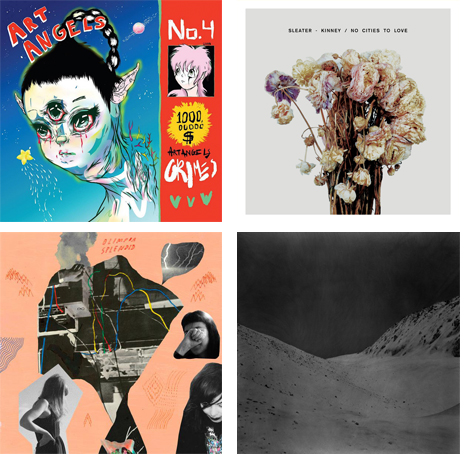
Art Angel by Grimes (4AD) for its joyousness and for demonstrating a savvy, self-sufficient alternative to manufactured pop. No Cities to Love by Sleater-Kinney (Sub Pop), for its immediacy and for shitting on all other rock albums this year, apart from Olimpia Spendid by Olimpia Spendid (Fonal). Au De La by Big Brave (Southern Lord), for call-and-response guitars that The Quietus described as ‘like two steel mills groaning to each other’.


Other albums fan 2

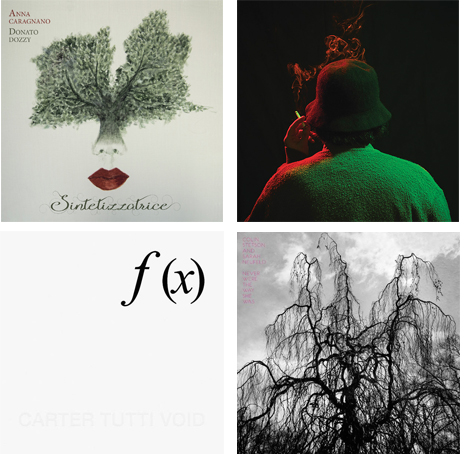
Sintetizzatrice by Anna Caragnano & Donato Dozzy (Spectrum Spools) for Berberian Sound Studio-style wooziness and melodies that float just above head height. Simple Songs by Jim O’Rourke for its effortless evocation of Harry Nilsson at his best. f(x) by Carter Tutti Void (Industrial) for providing a worthy studio successor to 2012’s Transverse. Never Were the Way She Was by Colin Stetson & Sarah Neufeld (Constellation) for its cold, precise beauty.


Other albums fan 3

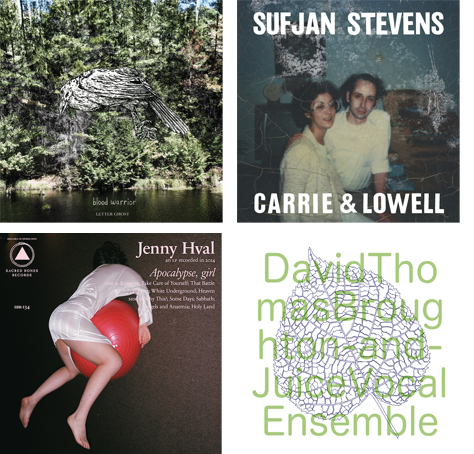
Letter Ghost by Blood Warrior (Immune), for Baptist General-esque fragile indie-folk that felt immediately familiar, in the best possible way. Carrie & Lowell by Sufjan Stevens (Asthmatic Kitty), Apocalypse, Girl by Jenny Hval (Sacred Bones) and Sliding the Same Way by David Thomas Broughton & Juice Vocal Ensemble (Song, by Toad) for their honesty and frankness.

Compilations

Highlife

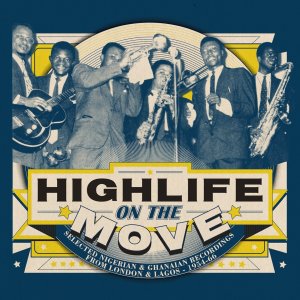
My favourite compilation released this year is Soundway’s Highlife on the Move: Selected Nigerian & Ghanaian Recordings from London & Lagos 1954-66. Everything else can basically go to hell, but the Earthly 6 mix by Jam City is good and the Late Night Tales mix by Nils Frahm is lovely.

2015 reissues

Reissues

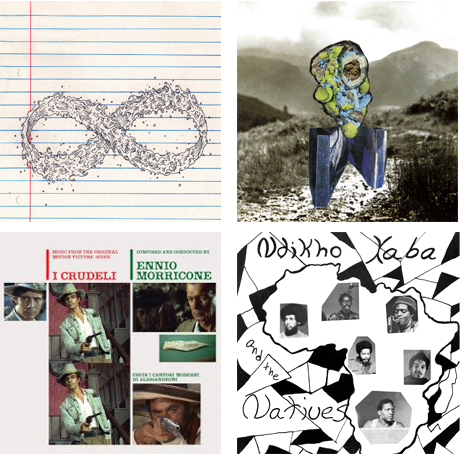
Finally, Domino’s Weird World imprint rereleased The Magic Bridge (2011) and The Glass Trunk (2013) by Richard Dawson and you know what? They’re incredible. For me, the only reissues that come close are the I Crudeli OST by Ennio Morricone (Cherry Red) and 1971 Revolutionary Spiritual Afro Jazz Sounds From Exile by Ndikho Xaba and the Natives (Matsuli).

Favourite albums overall, new to me, from any year

Other than 2015 titles, my first big discovery this year was The Ascension by Glenn Branca (1981). The Adding Machine by Arnold Dreyblatt (2002) scratched a similar itch. And I can’t believe I’d never heard Watusi by The Wedding Present (1994), but I’ve now more than made up for the omission.

Book soundtrack: Carus & Mitch

I listen to music while I write. It’s usually drone, industrial or minimal techno. I could wax lyrical about the state of mind induced by Biokinetics by Porter Ricks, Grapes from the Estate by Oren Ambarchi or Water Park by Dirty Beaches. Each story I write is usually accompanied by a particular few albums on rotation.

But that’s by the by. That’s not the kind of soundtrack I want to write about here.

I’ve started creating playlists for each of the longer pieces of fiction I’ve written. You could think of them as soundtracks to imaginary film adaptations, I suppose. But who says that books shouldn’t have soundtracks in their own right? In fact, creating a soundtrack playlist has helped me pin down the tone of stories while I’m still editing them.

I like to make the process convoluted. I’ve come up with a fairly strict set of rules:

  1. The first and last tracks ought to work as an accompaniment to the story’s ‘opening and closing credits’.
  2. The playlist should include diagetic (i.e. in-world) and non-diagetic (i.e. conventional overlaid soundtrack) music. Generally, that means not much vocal content.
  3. Broadly, the tracks should reflect the mindset of the central character. My stories are mostly 1st-person or close 3rd-person POV, so by the editing stage I should have a pretty good idea what makes them tick.
  4. The ordering of the tracks should reflect the changing mood or plot events.
  5. Despite rule 4, the playlist should remain listenable in its own right, without sounding jarring. Unless jarring sounds good.

Carus & Mitch

My novella, Carus & Mitch, is published by Omnium Gatherum on Monday (23rd Feb 2015). It’s about two girls who live entirely alone in a remote house, afraid of the dangers outside. It’s kind of creepy.

Here’s a Spotify soundtrack to accompany Carus & Mitch. Hopefully, it ought to work either as a teaser to reading the story, or a kind of epilogue if you’ve already read it.

It’d probably be counterproductive to explain the reasoning behind each of the track choices. But perhaps it’s worth noting that the 1940s tracks and the ‘Autumn’ educational record are the diagetic (in-world) ones. I like the image of Carus and Mitch investigating a vinyl record collection they’ve discovered in the house.

Mild spoilers: The playlist reflects the book in that it transitions from cosy to queasy to a little bit terrifying. Enjoy.

Favourite tracks of 2014

Firstly, it’s been more a year for albums rather than individual songs. Even though my longlist is 41 tracks and 4.5 hours, I’m being strict with myself for this list by not including tracks to represent albums I love, if the track doesn’t stand alone. So nothing from Oren Ambarchi’s Quixotism (Part 3 came close, but is far more glorious in the context of the album). I’m also disallowing tracks from compilations and rereleased albums, therefore it’s a no-show for the Soul Jazz Gipsy Rumba or Strut Haiti Direct compilations, Finders Keepers’ Lewis album, or the rerelease of Aby Ngana Diop’s Liital.

So it’s a pretty pared-down list. Only eight tracks remain, though two of them are well over the 10-minute mark:

  • I Have Walked This Body by Jenny Hval & Susanna
  • Advice to Young Girls by Copeland ft. Actress
  • CIRCLONT6A[141.98][syrobonkus mix] by Aphex Twin
  • Hidden Thieves by Eyes & No Eyes
  • Nothing Important by Richard Dawson
  • Body Sound by Holly Herndon
  • Pretending by Mice Parade
  • Speech Spirits by FIS (The Nagger remix by Oren Ambarchi)

Here’s a Spotify playlist:

The numbers

OK, so I keep a log of all the new stuff I listen to. Doesn’t everyone do that? Up until today I’ve listened to 589 unique albums, 98 EPs and 41 singles this year – that’s 728 releases in total.

354 of these titles were released in 2014. This chart shows the release years, ordered by listening date:

Listening years
254 releases were by artists from the USA, 204 from the UK. Germany’s next in the list with 37 releases, then Australia with 23, then Sweden with 18. I listened to artists from 55 different countries in total.

But that’s just the releases that were new to me. I don’t log everything I listen to. That would be crazy.

Most of my listening was via Spotify. The site’s ‘Year in Music’ tells me that my most-listened genres were experimental, drone, glitch, warm drone, post-rock. Sounds about right.
Apparently I’ve listened to 38,739 minutes of music on Spotify this year, which certainly justifies the £10/month payment.
That’s 645 hours. That’s 27 whole days.

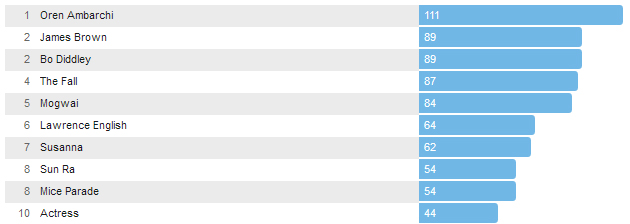
Finally, Last.fm tells me my most-listened artists this year. Given that many Oren Ambarchi tracks are longer than 10 minutes, he’s even more of a clear winner:Last.fm 2014 listening

Favourite tracks of 2013

Hungry Face by Mogwai – the most perfect theme imaginable to my favourite TV show of the last few years. / Casino Lisboa by Dirty Beaches – my most-listened new track of the year. I love the moment about a minute in, when the drums kick in and knock the bass riff upside-down. / New York / It’s All About… by Marina Rosenfeld – NY performance artist Rosenfeld is joined by Warrior Queen for a sparse, echoing shoutout. / Fall Back by Factory Floor – endless and hypnotic. Can’t shake the disappointment that the eventual album didn’t contain more like this. / Ludwig’s Children by Roj – a bedtime treat from the former Broadcast member’s early tape work EP, The Amateur’s Attic. / The Weighing of the Heart by Colleen – the aural equivalent of finding yourself dozing off beneath a tree on a sunny autumn day. / Major Tom by The Space Lady – recorded in 1990 and reissued on her Greatest Hits album, predates Julia Holter and Grouper with only a Casio and a winged hat. I’ve had this track on constant rotation since its release. / Low Light Buddy of Mine by Iron & Wine – Sam Beam moves even closer to a MOR sound, but this track’s an absolute earworm. / Water Park Theme – Take 2 by Dirty Beaches – the other side of Alex Zhang Hungtai’s 2013 output, as serene as ‘Casino Lisboa’ is frantic. / Brennisteinn by Sigur Ros – spluttering amps, synths and guitars, this is a tweaked sound for Sigur Ros, but the sense of bewildered glory is still present and correct. / LDWGWTT by SHXCXCHCXSH – unrelenting techno from the unpronounceable Swedish duo. / Full of Fire by The Knife – the rotten heart of Shaking the Habitual. / Breaking up the Earth by Colleen – frankly, I could include most of The Weighing of the Heart here, but I’m limiting myself to two tracks. This one’s more Arthur Russell than Grouper. / Willow by Rosy Parlane – one of a number of great Touch ambient tracks I might have included, and difficult to pinpoint what’s special about it. It just is. / Where Are We Now? by David Bowie – as wonderful as it was to have Bowie reappear out of nowhere, this track has only improved with each listen. / So Far So Clean by  Inga Copeland – a nice match with Marina Rosenfeld’s EP, the female half of Hype Williams finally strikes out on her own, hinting at excellence to come. / Waayey: The Butcher by Sidi TouréAlafia is an excellent, uplifting album. This track in particular does it for my three-month-old son. / Iyongwe by John Wizards – avoiding the Vampire Weekend-isms of the rest of the album, this track straddles genres perfectly. / Universe in Crisis by Wareika Hill Sounds – former Skatalite Calvin ‘Bubbles’ Cameron plays trombone in a fudgy, late-night haze. / Not Your Ordinary Blanket (live) by Groupshow – a track that I can only grasp onto for a few minutes before it merges into whatever daydream I’m in. / Hello Stranger by Julia Holter – a match made in heaven as Holter performs a stunning cover of Barbara Lewis’s song, one of my favourite ever pop tunes. / 10.17.2009 (for CCG) by M. Geddes Gengras – formless, pulsating, overwhelming.

Here’s a Spotify playlist containing all the tracks, just shy of 2 hours:

Favourite albums of 2013

colleen-weighing-cover

The Weighing of the Heart by Colleen

From the first hummed note of ‘Push the Boat Onto the Sand’ to the final echoing cello plucks of the title track, Cécile Schott’s latest is an exercise in swooning beauty. Lullaby-like rhymes and melodies appear and overlap, choral vocals become lost under layers of delicate rhythms. The sampling trickery is subtle and disarming, ‘Ursa Major Find’ and the single-phrase ‘Break Away’ feel at times like sweeter takes on Laurie Anderson’s ‘O Superman’. But the outstanding moments are instrumental: ‘Geometría del Universo’ and particularly ‘Breaking Up the Earth’ channel Arthur Russell’s World of Echo. Colleen succeeds at fusing the sweet and genuinely, unnervingly progressive. Each time I listen to The Weighing of the Heart I fall in love with it all over again.


Drifters & water park

Drifters / Love is the Devil and Water Park OST by Dirty Beaches

There’s an obscene generosity to the amount of music that Alex Zhang Hungtai has provided in 2013. The Water Park soundtrack is beguiling at first, little more than a hum heard from another room. But I’ve listened to this 28-minute EP countless times and now playing it is like hearing the sound of something remembered from childhood. It’s simple and beautiful.

The double album Drifters / Love is the Devil is another beast, at least at first. The first half represents more familiar Dirty Beaches territory – Suicide casio thumps and rockabilly-from-hell vocals swamped in reverb. This reaches a peak with the compellingly riffy Casino Lisboa, my personal song of 2013.  The second half of the CD revisits the same aural soundscapes as Water Park. Less essential, certainly, but packaging Drifters and Love is the Devil together is a throwaway gesture that most artists wouldn’t dare contemplate.


Dozzy

Plays Bee Mask by Donato Dozzy

Bee Mask’s Vaporware EP is pretty great. But this album, in which Italian techno producer Donato Dozzy, remixes the title track again and again over seven tracks, is outstanding. I’ve listened to a lot of ambient music this year, but there are few albums that manage to be both moodily evocative and also lodge themselves in your mind. I get the feeling that the circumstances of this piece couldn’t be replicated.


UR055_COVER_F

Collected Works Vol. 1 – The Moog Years by M. Geddes Gengras

More ambient perfection. Sun Araw, Akron/Family and LA Vampires collaborator Gengras fiddles about with Moog Rogue and MG-1 synths and creates something divine. The track ‘10.17.2009 (for CCG)’ is an aural swoon.


Other albums in the mix

Albums 2013 rack

Shaking the Habitual by The Knife, for its bloodymindedness, magnificent bloat and a handful of thumping pop hits. The entire Mallet Guitars series by Ex-Easter Island Head, culminating in this year’s Mallet Guitars Three, all EPs together forming an essential album. Exit! By Fire! Orchestra, some of the most terrific free jazz, despite being tricky to schedule into a working day. And finally, The Space Lady’s Greatest Hits, long-awaited and wonderful.


EPs

EPs

Live at Skymall by Groupshow –  like many of my favourite albums this year, a listen that merges with whatever activity you’re doing. P.A./Hard Love by Marina Rosenfeld, a surprising favourite given its abrasive unpredictability, but totally compelling. No More War by Wareika Hill Sounds for chilled, alien trombone tunes.


Favourite record labels

Thrill Jockey (new releases from Matmos, People of the North, Mouse on Mars’ Jan St. Werner, Sidi Touré). Room 40 (Bee Mask, Marina Rosenfeld), Touch (Chris Watson, Rosy Parlane, Mika Vainio, Bruce Gilbert & BAW) Hospital Productions (Vatican Shadow, Rainforest Spiritual Enslavement, Alberich).


Favourite albums overall, new to me, from any year

Suicide (Suicide, 1977), an album that made me furious that nobody had introduced the band to me before. Womblife (John Fahey, 1997), produced by Jim O’Rourke and featuring some of the wonkiest sounds imaginable. Moondog & His Friends (Moondog, 1953) , an eye-opening account of the Viking of Sixth Avenue. I Am Sitting in a Room (Alvin Lucier, 1981), a simple sonic experiment that morphs into something intangible and ethereal. Illuminations (Buffy Sainte-Marie, 1969), apparently abandoned by the artist but superb and alien. Strumming Music (Charlemagne Palestine, 1974), another experiment with warmth and humour. We’re Only In It For the Money (Frank Zappa & The Mothers of Invention, 1968) – batshit insane. Everybody Knows This Is Nowhere (Neil Young & Crazy Horse, 1969)  – everybody else loves this album already, evidently, and it was mostly familiar to me, but hearing the tracks together was a revelation. And, already mentioned above, The Weighing of the Heart (Colleen, 2013) and Drifters / Love is the Devil (Dirty Beaches, 2013) are the two albums that stand out this year.

Favourite films watched in 2013

Warning to the Curious

Other than Alfonso Cuarón’s essentially perfect Gravity (see my review), the only other 2013 film I saw that was worth a damn was Stoker (Chan-wook Park), a terrific and seedily terrifying reimagining of Hitchcock’s Shadow of a Doubt.

As for the rest of my film viewing, A Warning to the Curious (Lawrence Gordon Clark, 1972) was one of the most unsettling film experiences I can remember, up there with Jerzy Skolimowski’s The Shout (1978). Night of the Demon (Jacques Tourneur, 1957) was an expected pleasure. Whether or not the demon should have been omitted, as per Tourneur’s original intentions, is moot. With or without it, this is a peculiar masterpiece. I found Persona (Ingmar Bergman, 1966) striking and shocking – pop-culture familiarity still doesn’t prepare you for the experience. Sunrise (F. W. Murnau, 1927) was another absolute surprise – far more melodramatic than I’d imagined, but also far more dry and blunt, too. And it was a vast relief to see a (relatively) modern film with as much time to pay to its characters as Together (Lukas Moodysson, 2000), an unflinching and strangely warm account of communal living.

The things I most enjoyed in 2012

End-of-year lists are always self-indulgent, but this is more self-indulgent still. I wanted to capture all the things that were new to me this year that summed up what I most enjoyed in 2012. I realise that this is only really of interest to me.

Albums

Feelies

Transverse (Carter Tutti Void, 2012) was the single album of 2012 that stands alongside my favourites from other years. I missed New History Warfare Vol 2: Judges (Colin Stetson, 2011) and An Empty Bliss Beyond this World (The Caretaker, 2011) in 2011 but they became firm favourites this year – Colin Stetson for Tube journeys and The Caretaker as a background to writing. Biokinetics (Porter Ricks, 1996) became my soundtrack on countless rainy train journeys, a heartbeat layered on top of the hum of travel. World of Echo (Arthur Russell, 2001) gradually became less an album heard than an album felt. My go-to album for relaxation this year was the reissued UFO (Jim Sullivan, 1969). And Crazy Rhythms (The Feelies, 1980) and Midnight Cleaners (The Cleaners From Venus, 1982) were the two albums that made me upset at time wasted before having heard about them – my favourite pop albums of 2012.

Live music

Boredoms

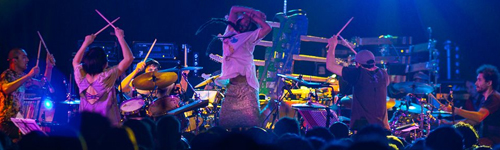
The American Contemporary Music Ensemble’s performance of Jesus’ Blood Never Failed Me Yet (Gavin Bryars) at All Tomorrow’s Parties was one of the most perfect things I’ve ever experienced. Boredoms at the same ATP festival was one of the bravest and maddest, featuring five drummers and a tree of guitar necks hit with a stick.

Films

Shout

I loved working through Les Vampires (Louis Feuillade, 1915), influential in technical respects but with its own weirdly dreamy qualities. The imagery has stayed in my mind longer than any other film. The Shout (Jerzy Skolimowski, 1978) was my hidden treasure of 2012, perfectly tailored to everything I like about films, and a great companion piece to Berberian Sound Studio (Peter Strickland, 2012). The latter was perhaps not the best-crafted film released in 2012 (surely The Master), but the one I responded to the most enthusiastically. I thought my high expectations for F for Fake (Orson Welles, 1973) would make it a disappointment, but it was totally surprising despite the fact I expected surprises. The same applies to That Obscure Object of Desire (Luis Bunuel, 1977), especially the first 15 minutes or so, with a remarkable story structure. The Silence (Ingmar Bergman, 1963) was an epiphany, the first Bergman film that I’ve had an emotional reaction towards and predating David Lynch by 20 years. The Bespoke Overcoat (Jack Clayton, 1956) and Certified Copy (Abbas Kiarostami, 1990) featured the most sympathetic performances, within beautifully humanist films. And Vampyr (Carl Theodor Dreyer, 1932), performed with a live soundtrack by Steven Severin, was the trippiest film experience, with Rose and I half-awake with woozy colds.


Books

LovedOne

I’m pickier with books than films, perhaps due to time investment. I’ve liked and/or appreciated lots of books this year. Conrad’s Heart of Darkness, Collins’s The Moonstone and Goethe’s The Sorrows of Young Werther come close, but the only book that made me bubble over with enthusiasm was The Loved One (Evelyn Waugh, 1948), a perfect and perfectly concise novel.

TV

Carlos

Carlos (Olivier Assayas, 2010) was the most compelling thing I saw on TV this year, making a case for longer treatments of complex events than films can offer. It also had the best soundtrack. The Olympics opening ceremony (Danny Boyle, 2012) was the broadcast that made me happiest, possibly due to watching it with a hangover and letting the spectacle wash over me. Sherlock: A Scandal in Belgravia (2012) felt like the best kind of ‘event’ TV fiction, and among the best scripts that Steven Moffat has yet produced. Black Mirror: The Entire History of You (2012) was the TV episode most tailored to my interests – fingers crossed for more Twilight Zone for the C21st. Breaking Bad Season 4-5a (2011-2012) was the most moreish TV experience once the show broadened out in scale, having earned our sympathy for the characters. The Thick of It Season 4 Episode 7 (2012) was the most surprising TV episode, using comedy characters to hint at something huge and dreadful just off-screen.


Theatre

SergeyBoris

The puppet show Boris and Sergey’s Vaudevillian Adventure (Flabbergast Theatre) at the Edinburgh Fringe made me feel like a child and made my face hurt from smiling and laughing.

Art

Saville

It’s rare for visual arts to get me in the guts. The Jenny Saville retrospective at Modern Art Oxford did just that. And the Speed of Light night-hiking/neon joggers/sound art performance at the Edinburgh International Festival was an event that was at once hilarious and baffling.

Favourite tracks of 2012

Sometimes I Forget You’ve Gone by Dirty Three (my favourite track of the year and more beautiful every time) / 5 by Dean Blunt & Inga Copeland (piped direct from my childhood, filtered through all the tape decks I ever owned) / Only in My Dreams by Ariel Pink’s Haunted Graffiti (hauntology without irony) / Ghost Hamlet by Daphne Oram, Daz Quayle and Andrea Parker (quietly invasive) / Too Tough to Die by Neneh Cherry & The Thing (accumulating towards superb frenzy) / Wisteria of Albion by Time Attendant (1980s CBBC nostalgia with undertones of Zarch on the Acorn A3000) / Ungirthed by Purity Ring (silences overwhelming melodies) / V2 by Carter Tutti Void (thuk thuk thuk thuk thuk thuk thuk thuk) / Epic by Au & Colin Stetson (Steve Reich-style minimalism, maximised) / Stupid Things (EYE remix) by Yo La Tengo (YLT eclipsed by EYE, like Paul Simon’s ‘The Obvious Child’ played on a ZX Spectrum) / Radar (Michael Mayer remix) by Hauschka (fragile, tiny techno) / Genesis by Grimes (how modern, commercial  synthpop should sound, IMHO) / Brats by Liars (dirty dancefloor) / Christian Rocks by Fenn O’Berg (Fennesz, O’Rourke and Rehberg transform Boston’s ‘More Than a Feeling’ into disorienting, doom-laden drone)

Click below for the Spotify playlist.

Favourite albums of 2012

2012 has been dark. Weather and hobbies have kept me indoors far more than usual. Music has performed a different function this year, too. I’ve preferred albums to hover somewhere below the conscious, as a backdrop to plotting and writing stories.

While there are albums that have proved most effective at blocking out the outside world, they haven’t all become favourites in the normal sense. The three albums that I’ve loved most this year have one thing in common: collaboration. They all take simple forms which become convoluted and unpredictable through introducing chaotic elements.


The big three

CarterTuttiVoidAlbumFront5001Since April I’ve had Carter Tutti Void’s album Transverse on constant rotation. There’s something beguiling about it, with an appearance of little going on but actually serving as a template for the listener to imagine all sorts of hidden melodies. That it’s a live performance is staggering. I wish I’d been there.
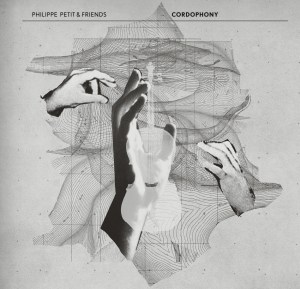
PP&F-CordophonyPhilippe Petit’s Cordophony is either an album that went under the radar for most music publications, or it’s one that just appeals specifically to me. In 45 minutes it covers a vast spectrum, short soundtracks to all sorts of imagined scenes. According to the press release, Petit plays ‘processed acoustics/field recordings/foundsounds + electronics + turntables & glass manipulations + percussions + synths/piano + balloons’ and there are 17 other musicians involved, including Nils Frahm. The album is a swirling mix of cello, electric harp, vibraphone, tibetan bowls, flutes, gongs and prepared piano, but sounds like something from another world.

BLACK-IS-BEAUTIFUL-575x575Dean Blunt and Inga Copeland’s ‘Black is Beautiful’ is another shimmering oddity. More a collection of sketches than songs, it gives the impression of flicking through radio stations. This is my understanding of what hauntology should be – I could convince myself that I’d heard any number of these pieces in my childhood, complicated by the inclusion of an unlabelled cover of Donnie and Joe Emerson’s 1979 track, ‘Baby’. Totally alien and totally familiar.

The rest of the top ten

Ariel PinkMature Themes, by Ariel Pink’s Haunted Graffiti, didn’t capture the attention of the music press in the same way as 2010’s Before Today. But it’s a really strong record and the move to less a lo-fi production might make it endure longer. It’s a terrific mix of styles, sounding like Beefheart, Zappa and Gong. The title track and ‘Only In My Dreams’ are perfect pop, ‘Early Birds of Babylon’ surprises me each time I hear it, and there’s another cover of Donnie and Joe Emerson’s ‘Baby’, making a nice link to Blunt and Copeland’s album.

Purity ringI’m not sure what kind of status Purity Ring’s Shrines has by popular consensus, but it’s the electropop album I’ve been waiting for for a long time. Megan James’s vocals are sharp, memorable melodies but it’s Corin Roddick’s backing work that makes it. The pitchshifted, choppy samples remind me of a more clubby take on The Knife’s Silent Shout. His synths saturate the album, often overwhelming the vocals. The effect is like examining intricate artworks with the low summer sun blinding your eyes.
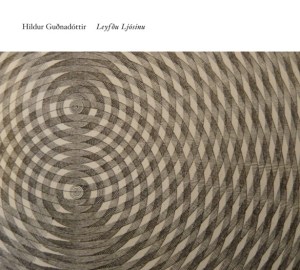
HildurCellist Hildur Gudnadottir’s album Leyfdu Ljosinu is a single 40-minute track, recorded live with no post-production. It’s staggeringly beautiful.

Dance classics 1&2The best albums often don’t fit neatly into particular genres. Dance Classics Vols I & II from NHK’Koyxen don’t match my normal tastes, and yet I’ve listened to them both endlessly in the second half of 2012. Something about these short, skittery bursts really puts me in some kind of flow state.

Liars-WIXIW1On its release, I fully expected Liars’ WIXIW to top my list of 2012 favourites. Seeing them perform live in Berlin cemented my love for the band’s new direction. The standout track, ‘Brats’, is still the most anarchic, infectious thing imaginable.

actress_RIP_1329831774_crop_500x500Unlike the immersive Splazsh, Actress’s R.I.P is a weird collection of vignettes. On some listens they can seem insubstantial, on others they seem to stretch out, hinting at something far broader. A really eccentric but compelling album.

seerThe Seer by Swans is a late entry to my top ten. I’d struggled for a long time to get around to devoting full attention to the 2-hour opus, in the knowledge that it would be demanding and no kind of background to any other activity. It’s an amazing album, huge in ambition, and it’s hard to believe it’s an album release and not a retrospective of a lifetime’s work. I suspect I’ll love it more and more with time.

Honorable mentions

  • Tim Hecker and Daniel Lopatin – Instrumental Tourist
    Beautiful drones. This is what I write to.
  • Au – Both Lights
    Colin Stetson’s addition to the lineup makes a great band greater. At it’s best, it sounds like Animal Collective playing Steve Reich.
  • Fieldhead – A Correction
    Not as firm a favourite as 2009’s They Shook Hands for Hours, but still sublime.
  • Andy Stott – Luxury Problems
    Hypnotic and overwhelming.
  • Fenn O’Berg – In Hell
    Another terrific collaboration. ‘Christian Rocks’ and ‘Omuta Elegy’ are outstanding.
  • Mouse On Mars – Parastrophics
    The most fun, and funniest, album of the year.

Favourite tracks of the first half of 2012

The new music I’ve been listening to this year has been pretty dark. I’ve been spending more of my free time writing over the last few months and have tended towards music that seems to provide a good backdrop. Here’s a Spotify playlist featuring almost all of these tracks.

Dirty Three – Sometimes I Forget You’ve Gone
My favourite track of the year by a good distance. Almost unbearably beautiful.

Halls – Lifeblood
No Radiohead album this year, no problem.

Bullion – Say Arr Ee
Arthur Russell for C21st.

Au – Epic
With the addition of Colin Stetson on sax, Au mine territory more usually occupied by Steve Reich.

Grimes – Genesis
Every time I’m told about electro-pop artists in the charts, I want them to sound like this.

Burial – Kindred
Perhaps undeserving of the internet meltdown, but still as good as Burial gets.

Sven Kacirek – Cars & Nightingales
‘Scarlet Pitch Dreams’ continues Kacirek’s explorations into weirdy muted percussion.

Mirrorring – Silent From Above
Far from the most immediate track on the Tiny Vipers / Grouper collaboration, but it really sneaks up on you.

Daphne Oram, Daz Quayle, Andrea Parker – Ghost Hamlet
I’m not sure where the work of the BBC Radiophonic Workshop’s Oram ends and Quayle and Parker’s tinkerings begin, but this is heavy, beautiful stuff.

Julia Holter – In the Same Room
Refreshingly straightforward shimmering pop.

Double Helix – Voyages
All tracks can be improved with the addition of samples from ‘Jason and the Argonauts’.

Carter Tutti Void – V2
Unbelievable chunky thumps – completely hypnotic.

Slant Azymuth – Helical Scan
The clear standout track from Demdike Stare’s and Andy Votel’s collaboration.

Fenn O’Berg – Christian Rocks
Christian Fennesz, Jim O’Rourke and Peter Rehberg spend ten minutes summoning the devil and then remix Boston’s ‘More Than a Feeling’.

The Notwist – Blank Air
Really looking forward to hearing this in context on the upcoming album.

SP-X – The Escape
Terrific minimalist techno taken from the excellent EP, ‘Stalker’.

Les Marquises – Sound and Fury (Fieldhead remix)
The only new Fieldhead track so far this year, but excited for the new album.

Liars – Brats
It’s difficult to pick a single track from WIXIW, but this wins for getting the best reception when I saw them live in Berlin.

Spotify playlist

Favourite albums of the first half of 2012

Favourite albums released between January and end of June 2012:

  • Philippe Petit & Friends – Cordophony
  • Liars – WIXIW
  • Au – Both Lights
  • Carter Tutti Void – Transverse
  • Actress – R.I.P
  • Hildur Gudnadottir – Leyfdu ljosinu
  • Sven Kacirek – Scarlet Pitch Dreams

Closely followed by:

  • Grass Widow – Internal Logic
  • Belbury Poly – The Belbury Tales
  • Mirrorring – Foreign Body
  • Grimes – Visions
  • Dirty Three – Toward the Low Sun

Favourite EPs:

  • Burial – Kindred
  • Grouper – Violet Replacement Pt. I: Rolling Gate
  • Grouper – Violet Replacement Pt. II: SLEEP
  • SP-X – Stalker

Amazing older albums, new to me this year:

  • Gavin Bryars – The Sinking Of The Titanic / Jesus’ Blood Never Failed Me Yet
  • The Feelies – Crazy Rhythms
  • Make Up – In Mass Mind  /  Sound Verite
  • Exuma – Exuma, the Obeah Man  /  Exuma II
  • Jim Sullivan – U.F.O.
  • Porter Ricks – Biokinetics
  • James Brown & The Famous Flames – James Brown Live At The Apollo, 1962
  • Kim Jung Mi – Now
  • Paul McCartney – RAM
  • Thelonious Monk – Underground

Favourite films released in 2011

Black Swan (Darren Aronofsky, USA)
At first glance, ‘Black Swan’ appears similar to Aronofsky’s previous film, ‘The Wrestler’, with its shaky documentary style and focus on a single struggling performer. But soon enough the film reveals itself as an out-and-out horror film with a fresh treatment of genre tropes (transformation, mirrors and doubling). Perhaps what seals it as not only my favourite film of the year, but my favourite cinema experience, is that I saw it amid a well-to-do North Oxford audience who’d been terribly misled. Many of them were ballet aficionados who saw ‘Black Swan’ following a screening of the Bolshoi Ballet’s ‘Swan Lake’, and seemed utterly unprepared for Aronofsky’s nightmare film, which resulted in an electric tension in the cinema.

The Tree of Life (Terence Malick, USA)
Watching the credits at the end of ‘The Tree of Life’, I felt less like I’d finished watching a film, and more like coming to after a protracted daydream. I struggled at the start, where the structure of the film comprises of tiny snippets of footage, but lost any scepticism during the ‘creation of life’ sequence (and felt that the dinosaurs fitted in perfectly well). After that point the pacing slows and the story becomes more accessible, I think, and I was totally won over. The ending on the beach may have enraged some critics but I thought it was wonderful and that it didn’t compromise Malick’s vision at all.

True Grit (Ethan and Joel Coen, USA)
‘True Grit’ contained some of my favourite suspense sequences that I’ve seen in any film this year. Jeff Bridges may have been wonderful, but I think it’s Hailee Steinfeld that steals the show, and it was great to see Matt Damon tackle something out of his normal range. After ‘True Grit’ and ‘No Country for Old Men’ (and the teeth-grinding awfulness of ‘Burn After Reading’), I’m starting to dread the Coens’ return to comedy.

Rango (Gore Verbinski, USA)
It was the involvement of the Coen’s cinematographer, Roger Deakins, as visual consultant that tipped me off that ‘Rango’ might be a treat. The film pastiches are accurate and funny and all the western signifiers are in place, but I wasn’t prepared for the tightness of the script. All of the key elements are laid out within the first twenty minutes, whereupon the rest of the film plays out satisfyingly. It makes ‘Toy Story 3’ seem rambling and incoherent in comparison. And the creature designs are so gruesome and gormless that it’s hard to imagine anyone involved believed that they were really making a children’s film.

Win Win (Thomas McCarthy, USA)
Yet another reason to hate Thomas McCarthy, director of ‘The Station Agent’ and ‘The Visitor’, respected actor starring in the fifth season of ‘The Wire’ among other things, and by all accounts a very nice man. There was no easy way to promote this midlife crisis/wrestling/parenting tale, but it’s a real shame that more people didn’t get to see this at the cinema.

Tyrannosaur (Paddy Considine, UK)
From the brutal opening sequence to its bleak ending, ‘Tyrannosaur’ is hard to watch, but the moments of humour lift the film from gratuitous misery. Olivia Colman has deservedly garnered lots of praise – her character is introduced with apparent whimsy recalling Colman’s ‘Peep Show’ persona but then changes out of all recognition – but Peter Mullan’s Joseph is equally compelling, in particular in any scenes without dialogue where his suffering is most apparent.

Point Blank (A Bout Portant) (Fred Cavayé, France)
This is the only film on this list that I’ve seen more than once, and just thinking about it makes me eager to see it again soon. At 84 minutes, it’s one of the punchiest action thrillers I can imagine. There may be some plot twists that challenge credulity, but this is a fantastic rollercoaster ride as Gilles Lellouche’s main character becomes trapped in a violent world, making bizarre choices that always seem perfectly logical in context.

Troll Hunter (André Øvredal, Norway)
Another action film that really delivers. Øvredal surprises us by laying out all his cards on the table almost immediately, as it becomes apparent that the trolls aren’t going to be shrouded in mystery, but seen up close throughout. The pacing is surprisingly nimble and the film gives viewers everything they could possibly hope for, with humour, scares, a variety of trolls and some fantastic chase sequences.

The Ides of March (George Clooney, USA)
It’s not quite up there with ‘Good Night and Good Luck’, but ‘The Ides of March’ at least proves that Clooney is dependable at delivering considered, mature political thrillers. Ryan Gosling comes into his own, and the support cast is fantastic, particularly Paul Giamatti and Philip Seymour Hoffman. We saw this at the Nitehawk Cinema in Williamsburg and even the horrendous hotdogs with George Washington sauce couldn’t detract from this excellent film.

Beginners (Mike Mills, USA)
Like ‘Win Win’, this is another film that must have caused headaches for the marketing department. The pre-release emphasis on Christopher Plummer’s character, an elderly father who comes out as gay, suggested an entirely different film. The true focus is on Ewan McGregor’s Oliver, to whom his father’s attitude is just another factor in his wavering indecision about his own life. Mills fills the film with curious touches which add up to create an intimate portrait of his lead character and produce a romantic comedy that feels natural and reaffirming.

Just outside of my top ten of films released in 2011:
Tinker Tailor Soldier Spy (Tomas Alfredson, UK)
Submarine (Richard Ayoade, UK)
Rise of the Planet of the Apes (Rupert Wyatt, USA)
Source Code (Duncan Jones, USA)

And some notable, high-profile disappointments. All of these films make me shiver slightly to recall them:
The Skin I Live In (Pedro Almodovar, Spain)
Midnight in Paris (Woody Allen, Spain/USA)
Hanna (Joe Wright, USA, UK, Germany)
The Fighter (David O. Russell, USA)

There are various films released in 2011 that I haven’t yet got around to seeing, including Lars Von Trier’s ‘Melancholia’, the Dardenne Brothers’ ‘The Kid with a Bike’, Terence Davies’ ‘The Deep Blue Sea’, Steven Soderbergh’s ‘Contagion’, Alexander Payne’s ‘The Descendants’, David Cronenberg’s ‘A Dangerous Method’, Steve McQueen’s ‘Shame’, Asghar Farhadi’s ‘A Separation’ and particularly Michel Hazanavicius’ ‘The Artist’, which I’m really excited about.

Favourite tracks of 2011

Click the image above for a Spotify playlist featuring all of these songs.

Isabel – Baxter Dury
I love Baxter Dury’s album, ‘Happy Soup’ as much as I did last year’s ‘Things To Do and Make’ by Ergo Phizmiz. Dury’s vocals have a sloppy, sub-rehearsal quality, he mutters, he’s cynical and he sounds wonderful. ‘Isabel’ is probably my favourite song of the year, mainly for the chorus: Isabel’s sleeping / Isabel’s sleeping / I think my mate slept with you when you were in Portugal. There are at least three other tracks on the album that are standouts, too.

Lonely In Your Arms – Deep Sea Arcade
Excellent jangly surf pop.

Satellite – The Kills
I first listened to ‘Blood Pressures’ in my now-deceased Ford Ka. The speakers were barely operational and the music was being fed from my iphone to the radio via FM transmitter. The door kept vibrating with the farting motion of the ragged speakers and it sounded like nothing on Earth. One of my favourite moments in any track this year is one minute and twenty-three seconds into ‘Satellite’, where the thumping guitar winds down to an abrupt silence – for just a moment it feels that the track ends, making the remaining three minutes a joyous lap of honour.

Future Crimes – WILD FLAG
This will keep me going until the reformed Electrelane finally record some new material. WILD FLAG’s self-titled album is rock-solid and raw.

If I Keep On Loving You – Let’s Wrestle
Straightforward indie pop and all the better for it.

Shark Ridden Waters – Gruff Rhys
Andy Votel’s sampling adds a kitsch, comic element that, in retrospect, seems to have been missing from the majority of Gruff Rhys’ solo work. I only wish that the final sampled chorus had been used more throughout the track – other than that, it’s blissful pop.

FFunny FFrends – Unknown Mortal Orchestra
Unknown Mortal Orchestra’s music sounds like it’s been recorded on C-90 cassette and then retrieved from a puddle. A bizarre slice of grungy funk through destroyed speakers.

Midnight Wave – Two Wounded Birds
More surf pop, this time even more indebted to Dick Dale.

Waveforms – Django Django
Oh, I love this. Beta Band vocals against DIY, skittery beats and 303 mayhem.

Mindkilla – Gang Gang Dance
Another of my absolute favourites this year. More than any other track on this list, this is the one that’s been drawing me back again and again. And surprisingly, I found that ‘Eye Contact’ was the perfect album to use as a backdrop for November’s novel-writing frenzy. Who’d have thought it?

Hipster – Monky
I love the chiptune vibe here. If I was a DJ, you’d all be dancing to this.

Don’t Play No Game That I Can’t Win – Beastie Boys featuring Santigold
It was a bit of a surprise to find this catchy dub pop buried in the Beasties’ ‘Hot Sauce Committee Part 2’. It definitely benefits from pushing the Boys down in the mix and the bassline is infectious.

Please Don’t Take Him Back – Bearsuit
Bearsuit straddle the line between catchiness and annoyingness throughout ‘The Phantom Forest’. This song is one of the more conventional but still catches them at their best.

Be a Doll and Take My Heart – Herman Dune
I still haven’t really got over the disappointment of ‘Strange Moosic’, in which David Herman Dune’s freewheeling lyricism is cut back to endlessly looping choruses. ‘Be a Doll and Take My Heart’ is lovely, albeit far less special than the brothers are capable of being.

There’s Nothing in the Water We Can’t Fight – Cloud Control
Is this great or awful? Last.fm tells me that this is one of the tracks I’ve listened to the most over the last six months, so it’d be hypocritical not to include it, even though Cloud Control is the worst band name ever.

Now the Smile Comes Over In Your Voice – The Wave Pictures
In an opposite trajectory to Herman Dune, The Wave Pictures have upped their game this year. Now that they’re signed to Moshi Moshi they’ve achieved a cleaner studio sound that befits them and sounds far closer to their live shows, but Dave Tattersall’s focus on British mundaneness remains intact.

Lotus Flower – Radiohead
‘The King of Limbs’ is the Radiohead album I’ve been hoping for since ‘Kid A’. I may be in the minority here, but with this release, Jonny Greenwood’s soundtracks and Thom Yorke’s coming out as a dubstep DJ, I think that Radiohead have never been in better shape.

Death Major – 13 & God
This track is more heavily weighted towards Anticon’s Doseone than the Notwist’s sweet choruses and features one of the best raps I’ve heard this year.

The Merry Barracks – Deerhoof
This appeared on last year’s list as a pre-release single, but is worth including here now that ‘Deerhoof vs. Evil’ is on Spotify. It’s a shame the rest of the album couldn’t live up to this glorious mess.

A Candle’s Fire – Beirut
This song does little to further Beirut’s sound and even sounds familiar on first listen. But it’s absolutely joyous, all the same.

Teenagers in Heat – Caged Animals
Childlike and wonderful, with a chorus that endears itself to me by sounding a little like ‘Tim Major’s in heat’.

Ping – Hauschka
More than any other Hauschka album, this captures the excitement of one of Volker Bertelmann’s live performances. It’s a rush of staccato rhythms and rattling, often achieved by placing a bundle of ping pong balls into the grand piano to be bounced up and down on the strings. Like Battles’ ‘Mirrored’, the effect is of machine-like intricacy, but ‘Salon des Amateurs’ somehow manages to remain soothing throughout. ‘Ping’ is one of my top tracks of the year.

It’s Choade My Dear – Connan Mockasin
Is this as lovely as it seems? I just looked up the word ‘choade’ and now I feel queasy.

Balance Her in Between Your Eyes – Nicholas Jaar
Chosen as a representative of the excellent album, ‘Space is Only Noise’. Once again, this woozy, hypnotic album turned out to be an excellent writing aid.

Abu Dhabi – Rough Fields
In its own odd way, this is probably the most beautiful song on this list. The listening conditions need to be perfect, but if you get it right this can be transcendent.

by this river – Alva Noto and Ryuichi Sakamoto
‘summvs’ is another of my favourite albums this year, even though I still don’t have much of a handle on it after many listens. This cover of Brian Eno’s song is the most accessible track on the album. I really love the high-pitched tone that’s used as a kind of punctuation mark.

Spotify playlist: Tim’s favourites of 2011

NaNo November 11: That went quickly

It all went in a blur. I’ll take stock about what went right and what went wrong (likely to weigh heavily on the latter), but for now I’ll take a break from writing. In the meantime, these are the albums that accompanied my 23-day flurry of novelling:

Actress – Splazsh
Alva Noto & Ryuichi Sakamoto – summvs
Animal Collective – Fall Be Kind
Animal Collective – Feels
Atlas Sound – Parallax
Burial – Burial
Burial – Street Halo EP
Ellen Allien & Apparat – Orchestra of Bubbles
Gang Gang Dance – Eye Contact
Gang Gang Dance – God’s Money
Hauschka – Foreign Landscapes
Little Wings – Black Grass
Magnetic Fields – 69 Love Songs
Mark Hollis – Mark Hollis
Mazzy Star – Among My Swan
Mazzy Star – She Hangs Brightly
Mose Allison – The Collection
Nicholas Jaar – Space Is Only Noise
Serge Gainsbourg – Vu de l’Exterieur
Studio 54, May 2, 1977 playlist
The Boats – Sleepy Insect Music
The Boats – Words Are Something Else
Thom Yorke – The Eraser

By far the most often-played album was Nicholas Jaar’s ‘Space Is Only Noise’, followed by Gang Gang Dance’s ‘Eye Contact’. It was a real surprise that Gang Gang Dance proved so conducive to writing and now the album feels rather hard-wired into my mind.

What I read in 2010

I saw a similar list on the blog Worlds in a Grain of Sand, and couldn’t resist. These are the books I read in 2010, in the order I read them.

The Victorian Chaise-Longue (Marghanita Laski, 1953)
A young mother recuperates from tuberculosis in 1950s London, lying upon a Victorian chaise-longue, and dreams, or perhaps becomes, Milly in 1864. Little in terms of mechanics is explained, but the view of Victorian society from a 20th century perspective is fascinating.

I Am Legend (Richard Matheson, 1954)
Far closer to the fantastic 1964 film adaptation, The Last Man on Earth, than the 2007 turkey. The final act makes a huge amount more sense in the novel, linked to a double-meaning in the title. If more modern vampire films could use the more routine elements of this novel as an influence, they’d be better for it.

City of Glass (Auster/Karasik/Mazzuchelli, 1994)
Firstly, Paul Auster’s original story (part of the New York Trilogy) is one of the finest and most concise short stories I’ve read. The surprise is that this comic adaptation retains almost all of what is striking about the text. The additions – wordless explorations into recurrence of patterns and images – add an aspect that’s now fused with the original story in my memory.

Telling Tales (Melissa Katsoulis, 2009)
A great account of literary hoaxes and swindles. My favourite were the cases where the hoaxers produced their finest work under a pseudonym, whilst attempting to mock the establishment.

5 is the Perfect Number (Igort, 2003)
A classy affair. Igor Tuveri’s style is pretty spare and the characters are treated coldly, but I enjoyed this graphic novel about a workaday Mafia hitman.

Apples (Richard Milward, 2007)
Richard was in the year below me at secondary school – this novel charts teen relationships in a rundown suburb of nearby Middlesbrough. The dialogue is spot on (Irvine Welsh contributed a cover comment to Richard’s followup, Ten Storey Love Song) and it’s easy to see why this talk-heavy analysis of teen idiocy was adapted for the stage.

The Lovely Bones (Alice Sebold, 2002)
My first book club title of the year, and certainly a novel I wouldn’t have read in other circumstances. Perfectly neat and all, but other than the character of the father, it didn’t lodge in my mind.

Castle Waiting (Linda Medley, 2006)
A mainly feminist reinterpretation of fairy tales, this graphic novel is rambling and full of heart. Perhaps not as special as the beautiful cover promises, but a cosy experience all the same.

Lunar Park (Bret Easton Ellis, 2005)
I had an enjoyable struggle with the amount of foreknowledge that Ellis expects of his readers, and the first third of the book had me hooked. But I quickly tired of (character) Ellis’ self-obsession, and the recurring images (the Terby, the peeling walls of the house) felt hammered home. The novel may have been intended as a parody of Stephen King-style thrills, but I felt that it fell for its own joke.

Fup (Jim Dodge, 1983)
A happy way to spend an hour or so. This wafer-thin novel features stars a man who believes he is immortal, and a duck. It’s wry and warm.

20th Century Eightball (Daniel Clowes, 2002)
A collection of Clowes’ early comics, this is far less assured than the only other of his works I’ve read, Ghost World. It’s fun, but there’s little to hold together this collection of short strips.

The Riddle of the Sands (Erskine Childers, 1903)
Good grief, this one dragged. I bought it on the strength of its being included in Penguin’s Read Red series of adventure stories (I wouldn’t have got round to reading the excellent Prisoner of Zenda without this series). At first, it lived up to it’s billing as an early espionage thriller, but soon became bogged down with minutiae about tides and boatcraft. Left a bitter taste and slowed down my year’s reading.

The Reader (Bernard Schlink, 1997)
Following up The Riddle of the Sands with this ponderous novel (another book club choice) was bad luck. To be fair, I would have resented it far less had I not seen the Kate Winslet stinker of an adaptation a few months previously. The view of post-war German attitudes to Nazism was fascinating, but the relationships were not.

Purple Hibiscus (Chimamanda Ngozi Adichie, 2003)
Another book club pick, which I’m embarrassed about: I rarely read female authors, and had never read a book by an African novelist – so the only way I would have read this was through coercion. I’m really glad this was picked – it was perfectly accessible and the account of post-colonial Nigeria was captivating.

The Unlimited Dream Company (J G Ballard, 1979)
Another novel that I laboured over, although this time it probably wasn’t the fault of the book. This story of a would-be pilot crashlanding in Shepperton, only to become trapped by unknown forces, was a real surprise to me. I’ve not read any other Ballard, and was impressed/baffled by the levels of woozy sexual fantasy. Unlike anything I’ve ever read.

Neuromancer (William Gibson, 1984)
Another author I’d been meaning to read for ages, and this book seemed a sensible place to start. The sci-fi tropes may now be overused, but still felt fresh, and the plot was pleasingly light and action-packed. Compare this with another novel with a similar heritage, Snow Crash – I tried listening to the audiobook of that book and its clunky, meandering prose completely put me off. I’d like to read either the sequels to Neuromancer, or Pattern Recognition, in 2011.

Ubik (Philip K Dick, 1969)
The only Dick novel I’ve read, other than Do Androids Dream of Electric Sheep?, and it was a relief to read his work without it being overshadowed by images from a film adaptation. The humour was unexpected, more like Douglas Adams than highbrow sci-fi.

Never Let Me Go (Kazuo Ishiguro, 2005)
Another defiantly speculative-rather-than-science fiction novel. Never Let Me Go felt effortless, its female characters were wonderfully drawn, and the sense of impending doom was palpable. I felt a terrific amount of frustration with the characters inability or lack of desire to get to grips with their situation, even once they’re fully aware of their fate. My memory of this novel is of a vague, thick atmosphere, as hazy as distant schooldays.

Oryx and Crake (Margaret Atwood, 2003)
I read and loved The Handmaid’s Tale last year, and while this is a bit less distinctive, it’s a solid post-apocalyptic tale with some snarky humour. I’m looking forward to reading the sort-of followup, The Year of the Flood. Margaret Atwood’s books are the ones I immediately think of when trying to pin down a definition of speculative fiction, as opposed to science fiction. The big ideas are there, but she doesn’t get bogged down in technical detail.

The Chrysalids (John Wyndham, 1955)
I recently bought a bunch of Penguin John Wyndham editions with the beautiful 1970s illustrated covers, so I’ll be ploughing through them in 2011. But the edition of The Chrysalids was a later one, with a singularly unhelpful cover (to describe it would spoil the plot, by deduction). Rather than ruining the story, this left me completely unprepared for the turn of events and, in fact, resulted in one of the most rewarding reading experiences I had all year. I have my thoughts on a different outcome to the plot that I would have preferred, but having that kind of strong opinion about a novel was inspiring in itself.

Middlesex (Jeffrey Eugenides, 2002)
I adored this book. I love hunting for the Great American Novel as much as anyone, and this was the best contender I’d read since Michael Chabon’s Kavalier and Clay. Middlesex ought to feel overblown, with several main themes: Greek families, American immigration and hermaphroditism – but it’s a flowing experience. A couple of episodes perhaps too neatly tie in with important events in US history, but on the strength of this novel, I’m anticipating Eugenides’ next book as much as Jonathan Franzen’s Freedom.

Tales of Natural and Unnatural Catastrophes (Patricia Highsmith, 1987)
I’m a sucker for Patricia Highsmith, but this was the first of her non-Ripley books I’ve read. These gloomy short stories are all about beginnings – Highsmith constructs a nightmarish or upsetting scenario, lets the consequences play out for a handful of pages… and then stops abruptly, apparently uninterested in conclusions. A strange contrast to the environment in which I read these stories, my head leaning against an upturned canoe after trips down the River Wye.

Linger Awhile (Russell Hoban, 2006)
I used to be in a band called The Hired Sportsmen, named after the children’s book Captain Najork and the Hired Sportsmen by Russell Hoban. Our singer rang Hoban (who was at the time quite ill), who agreed – with some bewilderment – to us using the name. It was only after this point that we discovered that Hoban was, in fact, a prolific author of magic-realism novels. Since then I’ve read Riddley Walker and Amaryllis Night and Day – the latter of which is one of the most lovable books I’ve read in the last five years. I also love Hoban because, of all of the writer’s rooms photographed in the Guardian Review section years ago, his was the only one which was a total pigsty. Linger Awhile is the most frivolous of Hoban’s books that I’ve read (Hollywood cowgirl is raised from the dead, subsequently becomes a vampire), but the leaps in logic and non sequiturs are wonderful.

Herland (Charlotte Perkins Gilman, 1915)
I came across this title in lists of proto-science fiction novels, and had expected the story of a lost land populated only by women to be a fun curiosity. But this Jules Verne-style exploration tale deals with big issues, and the arguments about the probably success of a female-only society are, while hugely biased, pretty convincing. Even more interesting is the story of Gilman herself: feminist, divorcee, child-abandoner – and editor of The Impress, a feminist journal to which she was the sole contributor.

A Long Way Down (Nick Hornby, 2005)
Although I enjoyed High Fidelity when I was about 15, it feels that both Nick Hornby and I are unsure whether his writing style can be adapted to mature fiction. The tone wavers between whimsical and navel-gazing, neither of which tend to feel appropriate for this story of four would-be suicides. A book club pick.

Scoop (Evelyn Waugh, 1938)
I’m embarrassed to say that I took ages to get through this one. I loved the Fleet Street and rural episodes, but the bulk of the book, with reporters stationed in a civil war-torn African state, left me cold. Still, I’m determined to read Brideshead Revisited this year.

And Then There Were None (Agatha Christie, 1939)
I hadn’t read an Agatha Christie book since my early teens, and this felt like a real palate-cleansing treat. Most impressive was Christie’s abruptness – it felt sometimes that she could condense what might be a chapter’s worth of exposition into a sentence. Less appealing was her tendency to sketch back stories with just one single image per character, repeated ad nauseum. I paused before the epilogue and tried to convince myself that each of the ten characters in turn had been the murderer, and all seemed equally valid. Expecting a forehead-smacking revelation, I was disappointed with the outcome.

The Magic Toyshop (Angela Carter, 1981)
I’d expected magic realism similar to Jeanette Winterson’s books, but this story of orphaned children, an authoritarian father figure and swan rape was incredibly bleak. I’m still not sure I fully understand the significance of sizeable portions of this book.

A Canticle for Leibowitz (Walter M. Miller Jr, 1960)
Back to my default, this is another post-apocalptic story, but with a difference. Each of the three books follow the events surrounding an abbey: in the first book the monks gather relics of the destroyed civilization and attempt to canonize Leibowitz, an ordinary engineer; in the second book the abbey protects the relics and redevelops pre-existing technology; in the third book the abbey witnesses the second rise of civilization and an impending nuclear war. It’s wryly funny and skippy for such a long book but packs a punch – definitely recommended.

The Bridge of San Luis Rey (Thornton Wilder, 1927)
Wow. I’d thought this novel sounded neat: five people fall to their deaths from a bridge in Peru and a priest researches each life to understand why God chose them to die. But each of the stories is totally engrossing, each character so idiosyncratic and appealing, I just raced through this short book. Page for page, the most impressive work I’ve read this year.

Timequake (Kurt Vonnegut, 1996)
I can’t get enough of Kurt Vonnegut, and, as with Nabokov, I’ve taken to rationing myself so I don’t get through them too quickly. This novel is barely fiction – Vonnegut tells the story of a temporary contraction of the universe which sends everyone ten years back in time, doomed to make exactly the same decisions all over again. But really this conceit is an excuse for Vonnegut to hold forth on his favourite topics: humanism, family and his alter-ego, Kilgore Trout. Since reading this book I’ve regularly been espousing Vonnegut’s wisdom to poor Rose.

I’ve missed out the four books I’ve yet to finish. All are non-fiction: The Rest is Noise by Alex Ross (absorbing account of modern classical music, but I got distracted making companion playlists); The Great Philosophers edited by Frederick Raphael; Teach Yourself Humanism by Mark Vernon; and an analysis of Jorge Luis Borges by Beatriz Sarlo.

I’ve already agonised over my choices of books in an earlier post. Suffice it to say that I didn’t read as much as I’d have liked to, and my to-read list is still longer than the list of books I’ve ever read.