Why I *almost* don’t want my novel to be published next week

In exactly one week, my novel SNAKESKINS will be published. That’s a good thing! And yet I’m feeling… I don’t know. Mixed. Mixed is how I’m feeling.

Here’s the thing. I’ve really enjoyed the long lead-up to publication of this novel. I sold it to Titan Books (…checks calendar…) eleven months ago. I wrote a bunch of additional material in September, signed off on the copyedit in October, received final proofs in January. Since that point the book has been complete, simply waiting to become a real object. I held an ARC copy in my hands in February, then a copy of the real actual book earlier in mid-April.

But even now, with hundreds of actual, tangible copies of the novel having been printed in two continents, the book remains unreal. In one week, on 7th May, the novel will be available to purchase in the UK and the USA. And I’m not ready for it.

This whole long period has been characterised by positivity. SNAKESKINS secured me a two-book deal and an agent. The ARCs were sent to authors I admire a huge amount, who not only read the book, they provided the most incredible blurbs. At various events, friends and friends-of-friends have wholeheartedly wished SNAKESKINS all the success in the world. The goodwill I’ve been receiving has been overwhelming.

I’m not saying that this goodwill is an illusion, or that it’ll evaporate in a week’s time. But I appreciate that all this goodwill is just that – a pleasant wish. In many ways, I’d prefer to stay in this period of daydreams and potential rather than face the hard reality of reviews and sales figures.

I can’t help myself from trying to read the tea leaves about how this is all going to pan out. There’s not a huge amount to go on, and I’m only slightly ashamed to confess that recently I’ve been googling the phrase ‘Tim Major Snakeskins review’ at the beginning and end of every day. But each of these tea leaves* gives me a Good Feeling:

Tea leaf 1: Titan Books are in a fantastic place right now. Within just the last couple of months they’ve published M.T. Hill’s deliriously inventive ZERO BOMB and Helen Marshall’s THE MIGRATION, which is as close to perfect as you could reasonably expect. I’m just about to dive into David Quantick’s ALL MY COLORS, which from the blurb sounds so much my thing that I’m cross that I haven’t written it myself. James Brogden’s THE PLAGUE STONES is out in a couple of weeks and Aliya Whiteley’s SKEIN ISLAND will follow soon. I can’t tell you how happy I am to be in the company of such writers.

Tea leaf 2: The guys at Titan, and my agent, are friendly and not really scary at all. Seriously, they’re lovely. Considering they’re THE GATEKEEPERS to this industry, they’re doing kind of a crappy job of being fierce and forbidding. I had lunch with Cat and George from Titan a couple of weeks ago and we talked about books and films and Art Garfunkel and it was as if they were just interesting normal people, which obviously is madness.

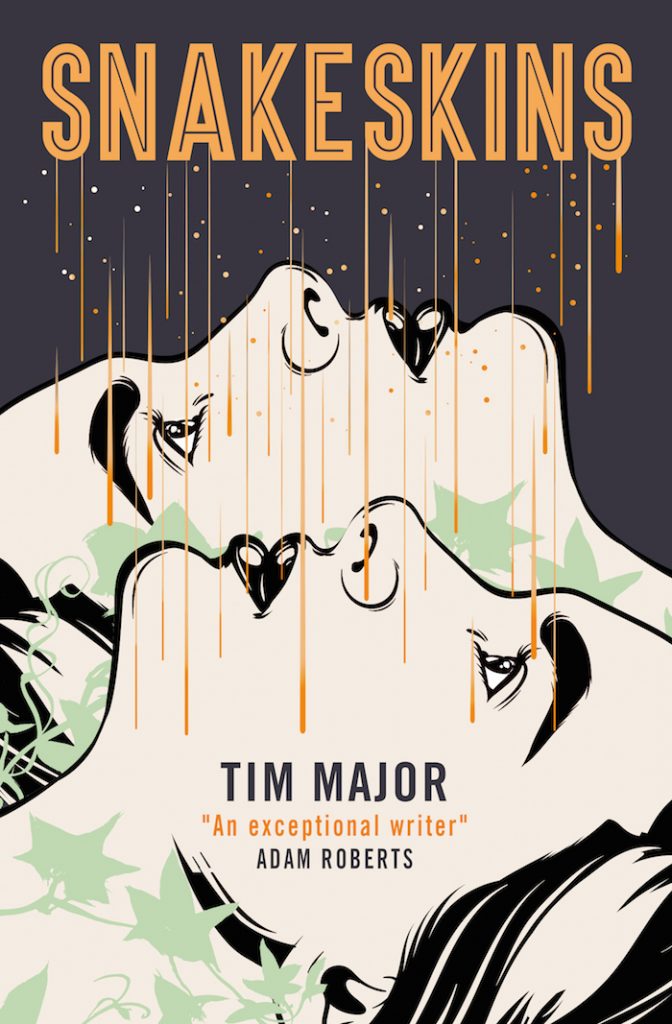
Snakeskins on Instagram Tea leaf 3: The Titan marketing team are clearly incredible at their jobs. There’s going to be a book blog tour, beginning the day before publication! And over the last few days SNAKESKINS has been popping up in the feeds of Instagram book bloggers. Each sighting of Julia Lloyd’s incredible cover gives my heart a little sharp prod.
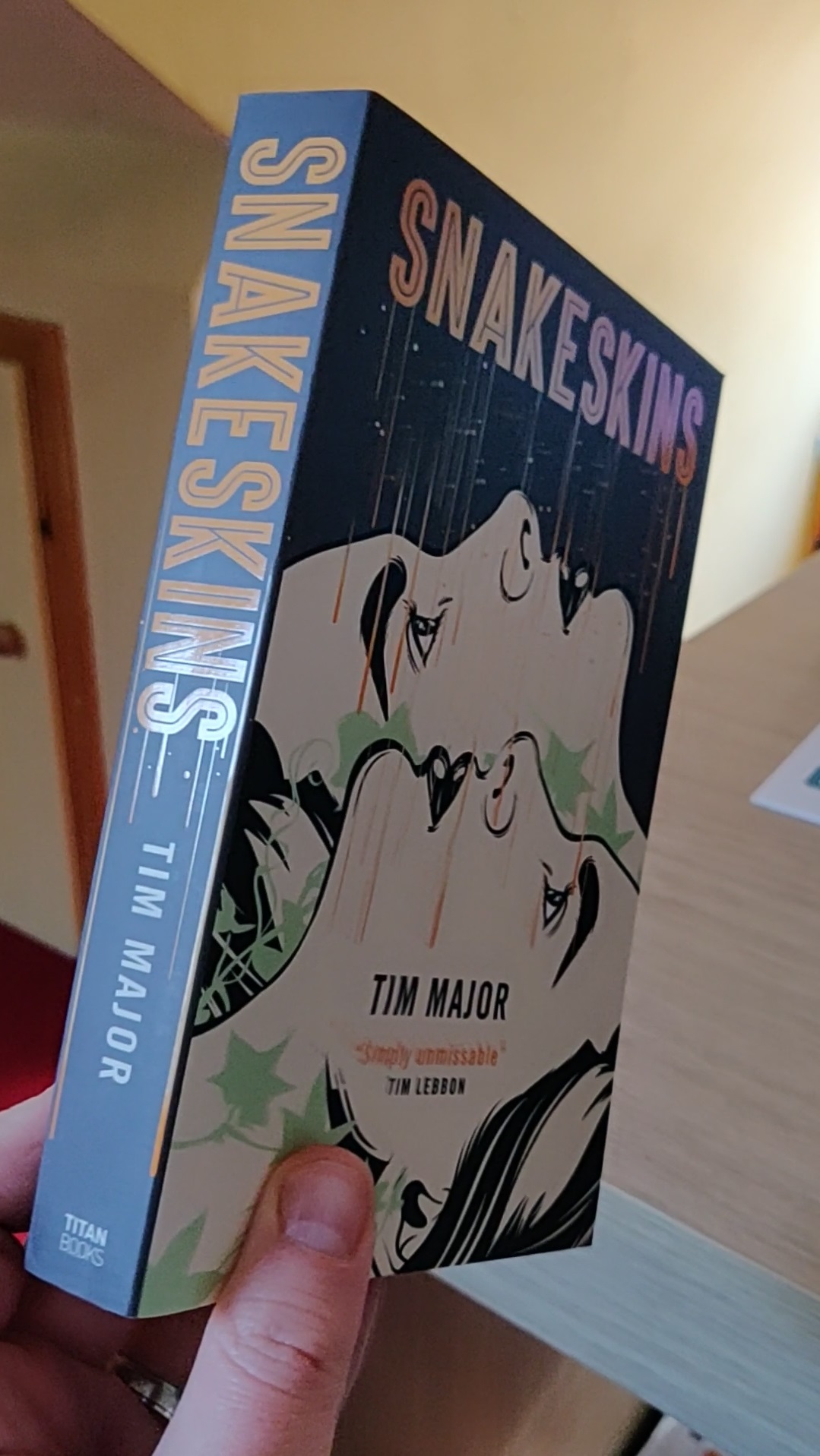
SnakeskinsTea leaf 4: THAT COVER. When I visited the Titan office I met Julia Lloyd, the seriously talented cover designer, and I swear I thanked her seven times. It was only back when I was shown the cover that I first allowed myself to believe that a bookshop customer might actually pick up my book and buy it, and they totally should because even the spine is awesome and it’ll look really good on their shelf. Also: a great use of spot varnish.

Tea leaf 5: THOSE BLURBS. I’ve bumped into a couple of the authors since they provided blurbs, and I looked deep into their eyes, Larry David-style, and still they swore that they liked the novel.

Tea leaf 6: There have been a couple of early reviews, and they’re good! Booklist called it a ‘taut and fast-paced sf thriller’ and Publishers Weekly used phrases like ‘delightfully tense’ and ‘uncanny tale’ and ‘strong voice’. There are currently three Goodreads reviews (book bloggers, I presume), with one of them giving it 5 stars. I’m prepared for the bad reviews, really I am, and in the past I’ve rarely disagreed with criticisms and not felt too badly stung. But good reviews are good.

Anyway. This time next week the book will be out in the world, and either it’ll be liked or it won’t, and either it’ll sell well or it won’t. I’ve already delivered my second novel to Titan (it’s unconnected to SNAKESKINS), I’ve more or less completed a novella and I’m planning a bigger, weirder novel. My only ambition thus far has been to be allowed to keep writing, and to spend more time writing, by making it a legitimate part of a cobbled-together career. I’m writing more than I ever have before, so I’m winning on that score.

It’s only right to acknowledge that I do have a fair amount at stake. SNAKESKINS isn’t my first novel but I feel wholehearted about it. If it crashes and burns, it’ll hurt.

So all of this is why I’m trying to pay full attention to this moment, when there’s only potential, when I feel able to introduce myself to people as a writer and feel halfway convinced that that might actually be my valid identity, when I’m swimming in goodwill, when at times I’m able to imagine that this whole thing might actually turn out well.

It seemed important to write this blog post to capture a snapshot of a particular moment. I promise to provide an update from the other side. Wish me luck?

* Clearly, I have no idea how tea leaves are supposed to be read.
Invaders From Beyond in SFX and Waterstones

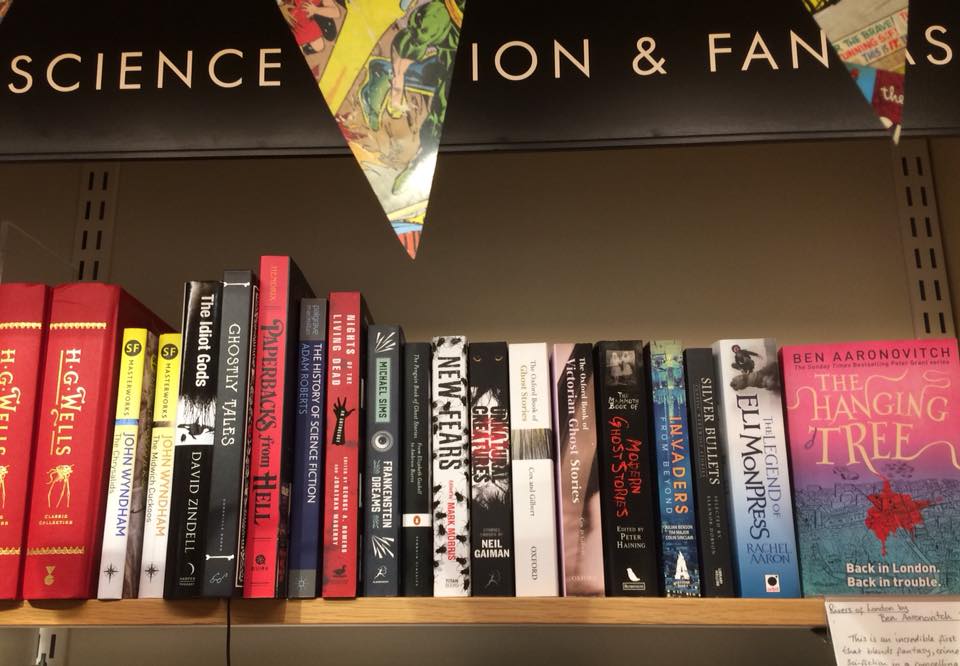
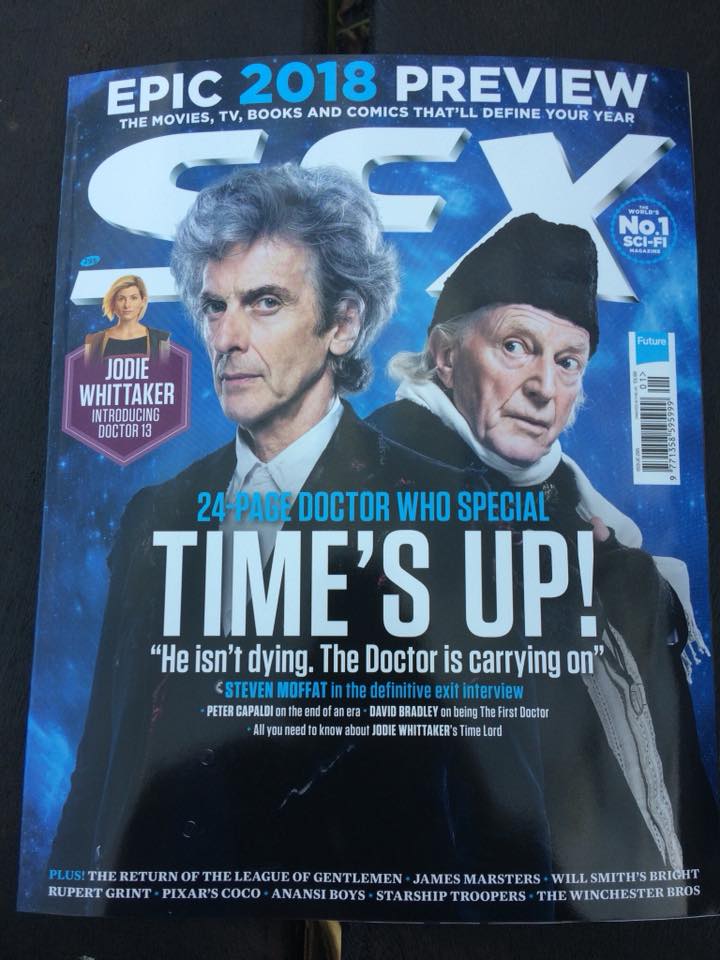
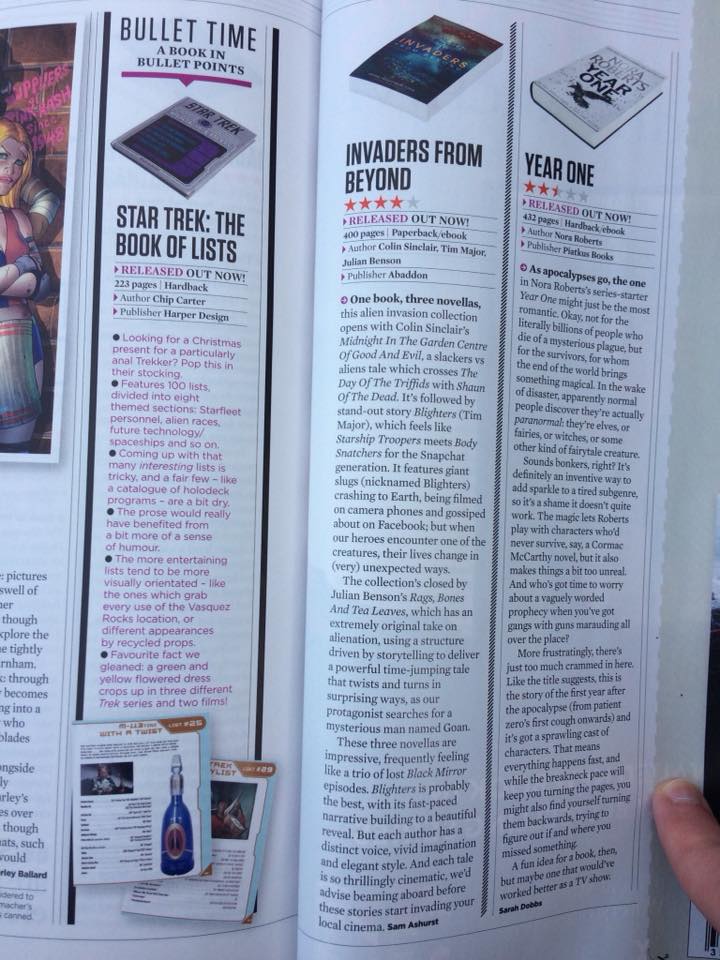
I just saw The Last Jedi, on my own, because childcare, and it was really good, which you all know. And then I went to WH Smiths to get a copy of SFX after having been tipped off about the review of INVADERS FROM BEYOND, which includes my novella, BLIGHTERS, and it really is a very positive review, and then I went to Waterstones and there was the book itself on the shelf a few down from Mark Morris’s terrific NEW FEARS anthology and Adam Roberts’s amazing HISTORY OF SCIENCE FICTION. And then I felt quite shaky about having an actual book in a proper bookshop, too shaky to even think about using my Christmas book tokens, but not so shaky I had to eat at Subway, so here I am on a park bench eating a chicken caesar wrap and another sandwich and I think I’m alright now. Happy New Year everyone!

Publication day: INVADERS FROM BEYOND

Publication day!

INVADERS FROM BEYOND is available *right now*. It’s a lovely, hefty omnibus that contains my novella, BLIGHTERS, alongside MIDNIGHT IN THE GARDEN CENTRE OF GOOD AND EVIL by Colin Sinclair and RAGS, BONES AND TEA LEAVES by Julian Benson.

Here’s the blurb for BLIGHTERS:

Them Blighters are everywhere.
They fell out of the sky last year, great horrible armour-plated slugs with razor-sharp fangs. But ugly as they are, they give the ultimate high to anyone nearby: a blissful, gleeful contentment that people are willing to kill for.
Not Becky Stone, though. All she wants is to drink beer, listen to her dad’s old vinyl, and get her life back to how it was before everything was all messed up.
Blighters? Frankly, she could do without them.

See here for guest posts and reviews of BLIGHTERS, and listen to a Spotify playlist to set the scene.

Or just head over to Amazon to buy it!

BLIGHTERS in print

I’m pleased to announce that my novella, BLIGHTERS, will be released in print by Abaddon in November, as part of an omnibus of three novellas under the umbrella title INVADERS FROM BEYOND.

BLIGHTERS is about giant slugs that have mysteriously landed around the world, which provide anybody nearby with an intense sense of calm and contentment. Becky Stone, a disaffected, snarky twenty-something from Kendal in Cumbria, gets drawn into the search for Blighters for all the wrong reasons. It’s also sort of a murder mystery.

You can find out more about the novella (including reviews, linked guest posts and a Spotify soundtrack) here, or you can just go ahead and preorder the book at Amazon.

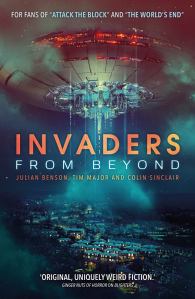
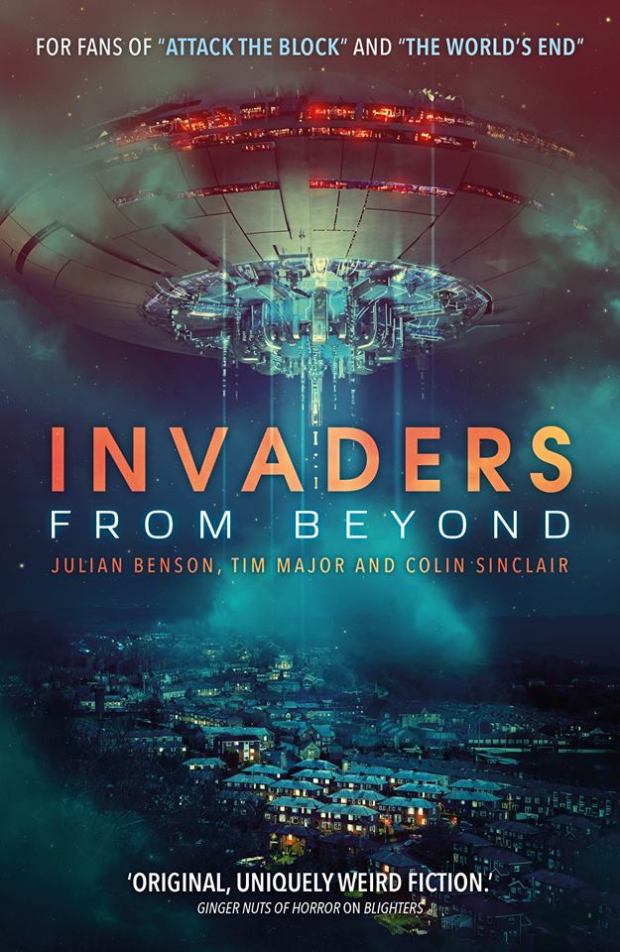
Finally, here’s the impressive cover – I’m particularly chuffed that the bottom quote is taken from the lovely Ginger Nuts of Horror review of BLIGHTERS from last year, when it was released as a standalone ebook.

Publication day! BLIGHTERS

Blighters cover thumbnailBLIGHTERS is out today! It’s available as an ebook from Amazon.co.uk and Amazon.com. (Cheap, too.)
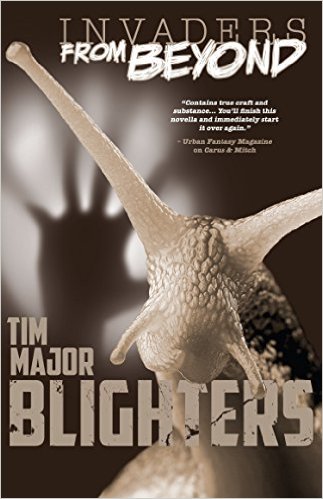
It’s a 30k-word novella about giant slugs that have mysteriously landed around the world, which provide anybody nearby with an intense sense of calm and contentment. It’s also sort of a murder mystery.

Over on the Abaddon website, you can read my blog post about the origins of the story and the huge influence of John Wyndham’s The Day of the Triffids, ‘cosy catastrophes’ in general (no surprise, given the title of my website!) and the idea of dormant threats.

Novella announcement: BLIGHTERS

I’m very pleased to announce the (very!) imminent arrival of BLIGHTERS. It’s a novella about a worldwide ‘invasion’ of alien slugs, from the viewpoint of a snarky woman living in Kendal, Cumbria. Here’s the blurb:

Them Blighters are everywhere.

They fell out of the sky last year, great horrible armour-plated slugs with razor-sharp fangs. But ugly as they are, they give the ultimate high to anyone nearby: a blissful, gleeful contentment that people are willing to kill for.

Not Becky Stone, though. All she wants is to drink beer, listen to her dad’s old vinyl, and get her life back to how it was before everything was all messed up.

Blighters? Frankly, she could do without them.

BLIGHTERS will be published by Abaddon as an ebook on 9th July, and it’ll likely be available in a printed anthology (with the other ‘Invaders From Beyond’ novellas) at some point later this year. Thanks to David Thomas Moore at Abaddon for picking up this story!

You can buy the ebook now from Amazon UK (£2.99) or Amazon USA ($3.99).

Blighters cover thumbnail

Favourite books read in 2014

I’m ashamed to say that I didn’t read much this year (23 books, with two still unfinished). Blame my one-year-old son and my recent tendency to fall asleep after reading two or three pages in bed. (Having said that, I may have read Where The Wild Things Are more than 100 times.)

StonerMy absolute favourite this year was Stoner by John Williams, a story so familiar and everyday that each of the protagonist’s disappointments felt like a friend injured. Couples by John Updike didn’t let me down and opens up for me a whole world of Updike novels not featuring Harry ‘Rabbit’ Angstrom. Concrete Island, though flawed in its second half, is my favourite of the three J G Ballard novels I read (the others being High-Rise and The Drowned World). The Machine by James Smythe was the only recently-released novel I read, but I thought it was fantastic. My favourite non-fiction book was Understanding Comics by Scott McCloud. And I wish there were more books as digestible and unmissable as Sum: Tales From The Afterlives by David Eagleman.

Favourite books read in 2013

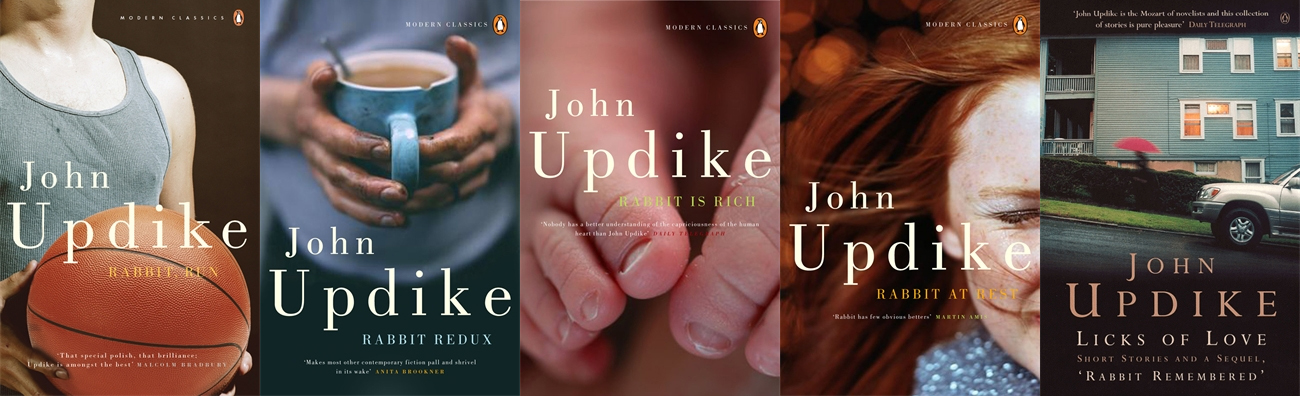
Rabbit

Harry ‘Rabbit’ Angstrom novels (John Updike, 1960-2000)

I found reading Rabbit, Run (1960) a revelation. Its third-person, present-tense point of view lends the story an immediacy, but that would be nothing without Updike’s immaculate observational powers. That vast sections of the novel feature nothing more dramatic than Harry driving around in the dark, yet are still gripping, speaks volumes. While I found the switch to Janice’s point of view the least satisfying element, stylistically, the narrative bombshell dropped still makes me choke.

Reading a novel that you fully connect with is wonderful. Discovering subsequently that you have the ability to follow the same characters over forty years at decade-long intervals… that’s a rare treat. Rabbit Redux (1971), Rabbit is Rich (1981), Rabbit at Rest (1990) and the novella Rabbit Remembered (2000) each cover subtly different aspects of changing American culture and, more importantly, of the psyche of the average American male. Taken as a complete work, they are as perfect a novel as I think I’m ever likely to read.


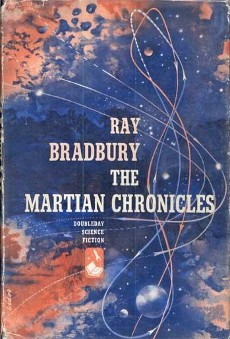
The-Martian-ChroniclesThe Martian Chronicles (Ray Bradbury, 1950)

This ‘half-cousin to a novel’ (Bradbury’s own words) comprises 28 loosely connected stories. Most of them had been published previously in the late Forties in various SF magazines. In collecting them here, Bradbury traces connecting lines between stories and recurring characters. The effect is a disorienting series of snapshots that nevertheless builds up a far more complete vision of the future than a more straightforward novel.

And what a vision! At times, Bradbury’s prose can be staggeringly beautiful. For example, from ‘The Locusts’: The rockets set the bony meadows afire, turned rock to lava, turned wood to charcoal, transmitted water to steam, made sand and silica into green glass which lay like shattered mirrors reflecting the invasion, all about. Bradbury’s Mars, modelled in the image of the memories of homesick astronauts, tells us far more about nostalgia for one’s childhood than about the Red Planet.

At heart, my favourite science fiction has little to do with science. I may have only read it for the first time this year, but The Martian Chronicles is my favourite science fiction novel.


Other EyesOther Days, Other Eyes (Bob Shaw, 1972)

A down-at-heel scientist accidentally creates glass that holds its image for years. Inventions, breakthroughs and problems ensue.

I read this in a couple of sittings, amazed at how much mileage Bob Shaw gets from a simple, hypothetical invention. The eventual use of ‘slow glass’ as a surveillance tool prefigures issues topical today: CCTV and Google’s Streetview and Glass projects. Throughout the novel, interspersed sections paint vignettes of different aspects of life that have been irrevocably changed by the invention of slow glass, many of them heartbreaking.

While the main plot may wrap up a little too quickly, and the love interest is under-developed, Shaw’s novel dwells on the human resonances of an important breakthrough. I’ll be searching out more of his novels in 2014.

Gaming and subcultures in Little Brother

MMORPG 2In Little Brother, Cory Doctorow demonstrates that social gaming communities can give rise to independent subcultures.

At the start of the novel, Marcus Yallow and his friends take part in an alternate reality game (ARG), Harajuku Fun Madness. The game involves clues hidden around major cities, forming a overlaid network over ordinary society. The ARG foreshadows events later in the book, where Marcus’s resistance network must remain hidden whilst still interacting with society.

Similarly, Marcus has experience of live action role-playing games (LARPs). Again, his experience involved playing the games in public, therefore producing a gaming layer over everyday life. Importantly, these LARPs involved dressing as vampires, linked to goth subcultures at the fringes of society. Marcus uses his knowledge of ARGs and LARPs to stage the politically-motivated gathering at the end of the novel.

With the internet monitored by the Department of Homeland Security (DHS), Marcus uses a modified Xbox console to communicate with his peers. Significantly, the hardware is designed for gaming, now adapted for political use. Large corporations are symbolically aligned with the DHS, as the teenagers use Microsoft’s hardware for unauthorised purposes.

The Xnet itself is similar to chatrooms and forums that surround internet gaming culture. The massively multiplayer online role-playing game (MMORPG), Clockwork Plunder, becomes less a game and more a legitimate social space for Xnetters to congregate, eventually becoming the home of the Xnet’s first press conference.

All of these examples are social activities that began as gaming experiences, adapted by Marcus and his friends for political means. Eventually, the situation is reversed: new game-like experiences arise from purely political activities. When Marcus meets the young teens Nate and Liam, he sees that they treat ‘jamming’ as an ARG, albeit one of which their victims are unaware.

In this way, Doctorow demonstrates that social subcultures and political movements can easily become merged, feeding into one another.

Submitted to Coursera as essay 10 for Fantasy and Science Fiction: The Human Mind, Our Modern World.
Coursera peer grade: Form 2 / Content 2

Image from Invertika / Wikimedia Commons

The Left Hand of Darkness and the ‘I’ of Ai

1eyeball004Ursula Le Guin’s choice of the name ‘Ai’ for the protagonist of The Left Hand of Darkness reveals a preoccupation with subjectivity, perception and the ‘other’.

The fact that ‘Ai’ and ‘eye’ are homophones is no coincidence. Genly Ai functions as the ‘eyes’ of the Ekumen, observing the Gethenians. Furthermore, although Ai states that ‘The story is not all mine, nor told by me alone’, he has selected all of the elements of the novel – it is ultimately experienced through his eyes.

Of course, ‘Ai’ also sounds like the word ‘I’. The novel is a personal tale of Ai’s life-altering experiences on Gethen. His own self-image changes during his travels with Estraven, to the extent that his Ekumen colleagues appear like ‘a troupe of great, strange animals’ in comparison to gender-neutral Gethenians.

Many Gethenians deny Genly Ai’s status. He encounters scepticism about the existence of worlds beyond Gethen and is labelled a liar and a ‘pervert’ due to his physiognomy. Ai’s name (‘I’) functions as a protest that he should be considered equal and capable of independent opinion.

However, no Gethenian makes this linguistic connection. When Estraven initially enquires about Ai’s name he perceives the sound differently. He hears in the answer ‘a cry of pain from a human throat across the night’, illustrating instead his own fear of the alien ‘other’.

The reason is not just that Gethen is isolated. Karhide and Orgoreyn are locked in a cold war, without contact, struggling for domination without war. In the same way that Gethen sees itself as alone in the galaxy, both realms refuse to cooperate with each other. As far as each is concerned, they alone are ‘I’, holding out against the ‘other’.

In short, Genly Ai’s name acknowledges that he is a reader surrogate, but also serves a narrative purpose, highlighting the conflict with characters that he encounters.

Submitted to Coursera as essay 09 for Fantasy and Science Fiction: The Human Mind, Our Modern World.
Coursera peer grade: Form 2 / Content 3

Nostalgia in The Martian Chronicles

640px-MarsSunsetCut

In The Martian Chronicles, we are told that the colonists arrive ‘with small dreams or big dreams or none at all’. However, throughout the stories Bradbury suggests that the motivating factors for many characters are nostalgia and the clarity of early memories.

In ‘The Third Expedition’, John Black is easily tricked by the Martian’s use of his own memories to populate the town. When he sees his parents, he ‘[runs] up the steps like a child to meet them’. His unquestioning acceptance may be difficult to understand at first, but throughout the stories Bradbury shows that each group of colonists yearns for reminders of its past. Although Anna LaFarge in ‘The Martian’ says of her dead son Tom, ‘He’s been dead so long now, we should try to forget him and everything on Earth’, she and her husband perpetuate the illusion that the Martian is Tom in order to cling on to their nostalgic memories. Similarly, in ‘The Long Years’, Hathaway eases his isolation by creating robot versions of his family.

Nostalgia also fuels other aspects of the characters’ psyches. Father Peregrine’s memories of fire balloons fuels his evangelical religious convictions. In ‘Way in the Middle of the Air’, Samuel Teece’s memories of night-time attacks on black people involve ‘laughing to himself, his heart racing like a ten-year-old’s’.

Many characters demonstrate that their ambitions extend only to a recreation of familiar Earth occupations. For example, the luggage-store owner states, ‘We came up here to get away from things’, yet his job selling luggage to people returning to Earth is regressive. Sam Parkhill, in ‘The Off Season’, has travelled to Mars only to set up a hot dog stand.

Bradbury shows us that the visitors to Mars, like European colonists of America, are not searching for a new world, but rather a safe place to recreate their own past.

Submitted to Coursera as essay 08 for Fantasy and Science Fiction: The Human Mind, Our Modern World.
Coursera peer grade: Form 2 / Content 2

Edgar Rice Burroughs and the Martian canals

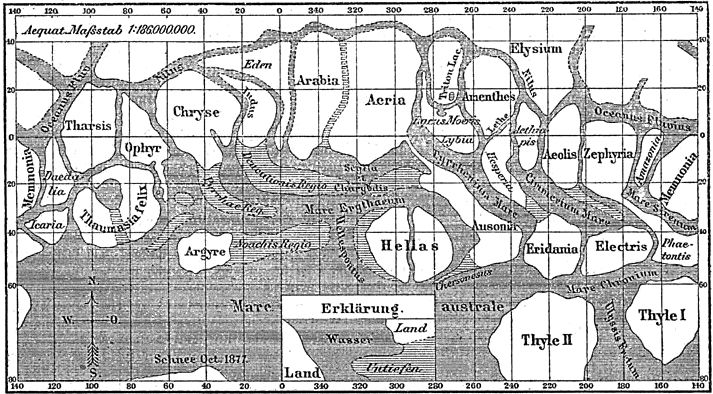
Martian canals

Edgar Rice Burroughs’s vision of Mars in A Princess of Mars [1] owes a debt to Percival Lowell’s astronomical observations, but itself propagated a specific image of the planet in the public consciousness.

In 1895, Percival Lowell published Mars [2], a summary of his observations of the planet. His descriptions of Martian ‘canals’ were influenced by the Italian astronomer Giovanni Schiaparelli’s references to ‘canali’ [3 – see image], more properly translated as ‘channels’ or ‘gullies’. The concept of Martian canals, in this and Lowell’s later works [4], fuelled many people’s belief that Mars was an inhabited, ruined world.

Burroughs, who was aware of Lowell’s theories, included ‘the famous Martian waterways, or canals, so-called by our earthly astronomers’ in his vision of Mars. The canals have primary importance in the novel, controlled by the red Martians and the source of conflict between the races of the planet. Extrapolating from Lowell’s vision of a ruined world, Burroughs introduced Atmosphere Plants, combating the environmental threat of extinction of life. In his descriptions of ‘arid and semi-arid land’, ‘ruined edifices of the ancient city’ and ‘partially ruined towers of ancient Thark’, Burroughs aligned John Carter’s observations to Lowell’s popularly-believed findings.

While Lowell did influence other writers at the time of the publication of his work, including H.G. Wells’s The War of the Worlds [5], it was Burrough’s Barsoom series that proved the greater catalyst for the public perception of Mars. The concept of Martian canals remains popular today, as well as being a staple in literary depictions of the planet. Canals appear in The Martian Chronicles [6] by Ray Bradbury, who ‘admired Burrough’s Martian tales because they were romantic and moved the blood as much as the mind’ [7]. Many writers who later became prominent science-fiction authors were similarly influenced at an early age by Burroughs’s vision of Mars.

References
[1] Edgar Rice Burroughs – A Princess of Mars (1917)
[2] Percival Lowell – Mars (1895)
[3] Historical map of planet Mars by Giovanni Schiaparelli (1888)
[4] Percival Lowell – Mars and Its Canals (1906)
[5] H.G. Wells – The War of the Worlds (1898)
[6] Ray Bradbury – The Martian Chronicles (1950)
[7] Aaron Parrett, Introduction: Edgar Rice Burroughs – The Martian Tales Trilogy, Barnes and Noble edition (2006)

Submitted to Coursera as essay 07 for Fantasy and Science Fiction: The Human Mind, Our Modern World.
Coursera peer grade: Form 2 / Content 2.5

Religion in H.G. Wells’s stories

Country of the BlindDoctor MoreauH.G. Wells’s story, The Country of the Blind, and novel, The Island of Doctor Moreau, offer a critique of the function of religion in society.

In The Country of the Blind, Nunez encounters an isolated community whose inhabitants are blind. His descriptions of the sense of sight, and objects he sees around him, are dismissed by the inhabitants. Their proof – that they believe to be incontrovertible – is a religious explanation. The religious origin story is centred around touch, including the belief that above them is a ‘cavern roof […] exquisitely smooth to the touch’.

Nunez’s facility of sight allows him to dispute the beliefs, but he is unable to convince the population of their error. Their conviction, and his love for Medina-saroté, almost leads him to agree to be blinded. The story ends with Nunez high in the mountains, looking at ‘the illimitable vastness of the sky’. His own understanding of the truth is preferable to accepting a false religious doctrine.

In The Island of Doctor Moreau, the creatures have adopted Moreau’s initial prohibitions as doctrine. ‘The Law’ is a series of rules, some humanist (‘Not to chase other Men’) and some for Moreau’s own purposes (‘Not to eat fish’ is arguably morally arbitrary, but Moreau wishes to avoid them becoming carnivorous).

Once again, our narrator, Prendick, is in a position to witness the folly of a new religious code. His outsider status allows him to see that the Law, and the deification of Moreau as creator (‘His is the Hand that makes’), is a method for the creatures to rationalise the world and their own existence.

In both tales, Wells suggests that organised religion can arise in any closed community to explain the world and humanity’s function within it. Furthermore, the narratives illustrate that these deeply-held convictions can be misleading and potentially dangerous without being balanced by reason and open-minded observation.

Submitted to Coursera as essay 06 for Fantasy and Science Fiction: The Human Mind, Our Modern World.
Coursera peer grade: Form 2 / Content 2

Art versus life in Hawthorne and Poe

Butterfly etchingPoe’s The Oval Portrait and Hawthorne’s The Artist of the Beautiful both illustrate the Romantic artist’s preoccupation of art in favour of everyday life, but reach very different conclusions.

In Poe’s story, a painter’s portrait of his wife consumes him. Initially the painting is a tribute to the real woman, ‘proof not less of the power of the painter than of his deep love for her’. Becoming ever more obsessed with the painting in favour of the woman, on completion he remarks ‘This is indeed Life itself!’, only to see that his wife has died.

There are many similarities between Poe’s story and Hawthorne’s The Artist of the Beautiful. Like Poe’s painter, Owen Warland dedicates himself to ‘putting spirit into machinery’, to the detriment of his profession and relationships. After shunning his would-be sweetheart Annie Hovenden, he loses touch with the outside world. When he has finally created the mechanism, Annie is married and has a child.

Whereas Poe’s story is a straightforward indictment of favouring art over life, Hawthorne’s story is more complex. Initially, butterflies symbolise to Warland a ‘beautiful idea’ that he aspires to mimic with machinery. When he succeeds, the mechanism is, to all intents and purposes, a butterfly. Whether or not he is its creator has become irrelevant: he now appreciates the majesty of the real butterfly. When the butterfly is crushed by Annie’s wilful child, Warland – who created the box showing an image of a boy in pursuit of a butterfly – understands that the search for the beautiful is itself the ‘beautiful idea’.

There is a striking difference between the stories. Poe suggests that favouring art over life results in the loss of corporeal treasures, leading to despair. While Hawthorne’s story supports this incompatibility of approaches, it suggests that pursuing an artistic ideal is a noble undertaking, with transcendent rewards.

Submitted to Coursera as essay 05 for Fantasy and Science Fiction: The Human Mind, Our Modern World.
Coursera peer grade: Form 2 / Content 2

Frankenstein and communication

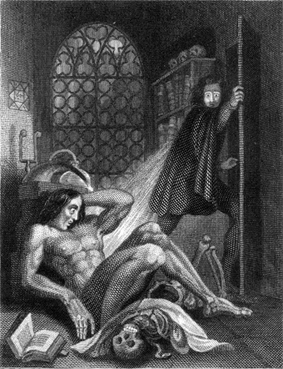
Frankenstein frontJohn Locke, in An Essay Concerning Human Understanding, describes the newly-formed mind as a tabula rasa or blank slate: ‘white paper, void of all characters, without any ideas’, and states that all knowledge derives from experience. In Frankenstein, Mary Shelley suggests that, as well as experience, the ability to communicate is crucial to understanding.

Frankenstein’s creature is initially rational but struggles to order his thoughts:A strange multiplicity of sensations seized me, and I saw, felt, heard, and smelt at the same time’. When he deduces that the sounds that the De Lacey family make are a method of communication, he describes speech as a ‘godlike science’. He masters language and reading, which he describes as a ‘wonder and delight’.

Later, the creature describes his main obstacle as the inability to communicate in the manner he would wish. He tells Victor Frankenstein, ‘I will revenge my injuries; if I cannot inspire love’. Failing to communicate with ordinary townfolk or with Frankenstein himself, the creature insists that he be provided with a female creature, the only possible companion with whom he may communicate without inspiring fear.

Shelley’s novel is defined by communication. Robert Walton’s letters to his sister form a framing device, but the tale within is transcribed from Victor Frankenstein’s own storytelling. In turn, parts of Frankenstein’s narrative are transcriptions of the creature’s own experiences. Therefore, the novel is dependent on placing trust on each storyteller in turn. Without each character’s ability to communicate fully and clearly, there could be no story.

The subtitle of the novel, ‘The Modern Prometheus’, refers to the theft of the Gods’ fire for human use. One could argue that the ‘fire’ in Frankenstein is not only the life that Frankenstein gives to his creature, but also the ability to communicate.

Submitted to Coursera as essay 04 for Fantasy and Science Fiction: The Human Mind, Our Modern World.
Coursera peer grade: Form 2 / Content 2.5

Images of weather in Dracula

Whitby abbey

In Dracula, images of weather associate Count Dracula with the forces of nature and build in intensity as he gains strength.

Initially, the unseasonal, ‘late-lying’ snow in Transylvania creates a muted effect like a ‘white blanket’ upon the land. Jonathan Harker’s coach ride is described as ‘a boat tossed on a stormy sea’, prefiguring the Demeter’s arrival in Whitby. Within the castle, Harker’s remarks on the ‘wind [that] breathes cold through the broken battlements and casements’. When Dracula interrupts the preying female vampires, Harker experiences the Count ‘as if lapped in a storm of fury’, linked to the forthcoming Whitby scene.

The day of the Demeter’s arrival in Whitby is ‘marked by myriad clouds of every sunset colour’ but with dark areas of ‘colossal silhouettes’. These images create a feverish backdrop to Dracula’s arrival. The description of the Demeter’s approach is filled with imagery linked to the Count’s threatening status: ‘dead calm, a sultry heat, and that prevailing intensity’. After appearing to the crew during a rainstorm, Dracula creates the ‘tempest’ which accompanies his arrival, producing an ‘onrushing mist’ which be later recalled during his physical transformation into a ‘pillar of cloud’.

Before Lucy is attacked by Dracula on the hilltop, the sky is clear with a bright full moon. As Mina sees Dracula, ‘heavy black, driving clouds’ obscure her view, mirroring Lucy’s swooning confusion.

At the end of the novel, snow at first reflects Dracula’s power over the elements (‘The wind came now in fierce bursts, and the snow was driven with fury’), but as the group of vampire-hunters  gain the upper hand, the snowfall recedes. Finally, the settled snow represents a return to the calmness of the beginning of the story and represents cleanliness and purity. Quincey, seeing that Mina’s scar has disappeared, says, ‘The snow is not more stainless than her forehead!’

Submitted to Coursera as essay 03 for Fantasy and Science Fiction: The Human Mind, Our Modern World.
Coursera peer grade: Form 3 / Content 2.5

Alice’s struggle for identity in Wonderland

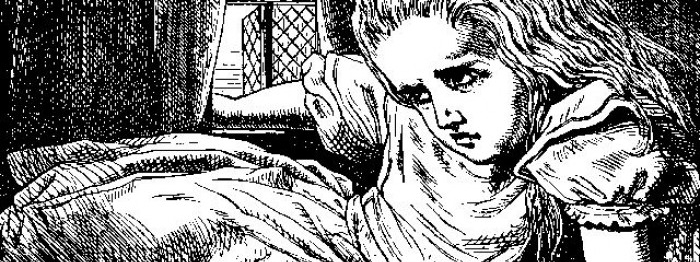
Alice big

Alice struggles to maintain her identity during her adventures in Wonderland, and it is only when she has fully established her identity that she is able to leave.

Soon after arriving in Wonderland, Alice speaks to herself (‘Come, there’s no use in crying like that!’). We learn that she is fond of ‘pretending to be two people’, demonstrating an already tenuous grip on her own identity.

Alice’s changes in size further challenge her self-image. She asks herself, ‘was I the same when I got up this morning?’ and goes on to question whether she might, in fact, be another child. Both the changing body-image and reliance on whether ‘I know all the things I used to know’ show that she values external indicators of self, rather than having a hold on her identity.

Other characters challenge Alice’s identity, and she struggles to establish herself. In response to the Caterpillar’s question she replies, ‘I—I hardly know, sir, just at present—at least I know who I WAS when I got up this morning’. As before, she considers changes to her personality and body to have been imposed upon her from external sources.

Similarly, when the White Rabbit mistakes her for his maid, Mary Ann, Alice nevertheless complies with his commands. The Pigeon insists that she is a serpent, using mistaken logical arguments to prove his case and Alice is forced to defend her identity.

The arc of the story follows Alice’s growing certainty of her identity. When she first meets the Queen of Hearts she is only tentatively sure of herself: ‘My name is Alice, so please your Majesty’. In the final courtroom scene Alice scoffs at the jurors who write down their names in case they forget them (‘Stupid things!’), identifies herself clearly (‘”Here!” cried Alice,’) and then leaves Wonderland with the realisation, ‘You’re nothing but a pack of cards!’.

Submitted to Coursera as essay 02 for Fantasy and Science Fiction: The Human Mind, Our Modern World.
Coursera peer grade: Form 2 / Content 2

Punishment of spouses in Grimms’ tales

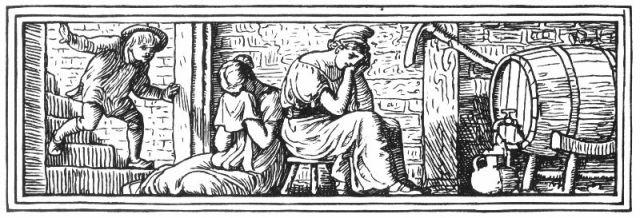
Clever Else

In Grimms’ tales, the perceived incompetence of a spouse is punished with a loss of identity and abandonment. This recurring theme indicates the concerns of a contemporary readership.

In ‘Clever Else’ and ‘Fred and Kate’, the husband’s worldview predominates. Both stories begin with the expectations of the new husband. Hans is assured that Else ‘does not want for brains’ but insists that she must also be ‘careful’; Fred entrusts Kate with specific tasks in readiness for his return.

The perceived failing of both wives is to approach life imaginatively rather than practically. Else’s forebodings about potential injuries to a hypothetical child at first impress others. Kate’s misfortunes are also a result of foresight, as she tries to perform multiple tasks at once.

Both stories end in the same way: after sleeping in a field the wild imagination of both Else and Kate lead each to mistrust her own identity. Hans and Fred each insist that their wife is already at home and so the true wives are abandoned, having lost their identities.

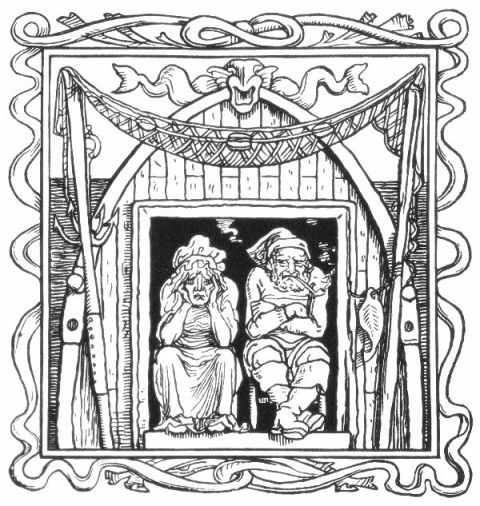
Grimm FishermanSimilarly, ‘The Fisherman and his Wife’ depicts a wife whose ambition opposes her husband’s practicality. Her granted wishes come with new identities of king, emperor and pope. These identities are ultimately stripped from her as punishment for imaginative greed, and she is returned to her original identity.

The stories suggest differing moral lessons to apply to different contemporary readers. While women are expected to aspire to be supportive wives, contemporary male readers would recognise a perceived need to reward a wife’s practicality and to prevent imaginative approaches that may lead to disaster. The stripping of identity and the abandonment of both Else and Kate may be seen as male wish-fulfilment fantasies, punishing wayward spouses. While the fisherman’s wife is not physically abandoned, the husband’s expression in Walter Crane’s tailpiece illustration makes clear that she has been shunned.

Submitted to Coursera as essay 01 for Fantasy and Science Fiction: The Human Mind, Our Modern World.
Coursera peer grade: Form 2 / Content 2

The things I most enjoyed in 2012

End-of-year lists are always self-indulgent, but this is more self-indulgent still. I wanted to capture all the things that were new to me this year that summed up what I most enjoyed in 2012. I realise that this is only really of interest to me.

Albums

Feelies

Transverse (Carter Tutti Void, 2012) was the single album of 2012 that stands alongside my favourites from other years. I missed New History Warfare Vol 2: Judges (Colin Stetson, 2011) and An Empty Bliss Beyond this World (The Caretaker, 2011) in 2011 but they became firm favourites this year – Colin Stetson for Tube journeys and The Caretaker as a background to writing. Biokinetics (Porter Ricks, 1996) became my soundtrack on countless rainy train journeys, a heartbeat layered on top of the hum of travel. World of Echo (Arthur Russell, 2001) gradually became less an album heard than an album felt. My go-to album for relaxation this year was the reissued UFO (Jim Sullivan, 1969). And Crazy Rhythms (The Feelies, 1980) and Midnight Cleaners (The Cleaners From Venus, 1982) were the two albums that made me upset at time wasted before having heard about them – my favourite pop albums of 2012.

Live music

Boredoms

The American Contemporary Music Ensemble’s performance of Jesus’ Blood Never Failed Me Yet (Gavin Bryars) at All Tomorrow’s Parties was one of the most perfect things I’ve ever experienced. Boredoms at the same ATP festival was one of the bravest and maddest, featuring five drummers and a tree of guitar necks hit with a stick.

Films

Shout

I loved working through Les Vampires (Louis Feuillade, 1915), influential in technical respects but with its own weirdly dreamy qualities. The imagery has stayed in my mind longer than any other film. The Shout (Jerzy Skolimowski, 1978) was my hidden treasure of 2012, perfectly tailored to everything I like about films, and a great companion piece to Berberian Sound Studio (Peter Strickland, 2012). The latter was perhaps not the best-crafted film released in 2012 (surely The Master), but the one I responded to the most enthusiastically. I thought my high expectations for F for Fake (Orson Welles, 1973) would make it a disappointment, but it was totally surprising despite the fact I expected surprises. The same applies to That Obscure Object of Desire (Luis Bunuel, 1977), especially the first 15 minutes or so, with a remarkable story structure. The Silence (Ingmar Bergman, 1963) was an epiphany, the first Bergman film that I’ve had an emotional reaction towards and predating David Lynch by 20 years. The Bespoke Overcoat (Jack Clayton, 1956) and Certified Copy (Abbas Kiarostami, 1990) featured the most sympathetic performances, within beautifully humanist films. And Vampyr (Carl Theodor Dreyer, 1932), performed with a live soundtrack by Steven Severin, was the trippiest film experience, with Rose and I half-awake with woozy colds.


Books

LovedOne

I’m pickier with books than films, perhaps due to time investment. I’ve liked and/or appreciated lots of books this year. Conrad’s Heart of Darkness, Collins’s The Moonstone and Goethe’s The Sorrows of Young Werther come close, but the only book that made me bubble over with enthusiasm was The Loved One (Evelyn Waugh, 1948), a perfect and perfectly concise novel.

TV

Carlos

Carlos (Olivier Assayas, 2010) was the most compelling thing I saw on TV this year, making a case for longer treatments of complex events than films can offer. It also had the best soundtrack. The Olympics opening ceremony (Danny Boyle, 2012) was the broadcast that made me happiest, possibly due to watching it with a hangover and letting the spectacle wash over me. Sherlock: A Scandal in Belgravia (2012) felt like the best kind of ‘event’ TV fiction, and among the best scripts that Steven Moffat has yet produced. Black Mirror: The Entire History of You (2012) was the TV episode most tailored to my interests – fingers crossed for more Twilight Zone for the C21st. Breaking Bad Season 4-5a (2011-2012) was the most moreish TV experience once the show broadened out in scale, having earned our sympathy for the characters. The Thick of It Season 4 Episode 7 (2012) was the most surprising TV episode, using comedy characters to hint at something huge and dreadful just off-screen.


Theatre

SergeyBoris

The puppet show Boris and Sergey’s Vaudevillian Adventure (Flabbergast Theatre) at the Edinburgh Fringe made me feel like a child and made my face hurt from smiling and laughing.

Art

Saville

It’s rare for visual arts to get me in the guts. The Jenny Saville retrospective at Modern Art Oxford did just that. And the Speed of Light night-hiking/neon joggers/sound art performance at the Edinburgh International Festival was an event that was at once hilarious and baffling.

The Sorrows of Young Werther (and Alan)


I’ve just finished reading Johann Wolfgang von Goethe’s 1774 blockbuster hit, ‘The Sorrows of Young Werther’. It’s a far more slight and breezy novel than I’d expected and is the first novel in a while that I’ve finished in just a couple of sessions. The bulk of the book is structured as letters written by Werther, mainly to his friend Wilhelm, whose replies we aren’t shown. The final third features an ‘editor’ who steps in to provide other characters’ viewpoints. At a glance it’s (SPOILERS!) a tragedy about a young man who falls in love with a girl, Lotte, who is unavailable who doesn’t return his love. He pines for her, then he kills himself.

But here’s the thing. I read the first two-thirds of the book, until the ‘editor’ steps in, as a broad comedy. I think if I had taken Werther’s account at face value, I would have rejected him and his self-indulgent whinings entirely. I was genuinely surprised when the editor’s comments seemed to validate the majority of Werther’s views. But treating Werther as an unreliable narrator made the book a huge amount of fun for me.

For instance, take the September 10 entry. Lotte says,

“Whenever I walk by moonlight, it brings to my remembrance all my beloved and departed friends… but shall we know one another again, what do you think?”

Werther appears to misunderstand her, thinking she’s referring to the two of them meeting after death. It’s a classic misunderstanding and I laughed out loud.

I’ve read elsewhere that the instances where Werther’s grammar breaks down demonstrate his grief. But read this passage:

“And what grieves me, is, that Albert does not seem delighted as he—hoped to be—as I—thought to be—if—I am not fond of dashes, but it is the only way of expressing myself here—and I think I make myself sufficiently clear.”

To me, it illustrated Werther’s pomposity and his tendency to over-egg sentences with extra clauses and tangents. It seems as though he’s lost his way until he even becomes distracted by his own punctuation, and the final ‘I think I make myself sufficiently clear’ is laughable.

Werther is utterly melodramatic – admittedly, by modern standards. His adoration of Lotte reminded me a great deal of Adrian Mole’s over-the-top fixation on Pandora Braithwaite. In fact, after the initial meeting at the dance, Werther often goes for days without describing the woman he says he adores, and she becomes almost invisible in the middle section of the novel. Instead, Werther concentrates solely on her effect on himself. He seems absorbed with his capacity for love and pain.

I’ve just finished reading the fictional autobiography of Alan Partridge (‘I, Partridge: We Need to Talk About Alan’) and the levels of egomania are pretty comparable, as are the paranoiac revisions and qualifications. It’s a terrific companion piece to ‘The Sorrows of Young Werther’. Werther’s continual closing comments about his own suffering seems as needy and self-serving as Partridge’s repeated closing statement, “Needless to say, I had the last laugh”.

I understand that I was probably reading the novel ‘wrongly’ and had mistaken a serious 18th century portrayal as a modern pastiche. But I wouldn’t have it any other way – my enjoyment was largely based on the fun I had trying to glimpse the truth beyond Werther’s rantings. This article gives an interesting account of some of the parody versions of ‘The Sorrows of Young Werther’ after its blockbuster success (plus Werther merchandising and clothing!). But as far as I’m concerned, the original was already a side-splitter.

Reading list 2011

2011 is, in terms of reading, off to a good start. I’m two novels in, just over one week into the year. Here’s a list of the books that I’ll try to make sure I read in 2011. I think this list of 13 ‘must-reads’ leaves plenty of room for impulse purchases, new publications and recommendations.

Candide (Voltaire, 1759)
After a conversation about humanism, my dad insisted that I read this. What sealed the deal was finding and buying the beautiful new Penguin edition with a cover designed by Chris Ware – one of the most enticing books I’ve seen in a long time.

Freedom (Jonathan Franzen, 2010)
I’ve been in near-feverish anticipation of this book since The Corrections – and the reviews upon publication last year were stellar. And yet, I was still a little too stingy to shell out for the hardback, so this will have to wait until the paperback comes out in April.

Blood Meridian (Cormac McCarthy, 1985)
I read and loved The Road, and this is shorter than committing to McCarthy’s entire Border trilogy. Everyone I know who’s read this recommends it, and everyone else seems intent on reading it.

The City and the City (China Mieville, 2009)
This has been on my shelf for six months and is one of the books I’m most looking forward to reading. I normally try not to read book blurbs too closely, so while my expectations involve detectives and parallel worlds, I still don’t know quite what to expect.

Doctor Faustus (Thomas Mann, 1947)
Taissa and I have made a pact to run a two-person book club in which we’ll read weighty novels that we wouldn’t otherwise get around to reading. This was her suggestion, but I’ve had my eye on it for a decade or so. I’ll probably read this one in parallel with easier, shorter novels.

How I Escaped My Certain Fate (Stewart Lee, 2010)
I’ll certainly finish this one, as I’ve already started it. Sure, it’s ‘only’ a comedy memoir, but Lee’s deconstruction of his work (mainly in the form of lengthy footnotes) is considered and serious, while the transcripts of his stand-up shows are typically genius.

Flow (Mihaly Csikszentmihalyi, 1990)
I meant to read this last year. Csikszentmihalyi’s ‘flow’ principle (people are most effective when they’re tackling tasks involving a balance between familiarity and challenge)  is often quoted with respect to videogame design. I imagine it’s appropriate reading for my day job which involves, among other things, commissioning educational interactive resources.

Lucky Jim (Kingsley Amis, 1954)
I know not a thing about this novel but Kingsley Amis seems like an author I should have read. The edition that my dad lent to me has a funny caricatured cover, so appears accessible.

Our Town (Thornton Wilder, 1938)
I read and was blown away by Wilder’s The Bridge of San Luis Rey at the end of 2010. I then followed it up with Timequake, in which, coincidentally, Kurt Vonnegut waxes lyrical about a performance of Our Town. Must find and read a copy of this soon.

Nights at the Circus (Angela Carter, 1984)
Carter’s The Magic Toyshop was great, but felt like a young novelist flexing her muscles. Nights at the Circus is the novel I’d meant to read first, and the one that people at my book club most recommended.

A Universal History of Infamy (Jorge Luis Borges, 1935)
I think this is the one work by Borges that I’ve not yet read, and I found a copy in Wigtown just before new year. I’ll probably put off reading this as long as I’m able, because this will be an indulgent treat.

Disgrace (J M Coetzee, 1999)
Recommended by Chris as the best novel he read in 2010. I know almost nothing about the book, but that recommendation is good enough for me.

Human Diastrophism (Gilbert Hernandez, collected 2007)
I read the first collection of Palomar comics, Heartbreak Soup, a few days ago. It was a fantastic experience (reviewed on Goodreads here), and this follow-up collection is the graphic novel I’m most looking forward to reading this year.