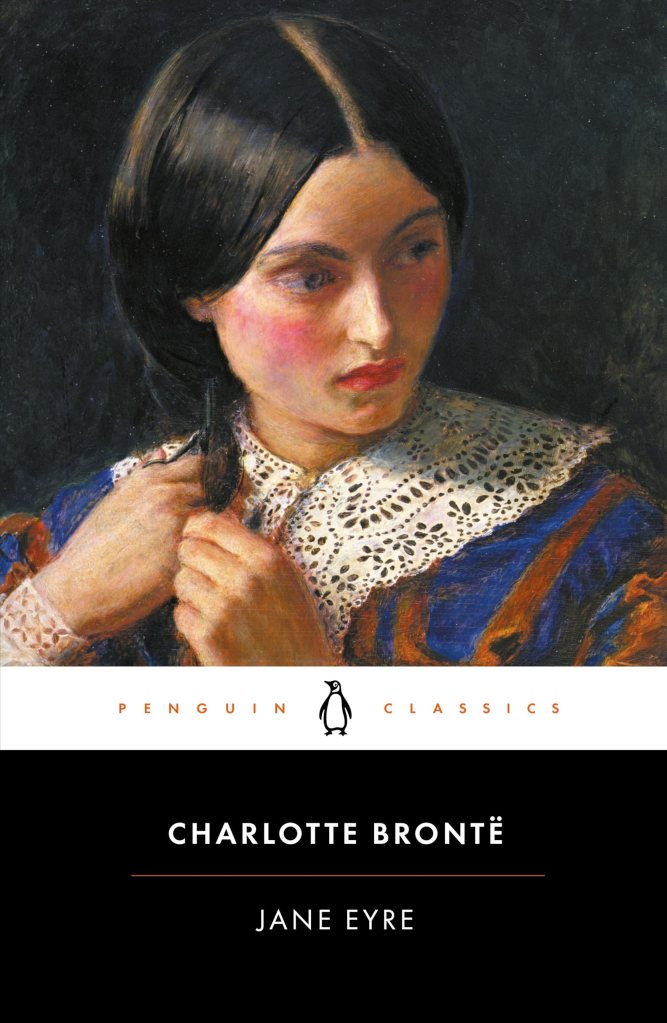
This year I got around to reading a number of books I’d always meant to read, and which, frankly, made me feel embarrassed about not having got around to reading. By far the best of these was Jane Eyre by Charlotte Brontë (1847), which had the capacity to surprise even though I knew the plot fairly well, and which I found totally absorbing throughout.
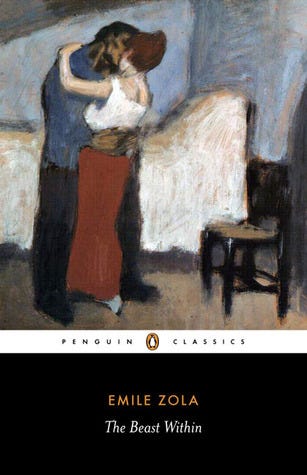
A more surprising favourite was The Beast Within (La Bête Humaine) by Emile Zola (1890). I’d already read and loved Zola’s Thérèse Raquin and assumed his other novels couldn’t possibly reach the bleak heights of that novel, but this one absolutely does, with grim setpieces that will stick in my mind. I’ll be searching out more Zola in 2026, I’m sure.
I approached the 1999 Seamus Heaney translation of Beowulf with caution, as I tend to struggle with verse, but I read it in a single sitting and was astounded at the impact of the poem, and the outright horror imagery.
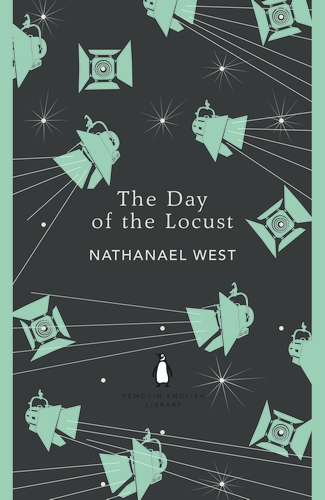
My final five-star novel I read this year was The Day of the Locust by Nathanael West (1939), a dour but funny tale of an artist lost in Hollywood.
Moby-Dick by Herman Melville (1851) was as excellent as I’d been told – I’ll confess I skim-read some of the whaling sequences, but I lingered over everything involving the characters themselves. Similarly, I found lots of dark humour in Hunger by Knut Hamsun (1890), though it certainly benefits from its short word count as the bleaker elements could overwhelm the reader. I adored Picnic at Hanging Rock by Joan Lindsay (1967), which is as satisfyingly weird as the film adaptation, and performs some really interesting tricks with viewpoint.
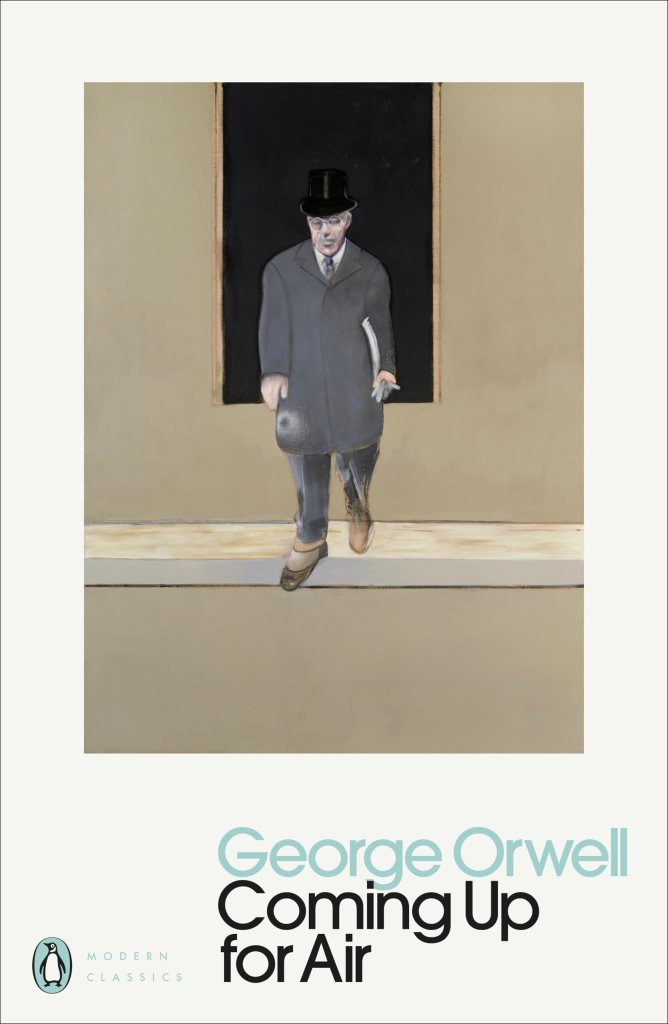
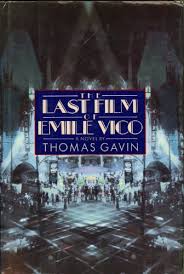
Books I admired rather than loved included time-travelling slavery drama Kindred by Octavia E. Butler (1979), down-to-earth Coming Up For Air by George Orwell (1939), pleasingly melodramatic Adolphe by Benjamin Constant (1816), wholehearted family epic Fathers and Sons by Ivan Turgenev (1862), frequently gripping A Tale of Two Cities by Charles Dickens (1859), Nabokovian thriller The Debt to Pleasure by John Lanchester (1996), beautifully snide Miss Lonelyhearts by Nathanael West (1933), viewpoint-undermining The Last Film of Emile Vico by Thomas Gavin (1986) and meandering but witty Lost for Words by Edward St Aubyn (2014).
I didn’t read much recent fiction this year, but my favourite was The Proof of My Innocence by Jonathan Coe (2024), which has the expected well-drawn characters and social commentary, but also the addition of a metafictional mystery plot that involves an outright cheat and yet remains deeply satisfying, which is an achievement no author can reasonably expect to pull off.
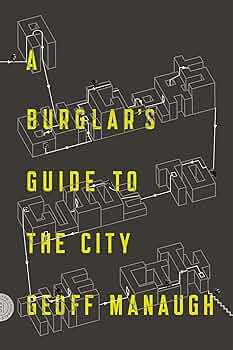
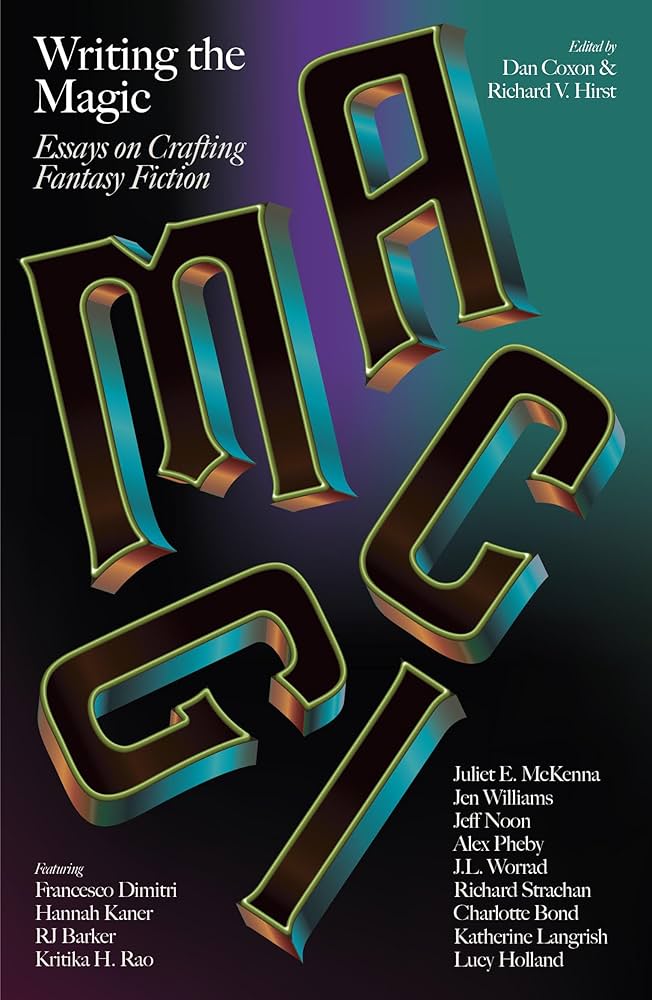
My favourite non-fiction book this year was crime-meets-architecture analysis A Burglar’s Guide to the City by Geoff Manaugh (2016). I also enjoyed The Artist’s Voice, a series of interviews with artists edited by Katharine Kuh (1962) and writing guides Steering the Craft by Ursula K. Le Guin (2015) and Writing the Magic, edited by Dan Coxon (2025).
I’m delighted to find my collection GREAT ROBOTS OF HISTORY reviewed in the Financial Times today! Thanks so much to James Lovegrove for his very generous assessment.
Other very positive reviews of the collection have appeared in recent days, too.
Ginger Nuts of Horror concluded: “Whether fairytale, sci-fi, or Dennis Potter-shaded drama, there’s a lot of innovation here and the one overriding quality to Major’s prose is surely that it’s far from… robotic (ha!).”
Runalong the Shelves said: “This is an excellent collection playing with the concept of the robot and his long history in myth and science fiction with a lot to think about as to how they reflect us. Inventive, funny, scary and always intelligent this is a fascinating book to dive into. Highly recommended!”
Of all the recently published books I read this year, Six Lives by Lavie Tidhar (2024) was the one I relished the most. Each of the six parts follows, as you’d expect, a single life (all members of a convoluted family tree), and there are pleasing links between the stories that reward attention. But it’s the style that most impresses – not only does each story move forward in time, which affects the tone, but each episode is essentially a different genre, including an Agatha Christie-style murder mystery and a Cold War espionage tale. The prolific Tidhar has form in this sort of genre-hopping novel, and I also enjoyed his 2023 novel The Circumference of the World, which concerns SF genre history and also contains a hard-SF sequence in its own right.
I was deeply impressed by Whalefall by Daniel Kraus (2023), a novel that sounds like either a Moby Dick ripoff or high-concept pulp (a man goes diving, finds himself trapped inside a whale, spends an entire novel trying to escape) but is actually thoughtful and considered, concerning the character’s troubled relationship with his father. There’s similar paternal territory covered in The Italian Teacher by Tom Rachman (2018), a wonderful novel about an artist operating in the shadow of his much more celebrated father. Far more straightforward than Six Lives and Whalefall, this is probably my most satisfying read this year in terms of recent releases.
Two structurally experimental novels I enjoyed were Cuddy by Benjamin Myers (2023), which treads a line between his raw, ugly fiction like The Gallows Pole and his gentler contemporary fiction, and Venomous Lumpsucker by Ned Beauman (2022), which is decidedly cold but thought-provoking and surprisingly entertaining in its rambling discourse on environmental issues.
My biggest belated discovery was the Patrick Melrose sequence by Edward St. Aubyn: Bad News (1992), Some Hope (1994), Mother‘s Milk (2005), Never Mind (1992) and At Last (2011), which I rationed out over several months, not wanting the series to end. The first novel almost threw me off, as I’m no fan of tales of drug binges, but by the second novel Patrick has found a more even keel and his acidity is directed outwards. Sentence by sentence, the books are a joy to read, and the series is now up there with John Updike’s Rabbit sequence in my estimation.
I rarely get into series, but I did read another this year – the first Mortal Engines sequence by Philip Reeve: Mortal Engines (2001), Predator’s Gold (2003), Infernal Devices (2005) and A Darkling Plain (2006). I’d initially begun reading them as a sort of book-club read with my eldest son, but I was soon hooked. The shifts between novels and willingness to stray away from the initial protagonist are as satisfying as in Philip Pullman’s His Dark Materials series – which I’ve also been rereading to my son this year, so I’ve absorbed a good deal of excellent YA fiction.
I finally read The Glass Cell by Patricia Highsmith (1964), which was more dour than most of her thrillers, but relentlessly compelling. Having also managed a reread of The Talented Mr Ripley before the Ripley TV series began, my opinion of Highsmith remains sky-high.
Another genre novel that surpasses its pulpy context is Magic by William Goldman (1976), recommended to me by a writer friend (I wish I could remember who). The narrative trickery is great fun, but it was the close descriptions of magic tricks and the surprisingly detailed insights into the protagonist’s thoughts and the caustic humour that most impressed me.
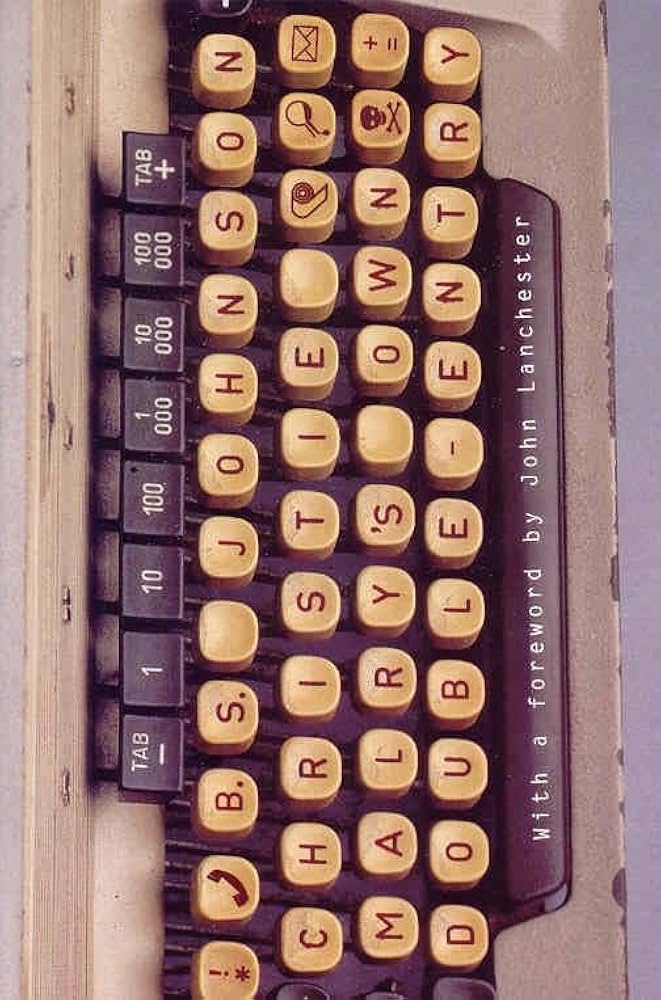
The novel I raved about most often this year, and which made me curse myself at not having read it sooner, was Christie Malry’s Own Double-Entry by B.S. Johnson (1973). It’s bleak and snide and yet incredible fun throughout, with Pythonesque humour and a disregard for the rules of novel-writing. I love experimental fiction, but I haven’t read much recently, and this playful novel is likely to shift my 2025 reading tastes in that direction.
The short-story collections I read this year were all by friends – incredibly talented friends, I should add. Treatises on Dust by Timothy J. Jarvis (2023) takes its weirdness and its place within the weird-fiction canon seriously, and the tales-within-tales become ever more labyrinthine – like Nabokov’s short fiction, these are stories that revel in being fiction, so it’s no surprise that the collection is proving so popular with fellow writers. I suspect it will become a classic in the future.
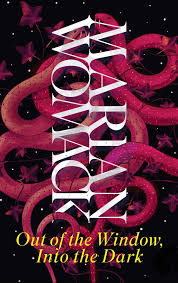
More contemporary weirdness can be found in Hunting by the River by Daniel Carpenter (2024), which gazes into the dark corners of urban spaces and finds little that’s reassuring there, Umbilical by Teika Marija Smits (2023), which twists mythology into modern contexts to examine parental concerns, and Out of the Window, Into the Dark by Marian Womack (2024), which contains stories that (as I wrote in my blurb) evoke the wild worldbuilding of Ursula Le Guin and the unsettling domesticity of Shirley Jackson, with a meticulousness that’s highlighted by a Borgesian fascination with libraries. Commercial Book by Andrew Hook (2024) contains stories each of exactly 1000 words, each paired with one of the songs on Commercial Album by The Residents. While no familiarity with the album is required – the affecting stories which are immersed in dreams and steeped in film and music certainly stand alone – listening to each song before or after reading the story reveals even greater depths.
Version 1.0.0Version 1.0.0
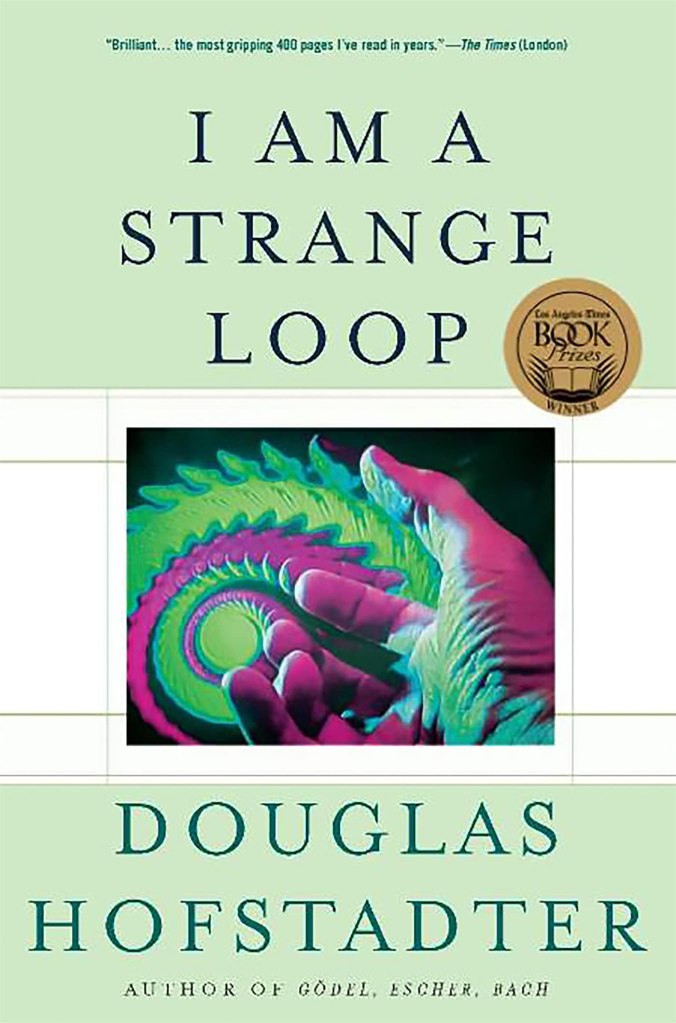
Most of the non-fiction I read in 2024 related to writing projects, but I put time aside for I Am a Strange Loop by Douglas Hofstadter (2007), a discourse on consciousness and self-reflexivity which will certainly end up inspiring more of my own stories and novels to come. I loved Ghosts of My Life: Writings on Depression, Hauntology and Lost Futures by Mark Fisher (2014), especially his analysis of albums by Burial. While I contributed an article to Writing the Murder: Essays on Crafting Crime Fiction, edited by Dan Coxon and Richard V. Hirst (2024), I thoroughly enjoyed the other contributors’ pieces, particular Tom Mead’s assessment of the locked-room genre, and Carole Johnstone’s very honest article about the pragmatism involved in selecting a writing project.
I’m so delighted with this beautiful cover for my upcoming novel JEKYLL & HYDE: CONSULTING DETECTIVES!
Dr Jekyll and his monstrous alter-ego join forces with his ex-fiancée to solve a series of disappearances across Victorian London in this thrilling mystery.
“Relentlessly engaging, entertaining, and terrific fun” – Tom Mead
Published 3 Sept 2024 by Titan Books Cover design by Natasha MacKenzie Edited by Daniel Carpenter
I made five other sales of short stories that will be published in 2024.
Next year I’ll be focusing on the publication of Jekyll & Hyde: Consulting Detectives in September, from Titan Books. I’m very excited about it! More details soon.
Of those published this year, the novel that perfectly matched my tastes was Biography of X by Catherine Lacey. It’s a fictitious biography of an artist skilled in creating diverse stage (and off-stage) personas, and as it’s written by her wife it’s a conceit that allows for insights into both characters whilst struggling to remain objective. Beyond that, it mixes Pale Fire-esque metafiction and alternate history politics reminiscent of The Handmaid’s Tale.
Two other recent novels covered similar metafictional territory, but with very different results. Conquest by Nina Allan (2023) is another sort-of fictional biography and sort-of private investigation, and incorporates non-fiction articles and SF short stories to great effect. I love Nina Allan’s short fiction, and this fragmented novel harnesses her skills wonderfully.
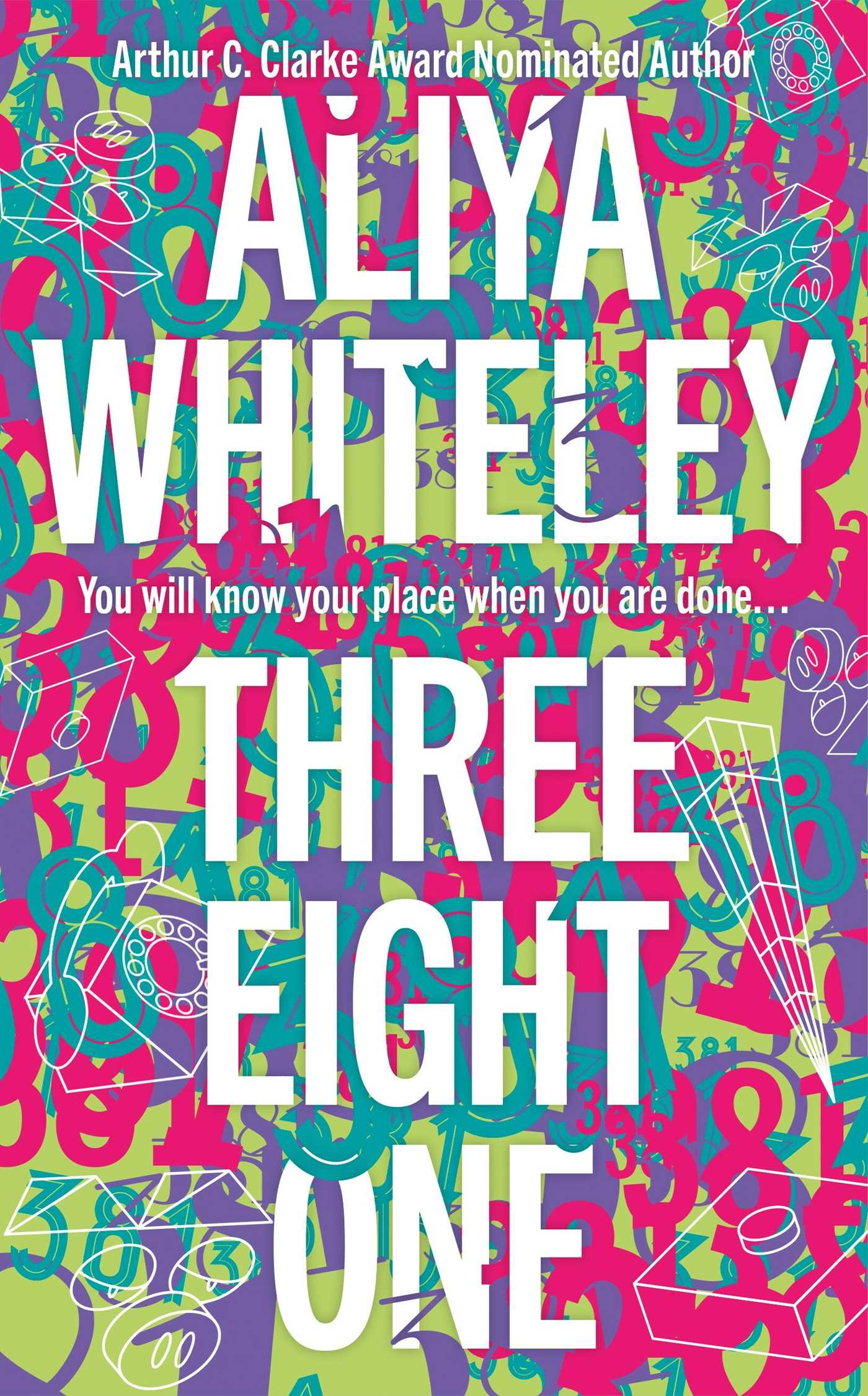
Three Eight One by Aliya Whiteley will be published in January 2024, but I was lucky enough to read an pre-publication ARC. Though it’s a fantasy quest narrative, it remains resolutely down to earth even in its wildest moments, and it features footnotes written by a scholar many decades later, which comment and interrupt the primary action, undermining and enhancing in equal measure. I think the novel works equally as well as epic fantasy as it does as a pure allegory about maturation, and when it made me cry, it was partly because I didn’t want it to end.
Speaking of which, the only other novel that reduced me to tears was Tomorrow, and Tomorrow, and Tomorrow by Gabrielle Zevin (2022). The framing of the real world as operating according to the mechanics of videogames is its most arresting aspect, but the cast of characters all trying to muddle through life, and the lack of antagonists, is perhaps what makes the novel so very life-affirming.
Ten Planets by Yuri Herrara (translated by Lisa Dillman, published by And Other Stories, 2023) was a great discovery. It’s not only one of the most enjoyable short story collections I can remember, it’s also one of the most inspiring books I’ve read in years, and it’s affected the style of my own short fiction. Though they’re nominally SF stories, these are truncated, magical tales more in line with works by Jorge Luis Borges or Italo Calvino.
Death and the Conjuror by Tom Mead (2023) is a note-perfect Golden Age locked-room mystery featuring stage-magician-turned-detective Joseph Spector, who reappears in the excellent sequel, The Murder Wheel, and with more mysteries to come.
In Lamb (2023), Matt Hill allows the weirdness that’s inflected his recent novels to come to the fore. Like Aliya Whiteley’s Three Eight One, it comes across almost as a parable, and its tortured characters and murky setpieces will linger with me for a long time.
The Shane Meadows TV adaptation led to me to read The Gallows Pole by Benjamin Myers (2017) finally this year, and I cursed myself for not doing so sooner. It’s a vicious book, less because of any actual violence but more due to its violent prose. It’s the most viscerally affecting book I’ve read this year. In contrast, Myers’ The Perfect Golden Circle (2022) is a warm hug, strongly reminiscent of Mackenzie Crook’s TV show The Detectorists in the pairing of its central characters.
Similarly calm and unassuming is Brian by Jeremy Cooper (2023). Upon his retirement from his council job Brian settles on the British Film Institute on London’s South Bank as his new haunt, where he encounters like minds and an entire world via screenings of classic films. Like Rónán Hession’s Leonard and Hungry Paul, usual expectations about plot or character development don’t apply here, and the pleasures of this novel relate to witnessing an awkward personality finding peace in unlikely ways. Brian’s responses to the films he watches are a lovely insight into the effect that fiction can have on impressionable minds.
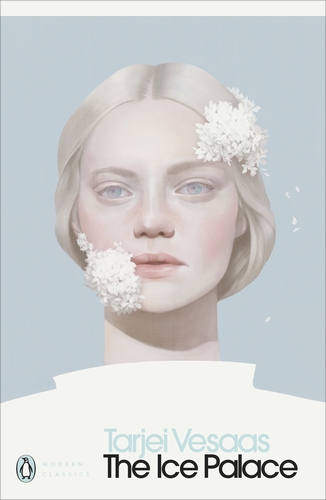
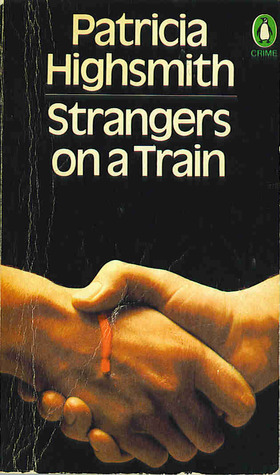
Moving away from recently-published books, the novels that had the biggest impression on me were The Ice Palace by Tarjei Vesaas (1963), a Norwegian coming-of-age tale that reminded me of a snowy Picnic at Hanging Rock, and Strangers on a Train by Patricia Highsmith (1950), which of course is nothing like the Hitchcock adaptation, and being Highsmith it’s murkier and more compelling than other thrillers of its, or perhaps any, era.
Now for some other books I particularly enjoyed, which were published fairly recently. Black Lake Manor by Guy Morpuss (2022) is just my sort of high-concept mystery, deploying time travel most effectively. Frankissstein by Jeanette Winterson (2019) had been waiting patiently on my shelf for years, and didn’t deserve to be ignored – it’s a fresh, strange and brilliant representation of Shelley’s classic. Boy Parts by Eliza Clark (2020) is second only to The Gallows Pole in terms of startling directness and, often, glorious ugliness. The Hood by Lavie Tidhar (2021) continues Tidhar’s Anti-Matter of Britain Quartet begun in By Force Alone, this novel dealing with the legend of Robin Hood and weirding its familiar subject satisfyingly.
Many of the older books I loved this year were mysteries, and many were books I’d anticipated as known quantities but which surprised me. Though I knew the ‘trick’ of The Murder of Roger Ackroyd by Agatha Christie (1926), I found it enormously effective – it was probably the book I read fastest this year. I also finally got around to reading the Lord Peter Wimsey series by Dorothy L. Sayers, beginningwith Strong Poison (1930) and Whose Body? (1923) andwas taken as much by her Wodehousian wit as her character and mysteries. Another mystery novel I loved was A Helping Hand by Celia Dale (1966), recently reprinted by Daunt Books and a far nastier tale than I’d anticipated.
I did read books without mystery plots, too! The ones I most enjoyed were the post-apocalyptic literary fantasy The Road to Corlay by Richard Cowper (1978), and The Princess Bride by William Goldman (1973) – another metafictional novel, so something of a theme this year! – and a wonderful fix-up novel concerning art and authenticity, Pictures of Fidelman by Bernard Malamud (1969).
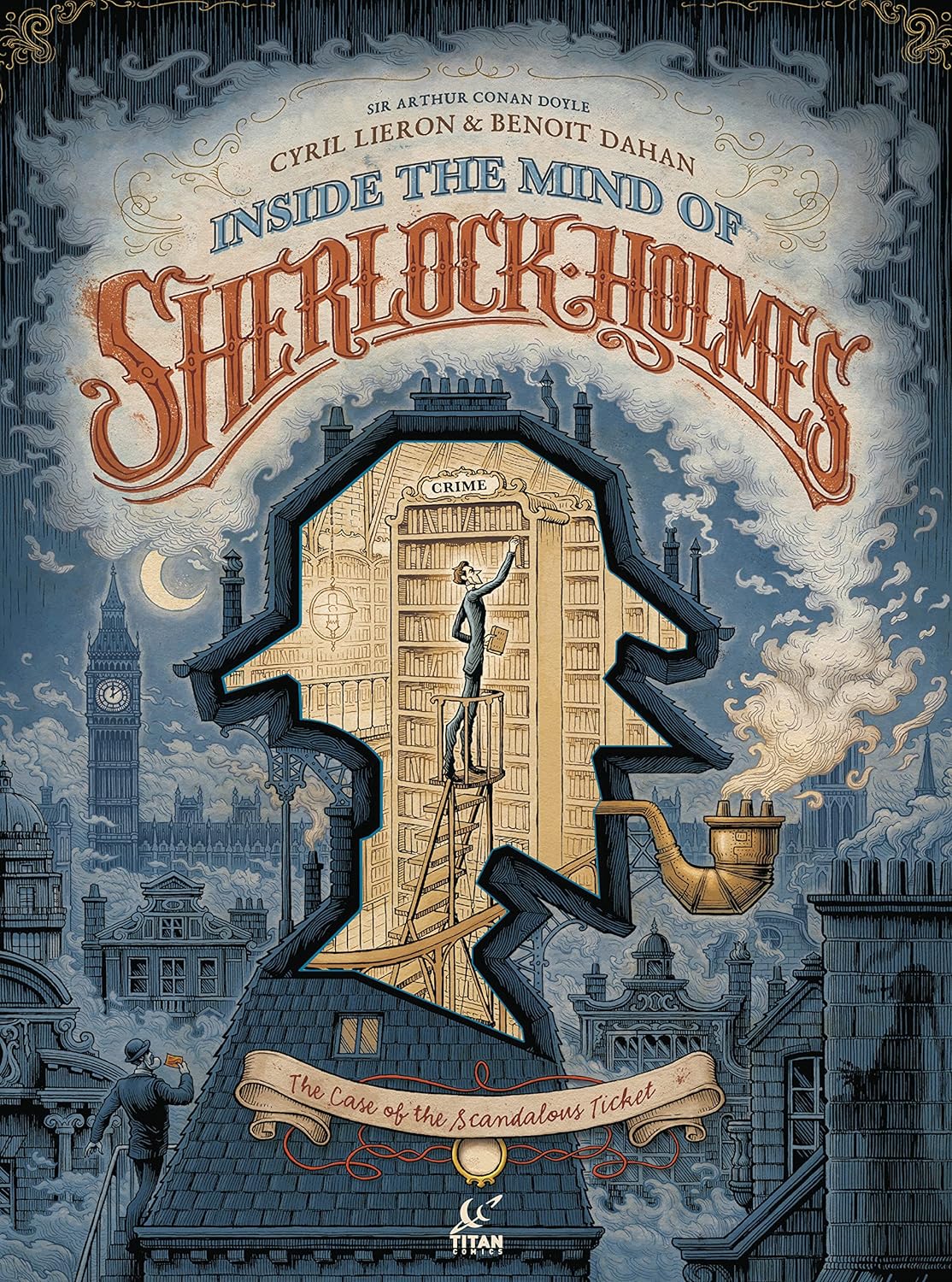
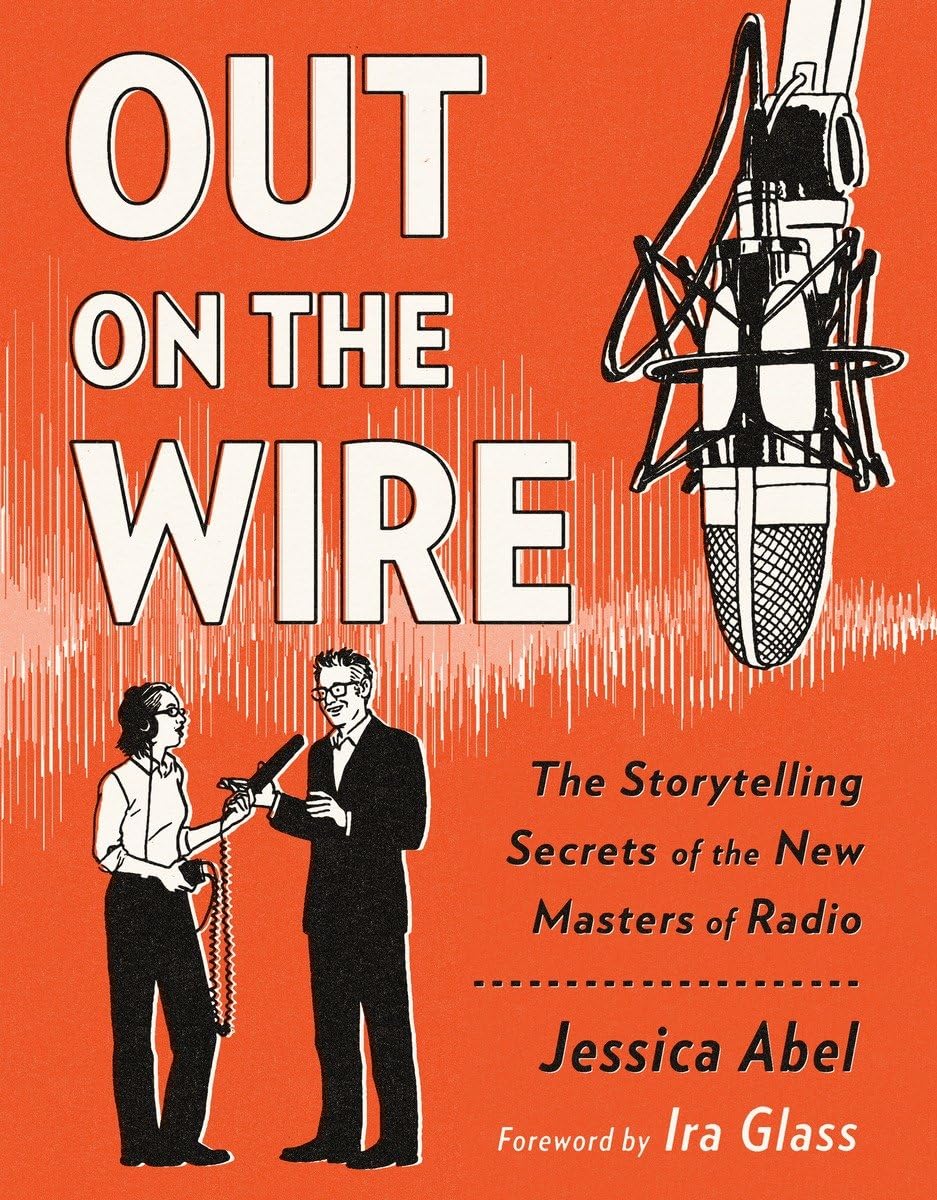
I read only two graphic novels this year, but both were excellent. Inside the Mind of Sherlock Holmes, written by Benoit Dahan and illustrated by Cyril Lieron (2023), is a pleasingly faithful rendering of Holmes and Watson that focuses on Holmes’s ‘mind attic’ and his processing of clues and which asks readers to fold pages or hold them up to the light in order to reveal hidden connections. Out on the Wire by Jessica Abel (2015) is a terrific account of the boom of American non-fiction podcasts such as This American Life and Radiolab, with plenty of insights into the craft.
Most of the non-fiction I read this year related to novel research. The best non-fiction book I read purely for pleasure was Writing the Future, edited by Dan Coxon & Richard V. Hirst (2023), continuing the terrific series from Dead Ink Books. It contains essays about SF by Aliya Whiteley, Adam Roberts, Nina Allan, Una McCormack and more, many of which are wonderful, perhaps even essential, and which, I think, will inform many SF novels yet to come.
Exciting news is the very best way to begin a new year! I’m thrilled to announce that Titan Books will publish my novel JEKYLL & HYDE: CONSULTING DETECTIVES, and I’m very excited about it.
Here’s the Publishers Marketplace announcement:
More details soon! If you’re impatient to know more, please consider signing up to my email newsletter, as I’ll be including additional plot tidbits in the first newsletter, to be sent out imminently…
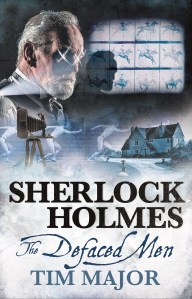
Sherlock Holmes: The Defaced Men (Titan) – my second Holmes novel (after The Back to Front Murder), featuring cinema pioneer Eadweard Muybridge.
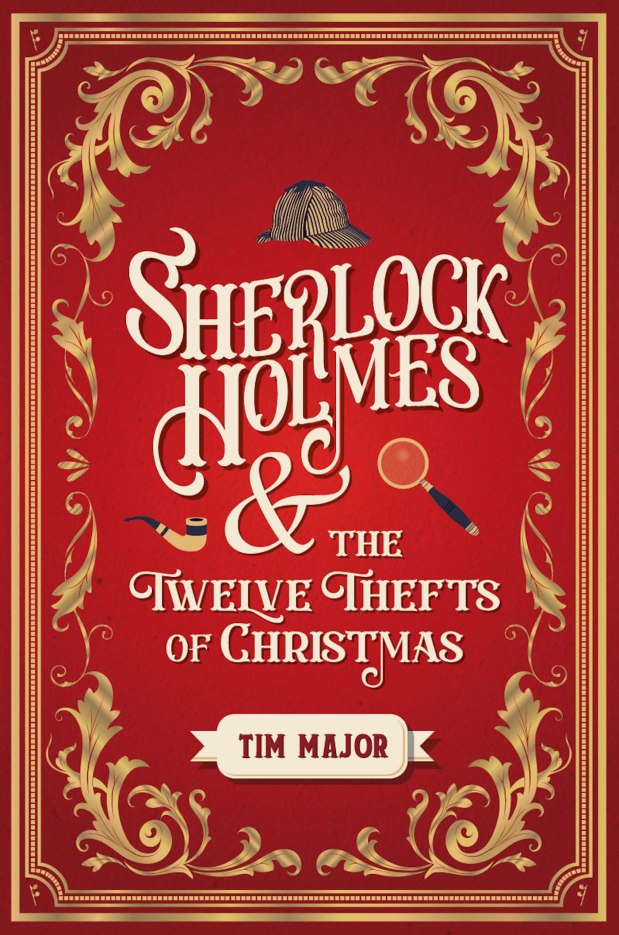
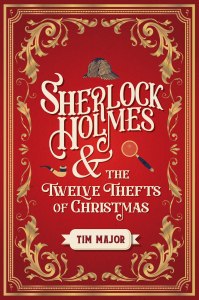
Sherlock Holmes & The Twelve Thefts of Christmas (Titan) – a ‘Christmas special’ of a Holmes novel, featuring Irene Adler’s ‘advent calendar of crimes’ and with central roles for Mary Watson and Mrs Hudson.
Shade of Stillthorpe (Black Shuck) – a weird, folk horror-ish novella about family, fatherhood and changelings.
‘The Marshalls of Mars’(IZ Digital / Interzone) – a short story about parenthood and isolation, featuring Meryl and Rich, the protagonists of my first published Interzone story, back in 2014.
It’s less than in previous years, but still a substantial enough output overall, I think. Most of all, I’m proud of all of this work.
I’ll be honest: 2022 hasn’t been the easiest year for writing and publishing. The year began with the disappointing cancellation of an anthology that would have included one of my stories, and would have represented a huge ambition fulfilled. It was also the first year in around a decade in which I didn’t begin working on a new original novel, which leaves me feeling that I haven’t made proper progress. Instead, most of the year was spent making revisions and editorial changes to two projects begun last year, and drafting the first half of a commissioned tie-in novel.
While I spent just under 300 hours writing, so much of my time was spent editing that I wrote fewer words than I have since 2018 – just over 172,000 words, compared to 286,000 words last year.
The year also involved a great deal of waiting. Though waiting is a fundamental characteristic of the publishing industry, and usually I’m fairly resistant to it, the long delays for feedback on drafts and submissions hit me hard this year, making progress on new projects far more difficult. It’s the first time I’ve been conscious that my writing career can have a negative impact on my mental health.
Another frustration was that my Christmas Sherlock Holmes title, The Twelve Thefts of Christmas, was affected by the IT software issue that has disrupted Waterstones warehousing and supply since the summer. The book was a month late to arrive in bookshops, and even then it failed to appear in most stores, despite (it seems) copies being ordered by booksellers. Given that it’s very much a seasonal novel, it’s now had its chance.
However – I mention these things not as complaints, but simply as a record of my year. I’m aware that I’m in a privileged position, and that I’m fortunate in that my work is still being published. More than anything, I continue to love writing, and I still have the luxury of plenty of time in which to do it.
The year to come is a little unpredictable, but there is one exciting element: the publication of an original novel that I’m really excited about, and that I’ll hopefully be able to announce soon. In fact, I’m determined to do right by this book in terms of publicising it widely, so I’ll be talking about it a lot. Apologies in advance.
My favourite book published this year was Candescent Blooms by Andrew Hook. It’s an outstanding, confident, often surreal collection, featuring accounts of the final days of Hollywood actors who died before their time. Despite its strong pitch, it remains difficult to describe – the stories are poetic, subjective, dizzying. Though there’s a huge amount of research in evidence, tone and language take precedence over biography. Normally I struggle to read whole collections from start to finish, whereas in this case I told myself I’d take my time, savour the richness of each story, but then raced through the whole lot in a couple of sittings, so that now they all merge in my mind and I couldn’t tell you which I loved most. It’s a huge achievement and a hell of an experience, and I recommend you get hold of a copy immediately.
Another 2022 novel I loved was Sea of Tranquility by Emily St. John Mandel. In many ways it operates as an out-there coda to her previous novel, The Glass Hotel, and though I adored it less than that book, its broader scope, multiple time periods and tangents that double back to become relevant at unexpected moments entirely won me over.
Of the other recently published novels I read this year, the one that meant the most to me was Leonard and Hungry Paul by Rónán Hession (2019). I can’t tell you how much I enjoyed this story of humble, modest people achieving humble, modest success. You might describe another of my favourites as an antagonistic twin of this book: No One Is Talking About This by Patricia Lockwood (2021), which genuinely made me laugh out loud in the first half and also cry at the end, and I can’t remember the last novel that managed that. One of the most exhilarating books I read in 2022 was By Force Alone by Lavie Tidhar (2020), casting Arthurian legend in bizarre new forms, a 21st-century riff on T H White’s already riff-packed The Once and Future King. I’m saving the second of Tidhar’s Anti-Matter of Britain Quartet novels (The Hood) for a later treat, and I can’t wait to find out which legends the final two novels will address. Other novels that I loved unequivocally were The Rotters’ Club by Jonathan Coe (2001), my first Coe, which sparked a season of reading his other linked books, and Geek Love by Katherine Dunn (1989), a big, bold carnival of a carnival novel which was Very Much My Thing even before the speculative elements showed up.
What else floated my boat? Lincoln in the Bardo by George Saunders (2017), certainly, but I was late to that party. I thought The Devil and the Dark Water by Stuart Turton (2020) was superior to his excellent The Seven Deaths of Evelyn Hardcastle, mainly by virtue of several of its high concepts remaining concealed from the reader. The Ten Thousand Doors of January by Alix E. Harrow (2019) was one of my favourite fantastical fables of the year. Circe by Madeline Miller (2018) is another novel everybody else read before me, which I thoroughly enjoyed. Similarly, A Visit from the Goon Squad by Jennifer Egan (2011) was one of those novels that seem to be everywhere for a time, which makes me contrary about refusing to read – which makes me an idiot, as it’s terrific. Three SF novels that I loved this year were The Psychology of Time Travel by Kate Mascarenhas (2018), Skyward Inn by the always wonderful Aliya Whiteley (2021) and I Still Dream by James Smythe (2018), an excellent AI novel that seems far more prescient now that my social media feed is full of people opining about AI compositions.
On to older novels. I was blown away by the restrained energy of Housekeeping by Marilynne Robinson (1980), and the inventiveness of the Jekyll and Hyde-inspired Two Women of London by Emma Tennant (1989) – I must get on to reading more of her work. I found The Woman in the Dunes by Kōbō Abe (1962) thrilling in spite, or perhaps because of, its claustrophobia.
Alongside the Stuart Turton mentioned above, my favourite crime novels this year were The Honjin Murders by Seishi Yokomizo (1946), which features a murder mystery with the most terrific explanation, and The Riverside Villas Murder by Kingsley Amis (1973), which is startling in its plotting but also its inversion of various mystery tropes, and an unlikely 14-year-old detective.
A list of wonderful novels I read this year and that I should have got around to reading much sooner includes: the amoral The Murderess by Alexandros Papadiamantis (1903), the lively Decline and Fall by Evelyn Waugh (1928), the unexpected pleasures of The Club of Queer Trades by G. K. Chesterton (1905), the proto-SF The Machine Stops by E. M. Forster (1909) and the intense and startlingly modern The Awakening by Kate Chopin (1899). Even odder, and somewhat embarrassing, omissions until 2022 were the wonderfully bizarre The Street of Crocodiles by Bruno Schulz (1934) and The King in Yellow by Robert W. Chambers (1895).
Most of the non-fiction I read this year represented writing research of one form or another. My favourite non-fiction book that I read purely for pleasure was The Complete Beatles Recording Sessions by Mark Lewisohn (1988).
In total, I read 51 books in 2022. I’m a bit ashamed to say 36 of them were written by men; I’m determined to equalise the ratio next year.
Book birthday! SHADE OF STILLTHORPE is published today by the excellent Black Shuck Books. It’s a lost-in-the-forest changeling story. A teen boy disappears during a camping trip & the person who reappears is entirely different – but only his father refuses to be taken in.
“A seemingly impossible premise becomes increasingly real in this inventive and heartbreaking tale of loss.” Lucie McKnight Hardy
“Parenthood is a forest of emotions, including jealousy, confusion and terror, in Shade of Stillthorpe. It’s a dark mystery that resonated deeply with me.” Aliya Whiteley
The novella’s available from all the usual places – but please do prioritise bookshops or buy direct from the publisher.
I did go to the cinema once this year, a Tuesday matinee with my wife to avoid the crowd. We saw No Time to Die and it was fine. Far better recent films I saw at home this year were The Green Knight (David Lowery), especially the middle sequences with wandering giants, Mogul Mowgli (Bassam Tariq) featuring an amazing performance by Riz Ahmed, Black Bear (Lawrence Michael Levine) for its bloody-mindedness, Under the Tree (Hafsteinn Gunnar Sigurdsson) for its bleak comedy and Call Me By Your Name, which secures Luca Guadagnino as one of my favourite contemporary directors.
I watched a lot of older films in the first part of the year, probably as a means of keeping sane in the January lockdown. Since then, barely anything – who knows why. My most exciting discoveries were the wonderfully tense The Servant (Joseph Losey, 1961) and Peeping Tom (Michael Powell, 1960), the excellent double-bill of carnival horrors The Unholy Three (Tod Browning, 1925) and He Who Gets Slapped (Victor Sjöström, 1924), the stone-cold classic Orphée (Jean Cocteau, 1950), the deeply subversive duo of Billy Liar (John Schlesinger, 1963) and The Naked Kiss (Samuel Fuller, 1964) and the surprisingly affecting South Pole expedition documentary The Great White Silence (Herbert Ponting, 1924).
Books
In terms of recent novels, my favourite isn’t available or even announced yet, as I read it as a beta reader. I’d hope it’ll be snapped up by a publisher soon and you can all enjoy it. My favourite recently-actually-published novels were the dazzling The Glass Hotel by Emily St John Mandel and Piranesi by Susanna Clarke. I also loved Hello Friend We Missed You by Richard Owain Roberts. My favourite recent SF novels were Amatka by Karin Tidbeck and The Employees: A Workplace Novel of the 22nd Century by Olga Ravn. The two collections I most enjoyed were both published in 2021 and were written by two of my favourite modern novelists: The Art of Space Travel, and other stories by Nina Allan and From the Neck Up, and other stories by Aliya Whiteley. Most of my non-fiction reading was related to my own projects, but of the others my favourite was Writing the Uncanny, a series of entertaining essays by some of the best current writers of the weird, edited by Dan Coxon.
Going back a little further, this year I discovered the work of Tom McCarthy, beginning with the incredible Remainder (2005) and then, neatly tying to having introduced my own children to Tintin, his non-fiction Tintin and the Secret of Literature (2006). The other 21st-century novel I most enjoyed was The Last Samurai by Helen DeWitt (2000), an absolute triumph in structural terms.
I read a lot of locked-room mysteries this year – odd, given that we were all in lockdown ourselves – my favourites being The Case of the Constant Suicides by John Dickson Carr (1941), The Red House Mystery by A. A. Milne (1922) and An English Murder by Cyril Hare (1951).
I also read a fair amount of 19th-century fiction, including lots of Robert Louis Stevenson, kicking off with the wonderful anthology of his work selected by Adolfo Bioy Casares and Jorge Luis Borges in the 1960s. This led me to Stevenson’s Fables (1896), now one of my favourite story collections.
Other novels I loved this year were the heartless Laughter in the Dark by Vladimir Nabokov (1932), the far more humane Cold Spring Harbor by Richard Yates (1986) and the wonderfully overflowing What a Carve Up! by Jonathan Coe (1994).
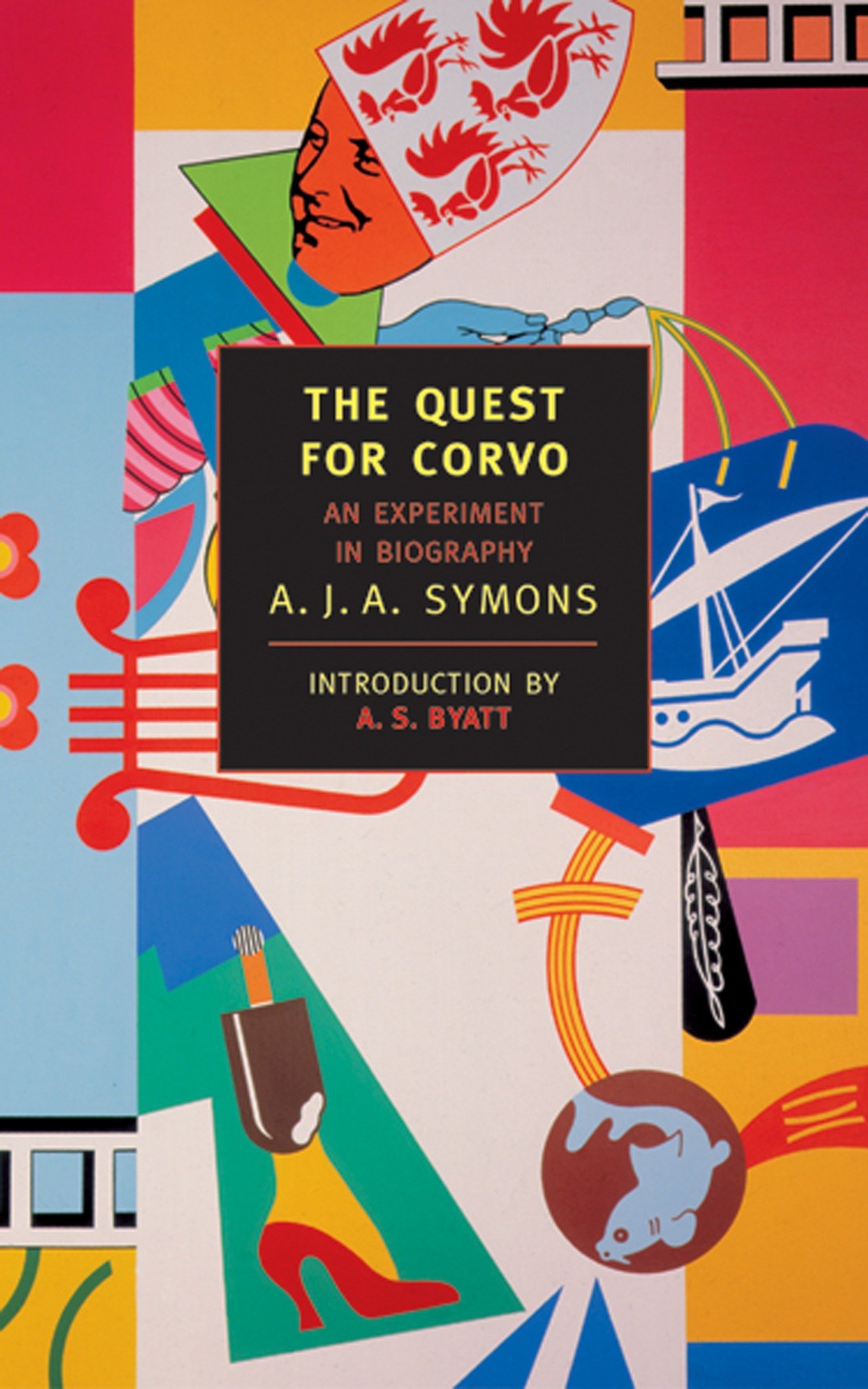
My favourite non-fiction book I read this year was also the book I most enjoyed overall: The Quest for Corvo by AJA Symons (1934), detailing the life of an unscrupulous author but structured like a detective novel, and one of the least classifiable and most compelling books I’ve ever read.
TV
Was there good TV in 2021? I’m sure there was, but for the most part, the tension in the real world left my wife and I unable to face anything particularly gritty, or suspenseful, or long. We watched a lot of Taskmaster. I loved the third series of Stath Lets Flats. I thought that Together was a necessary and uncompromising overview of the early lockdown. I liked Lupin and Call My Agent! and His Dark Materials and This Time… with Alan Partridge and Frank of Ireland. The best TV show was obviously Succession, one of the funniest TV programmes this century.
Games
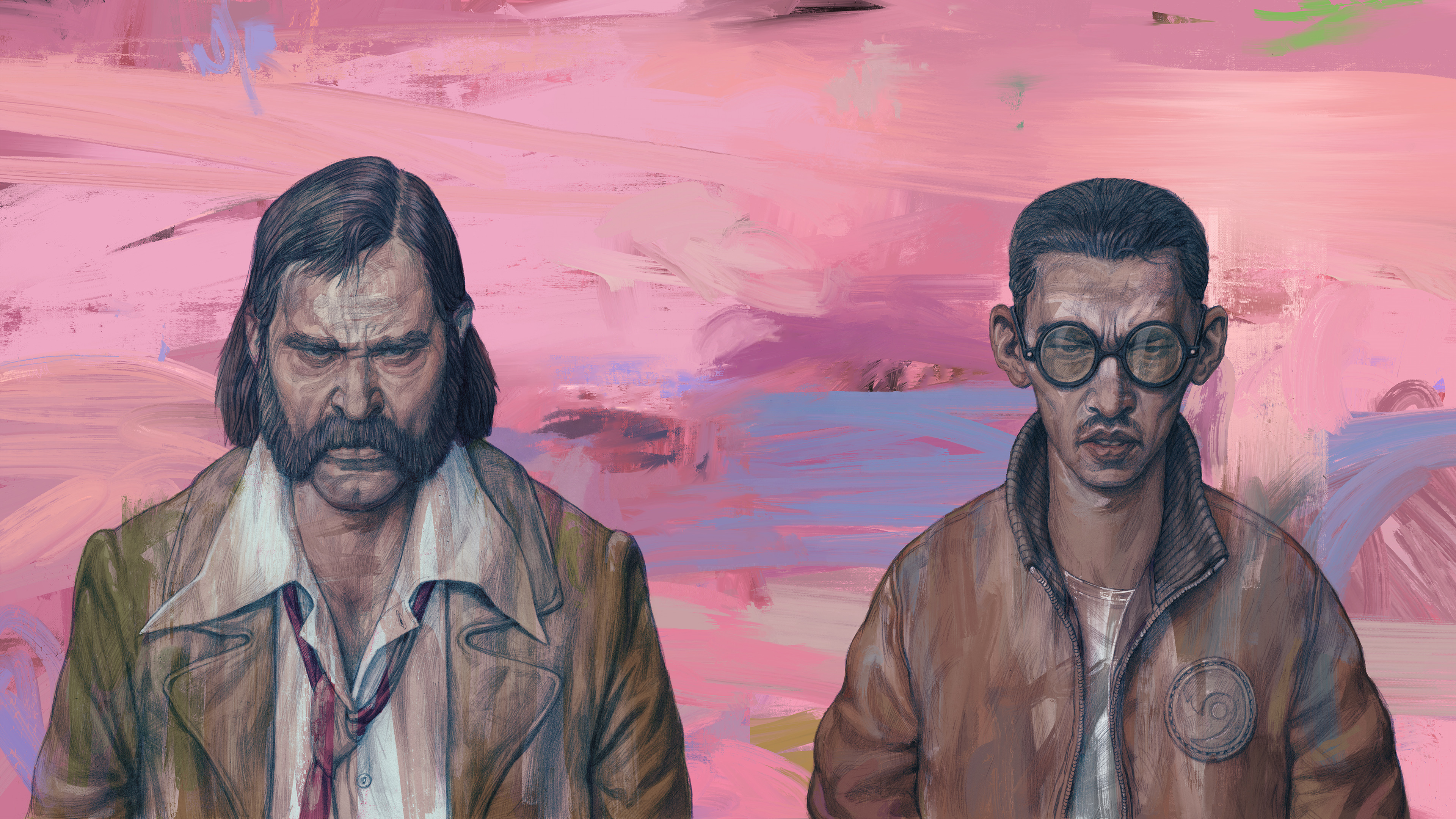
In gaming terms, this year has been characterised by compulsive playing in order to block out the world. The games that achieved this most successfully for me were both roguelikes: deck-builder Slay the Spire, and the hard-as-nails sidescroller Dead Cells, though Civilization VI has threatened to topple them both since I started playing it this month. Both Her Story and Orwell provided a sense of almost-real surveillance, and while I was terrible at it, Return of the Obra Dinn provided the most satisfying actual deduction. The most immersive storytelling was in the astounding Disco Elysium, which I’ve played through twice. I surprised myself by getting back into platform gaming via Ori and the Blind Forest and Ori and the Will of the Wisps, and thoroughly enjoyed playing Creaks with my sons. Two of my favourite puzzle games were Hexcells and Escape Simulator, the former satisfyingly clean and abstract, the latter almost capturing the feel of real-life escape rooms, with a thriving community scene creating new levels all the time.
I’m very pleased to say that in 2022 Titan Books will publish my second Sherlock Holmes novel, The Defaced Men, almost exactly one year after my first, The Back to Front Murder. I’ve had so much fun writing Holmes and Watson, and completing this second novel has been just as enjoyable as the first.
Here’s the description:
A white-haired, bearded client arrives at Baker Street and is recognised immediately by Holmes. This client is being threatened by someone unknown to him through curious means: doctored lecture slides, and Watson realises this is Eadweard Muybridge, pioneer of animal and human locomotion photographs, who presents his motion-study animations to interested parties through his zoopraxiscope device. When the two attend one of his lectures they find disturbing alterations to Muybridge’s slides he swears he did not put there and as they investigate further, discover murder and conspiracy with the fledgeling arts of photography and cinema at its heart…
I’m fascinated by early cinema, so writing about Muybridge was a gift, and I’ve had great fun showing Holmes and Watson encountering the new medium of film for the first time.
And here’s the cover!
Sherlock Holmes: The Defaced Men will be published by Titan Books on 23rd August 2022.
This week, my Martian murder-mystery novella, UNIVERSAL LANGUAGE, was published by the excellent NewCon Press. It’s available in paperback, ebook and the very fine signed hardback edition shown in the image above. It’s satisfyingly chunky; the word count actually edges it into short novel rather than novella categorisation.
I wrote several articles to introduce the book, including:
“…a fascinating mystery to solve while we are in the hands of a unique investigator and then get into a wider tale exploring humanity itself… a mixture of The Doctor and Columbo, [detective Abbey Oma] is a six-foot three private investigator who loves banter, often has to resist the urge to hug people and is very perceptive at working through the evidence and witnesses… a very successful novella mystery and also a great piece of science fiction.”
And, if you’ve read the novella or are contemplating doing so, you might be interested in the book soundtrack, available on Spotify:
The Kickstarter campaign for the anthology OUT OF THE DARKNESS, which features horror and dark fantasy authors’ stories related to mental health issues, ended yesterday, and it was massively successful – more than 300% funded, with all stretch goals met! This is particularly welcome news, as all royalties, as well as editor Dan Coxon’s fees, will go to charity Together for Mental Wellbeing.
Over the course of the campaign Dan did a terrific job of raising awareness, and, along with other authors involved in the anthology, I contributed to a few articles:
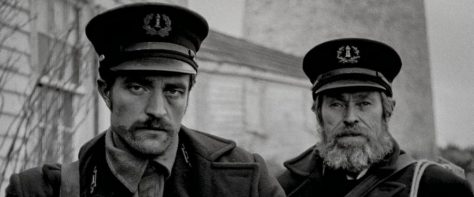
Like everyone else this year, I saw very little at the cinema in 2020. My favourite of the few films I saw was the wild, disturbing ride The Lighthouse (Robert Eggers), partly because it’s been my lingering memory of what it’s like to watch a great film in the cinema, booming foghorns and all – and I loved the alienating square aspect ratio. Portrait of a Lady on Fire (Céline Sciamma) was no less an intense depiction of people trapped together, and, equally, Parasite (Bong Joon Ho) contained foreshadowing of lockdown and a lack of fresh air. Steve McQueen’s films from his Small Axe TV anthology series were no less rich and rewarding than his cinema fare. The first two, Mangrove and Lovers Rock, were outstanding – particularly the dazzling choreography and soundtrack of the latter. On a similar note, the short film Strasbourg 1518 (Jonathan Glazer) is entirely choreographed dance, and was the most alarming film of 2020 that I saw.
Of more recent films (i.e. from the last decade), my absolute favourite was The Souvenir (Joanna Hogg, 2019), which I couldn’t stop thinking about for all sorts of reasons, and the knowledge that there’s an upcoming second part is tantalising. Bait (Mark Jenkin, 2019) was delightful in all respects, the best film about film that I’ve seen for a while. I found Pain and Glory (Pedro Almodovar, 2019) surprisingly affecting, particularly Antonio Banderas’ performance. The Personal History of David Copperfield (Armando Iannucci, 2019) was the most fun I’ve had with a recent film, in part due to the pleasure of spotting favourite TV character actors. I loved Aniara (Pella Kågerman & Hugo Lilja, 2018) – exactly my sort of setup, about a Mars migration that turns into an endless voyage – the intertitles signalling greater and greater timescales alone were powerful. And though I loved A Bigger Splash (Luca Guadagnino, 2015) in every respect, Ralph Fiennes’ creepy dancing remains its most memorable moment.
I watched a lot of classic films this year, partly as a response to lockdown, but also partly because I’ve developed new habits: I no longer fret about not finishing a film in a single session, and I’ve been watching them via BFI Player and MUBI on my (admittedly large-screened) phone, often starting at 5.30am after being woken by my youngest son. Watching films like this, with chunky headphones, in bed in the dark, has been the closest simulation of a cinema setting.
One of my biggest ‘discoveries’ this year was the wider work on Akira Kurosawa, in particular The Hidden Fortress (1958), Yojimbo (1961) and High and Low (1963), all of which rank as some of the best films I’ve seen this year. I finally watched, and loved, the long version of Fanny and Alexander (Ingmar Bergman, 1982), but surprised myself by enjoying Smiles of a Summer Night (Ingmar Bergman, 1955) equally as much. Other classic films I watched for the first time and adored included La Strada (Federico Fellini, 1954), Rome, Open City (Roberto Rossellini, 1945) and The Battle of Algiers (Gillo Pontecorvo, 1966), all stunning. I was blown away by Tartuffe (F. W. Murnau, 1925), particularly its framing story and metatextual elements. Two of my favourite finds were Cairo Station (Youssef Chahine, 1958) and Intimate Lighting (Ivan Passer, 1965), and I adored the ‘fake news’ docudramas Punishment Park (Peter Watkins, 1971) and the lesser-known Alternative 3 (Christopher Miles, 1977). For tense pulp thrills, my favourite films were the incomparable Night Tide (Curtis Harrington, 1961), the near-perfect thriller Breakdown (Jonathan Mostow, 1997) and the fantastical short film Quest (Saul Bass, 1984), included on the recent Phase IV bluray. My favourite horror film this year was the woozy masterpiece The White Reindeer (Erik Blomberg, 1952).
Books
My immediate response to the announcement of the first lockdown was to panic-read substantial classic novels I’d always intended to read. Middlemarch (George Eliot, 1872) worked as intended: I found it totally absorbing and entirely reassuring. I suspect that Candide (Voltaire, 1759), Mrs Dalloway (Virginia Woolf, 1925) and Lanark (Alasdair Gray, 1981) and The Third Policeman (Flann O’Brien, 1967) will each be influential on my own writing in the coming years. My favourite horror novel was Thérèse Raquin (Émile Zola, 1867), which packed a punch partly because I didn’t realise it was going to be a horror novel. My most important reading discoveries in 2020 were the novels of Richard Yates, my favourites so far being The Easter Parade (1976) and Revolutionary Road (1961), the latter being as great a Great American Novel as The Great Gatsby. My most exciting discovery of 2020 was the Jorge Luis Borges-endorsed, proto-SF novella The Invention of Morel (Adolfo Bioy Casares, 1940).
In terms of more recent works, my favourites were A Cosmology of Monsters (Shaun Hamill, 2019), which has one of the most absorbing first chapters of any book I’ve read, Annihilation (Jeff VanderMeer, 2014) which I can’t believe it took me so long to get around to reading, and The Wall (John Lanchester, 2019) which made me seethe with envy. I read a lot of non-fiction for writing research purposes, but the factual books I enjoyed most for ‘fun’ were High Static, Dead Lines: Sonic Spectres & the Object Hereafter by Kristen Gallerneaux (2018) and Deep Fakes and the Infocalypse: What You Urgently Need To Know (Nina Schick, 2020).
TV
It’s been a great year for TV drama. My wife and I binged both series of the hysterical (in all senses) Succession, I was entirely won over by the calm pace of Normal People, and the decidedly more frenetic I May Destroy You seemed to redefine the possibilities of TV drama with every episode. Staged was an impressively comprehensive and complex response to the first coronavirus lockdown, and was very funny to boot. Upright was the TV show that most upset me, offset by all the tremendous joy, and was probably my favourite TV show of the year. Armando Iannucci’s space workplace comedy Avenue 5 turned out to be far better than expected, and I hope there’ll be more to come. The most exhilarating TV I saw this year was World’s Toughest Race: Eco-Challenge Fiji, closely followed by the meticulous, gorgeous and subversive Anaïs Nin adaptation Little Birds. And, likeeveryone else, I thought The Queen’s Gambit was staggeringly good all round.
Games
After around eight years without videogames, purchasing a half-decent laptop this autumn has allowed me to dabble in games I’ve missed in the interim period, though anything particularly open-world or particularly recent stutters like crazy – for which I’m grateful, as I’m terrified of losing too much time to gaming at the expense of work. Still, I managed to work through Portal-esque puzzle game The Talos Principle (2014), Tomb Raider (2013) and Rise of the Tomb Raider (2015) (the latter better than the first in the new trilogy but representing an almost unsurmountable graphical challenge for my PC). I enjoyed Sherlock Holmes: Crimes and Punishments (2014) far more than expected, appreciating the slow pace. I admired a huge amount of What Remains of Edith Finch (2017), which as well as providing a compelling story, acted as a showcase for the possibilities of videogames – particularly the scene involving slicing the heads off fish on a production line whilst simultaneously guiding a prince around a kingdom whilst also learning about the fragile mental health of the factory worker in question. But the only game that I truly loved was Firewatch (2016), in which the player fulfils a patient role as a lookout in a Wyoming forest, whilst developing a relationship with your supervisor over walkie-talkie. The landscape is stunning, the nudges along the path of the narrative subtle, and the story is deeply affecting, perhaps partly because the game is over within three hours or so.
Author copies! This is the smart-looking new Luna Press edition of my YA SF novel, MACHINERIES OF MERCY. Elevator pitch: Westworld meets Battle Royale/Tron/Existenz/the Doctor Who serial ‘The Deadly Assassin’, but in a sleepy English village.
A gripping supernatural mystery for fans of John Wyndham’s The Midwich Cuckoos from the author of Snakeskins. Workaholic Nina Scaife is determined to fight for what remains of her family after her partner walks out on her. Relocating to the beautiful but isolated Hope Island is not the fix she had hoped for. Struggling to reconnect with her daughter, the island’s strange silent children begin to lure her away. And then Nina finds the dead body.
By the way, like some other Titan titles, HOPE ISLAND will now have a staggered publication: 5th May in the USA, 8th June in the UK.
It’s not just my novel available – there are five titles in Titan’s initial batch of releases. I’ve been lucky enough to have read two of the books already (as well as the one I wrote, obv). I described EDEN by Tim Lebbon as ‘visceral, cinematic and utterly wild’ and A COSMOLOGY OF MONSTERS by Shaun Hamill as ‘a staggeringly good debut novel, by turns warm and terrifying, tender and devastating’. And while I haven’t read James Brogden’s BONE HARVEST yet, his earlier novels HEKLA’S CHILDREN and THE PLAGUE STONES are some of my favourite recent horror novels. And DESCENDANT OF THE CRANE by Joan He sounds truly awesome too!
I hope you’re all managing in these strangest of times. After the first two weeks of lockdown and homeschooling, my brain’s starting to come alive again, little by little, by which I mean I’m writing again.
I’ll have updates about my next novel, Hope Island, very soon – but for now here’s a turning-back of the clocks by almost a year, to my last novel, Snakeskins. The article below was originally intended to feature in BSFA Focus, but after a mix-up it’s now without a home, so I thought I’d put it up here. It’s an overview of the writing and route to publication, which may be of most interest to upcoming writers.
Beginnings and false starts
In July 2015 I noted the following idea in a Word document:
Instead of the body’s cells gradually being replaced every 7–10 years, it all happens in an instant. This produces a ‘snakeskin’ version of yourself that is able to live independently, for a time. Somebody living a full life might produce eight Snakeskins, each of which continue to live for a short period after being ‘discarded’.
It sounded a rich idea, and even had a title built in. I began writing a story about a teenage girl experiencing her first ‘shedding’, roughly coinciding with her entry to adulthood. The result was… all right. I liked the depiction of the shedding ceremony well enough, but the aftermath felt too brief, constrained by the short story format. I had concentrated on this aspect: Perhaps Snakeskins tend not to be inhibited because they know they have limited time to live. Are they therefore more effective people? But this seemed only one possible repercussion, and more occurred to me over the following days. I wrote this list – the first item no doubt informed by the fact that I was considering quitting my job at the time:
Pros of Snakeskins:
You might be able to convince your Snakeskin to do your day job for you
Someone to confide in, who understands you entirely
Rejuvenation?
Sheddings represent important milestones in life, especially the first one
Cons:
Can’t necessarily control or even relate to your Snakeskin
Unwanted responsibility for someone else
Interruption to normal life
Desperately sad – like caring for someone with terminal illness
The short story had been vague about the world in which the characters existed. I began to wonder about aspects that might affect wider society. Had people always produced Snakeskins? Did everyone produce them? Did the process have some scientific basis, or was it essentially magic? How would Snakeskins expire – an ordinary death, or something stranger?
The release day has snuck up on me, but I’m happy to say that SNAKESKINS is now available as an unabridged audio download. Maybe a pleasant way to spend 11 hours and 19 minutes?
It’s available from the usual sources, the obvious ones being Amazon.co.uk or Amazon.com
This came around fast… I’m happy to say that my first short story collection, AND THE HOUSE LIGHTS DIM, is available as of today! It’s published by Luna Press and is billed as strange stories about houses, homes and families.
Here’s something I wrote about the collection when it was first announced:
AND THE HOUSE LIGHTS DIM is my first collection of short stories, which were written over a three-year period. They’re pretty diverse, spanning weird fiction, horror and SF – but I confess that when I wrote them they seemed more diverse than they really are. It was only recently that I realised just how prevalent particular themes have been in my writing: houses, homes and family.
Perhaps it’s no surprise. The earliest of the stories was written when my wife was pregnant with our first child; one of the novellas was written in a mad hurry in the weeks before his birth; nowadays I write in a fog of fatigue due to my second child’s sleepless nights. I think about family constantly and as a freelance editor I’m trapped in my home for the greater part of every day.
In this collection are stories about a sentient house overprotective of its new occupants, a supernatural Greenland shark that attacks a family via sound, a married couple alone on a lengthy space flight, two young girls who live in isolation and in fear of the world beyond their walls, a camping trip that turns a family feral, a post-apocalyptic Center Parcs, a man who has defragmented his mind and another who splices a rival’s brain patterns onto his own.
Most of the stories have been published in various places, including Interzone, Not One of Us, The Literary Hatchet and anthologies published by Fox Spirit, Jurassic London and Hic Dragones. ‘Carus & Mitch’ was previously published as a standalone novella by Omnium Gatherum and was shortlisted for a This Is Horror Award in 2015. People have been very nice about it: Lynda Rucker said it was a ‘compelling, unconventional page-turner… blending a John Wyndham-esque melancholy with a dose of existential despair’. Adam Roberts called it ‘punchy and scary and tense and genuinely moving’ and James Everington at This is Horror said it was ‘an intimate, original, and character-driven take on the post-apocalyptic genre’, all of which made me feel awfully proud.
One thing I neglected to mention in that description are the stories that are new to the collection: O Cul-de-Sac!, The Forge and Honey Spurge. I’m particularly proud of O Cul-de-Sac!, the 10k-word story that opens the collection – though I’m also nervous on its behalf, as if I’m forcing it out into the world rather it being there on its own merits. It’s an unusual story, written once I recognised the theme of the collection – it’s narrated by a sentient house who is proud and then wary of its new occupants.
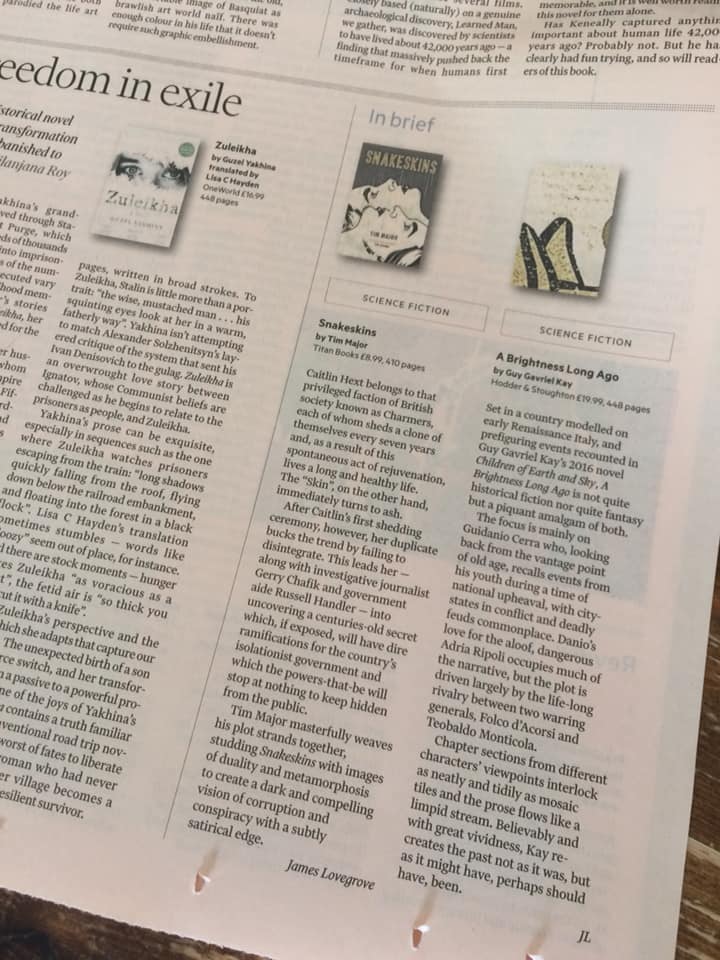
This is a cheering end to publication month… SNAKESKINS has been reviewed by James Lovegrove for the Financial Times, and he seems to have enjoyed it very much! Here’s the final paragraph of the review:
“Tim Major masterfully weaves his plot strands together, studding Snakeskins with images of duality and metamorphosis to create a dark and compelling vision of corruption and conspiracy with a subtly satirical edge.”
Last week I was interviewed by Hannah Kate for her show Hannah’s Bookshelf on North Manchester FM. I really enjoyed it, and felt far more comfortable than I expected – it was a long, detailed conversation, but there always seemed plenty to discuss, which has done wonders for my confidence with regards to forthcoming public appearances.
We talked about my recent novel Snakeskins, my upcoming short story collection, And the House Lights Dim and my non-fiction book about Les Vampires – and also my preoccupation with houses, nostalgia and baked beans in fiction.
I also picked my books to cling onto after the apocalypse: John Wyndham’s The Day of the Triffids, John Updike’s collected Rabbit novels and T.H. White’s The Once and Future King.
Well… It’s been a dizzying week. SNAKESKINS was published on Tuesday! It’s in hundreds of bookshops in the UK and the USA – I have photographic evidence! It’s being read right now! People seem to like it!
If I’m honest, I didn’t much enjoy publication day itself. My jittery anxiety translated into me checking my phone every 10 minutes for updates (and there were updates, every time). Wednesday was a bit better. By Thursday I was in the groove.
Because all that goodwill I mentioned a few days ago? It seems that it wasn’t just talk. To begin with, people are buying the book. They’re walking into bookshops or adding it to their Amazon cart. Phew. Furthermore, people who’ve read it seem to have genuinely enjoyed the experience. Whether all of this leads to more sales and more readers, I have no idea, and it’s out of my control. But things are still going as well as I could possibly hope. I keep trying to take snapshots of the current state of things, and the snapshots keep encouraging me.
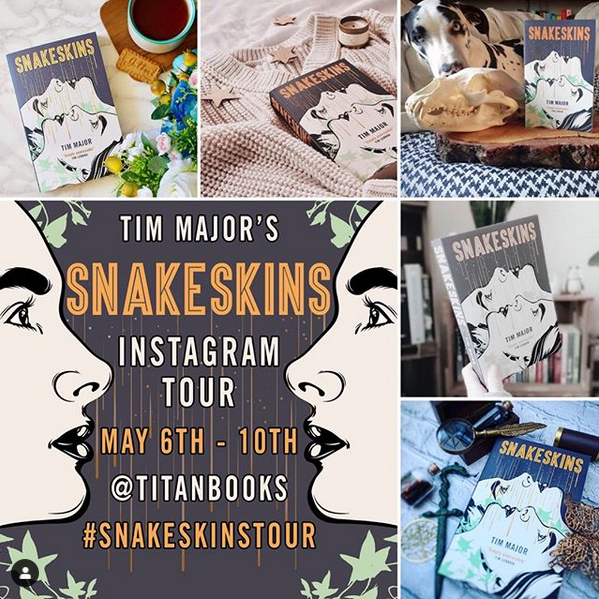
The most visible evidence that the book is real and out there is the social media promotional tour going on right now. I’m a newbie to Instagram, but there seems a lot of traffic surrounding the book, ably orchestrated by the Titan marketing team, who are amazing. Part of learning to go with the flow this week has been making a decision that the Instagram activity doesn’t need to involve me, and perhaps is better off for me watching but not participating – as mixed in with the Q&As, giveaways and terrific photos are reviews and comments. I’m applying the age-old author rule of not responding to reviews, even when they’re positive. (But do you know what? They really are positive reviews, hooray!) If you follow #snakeskinstour or #titanbooks, you’ll see what’s cooking. The photos alone warm my heart.
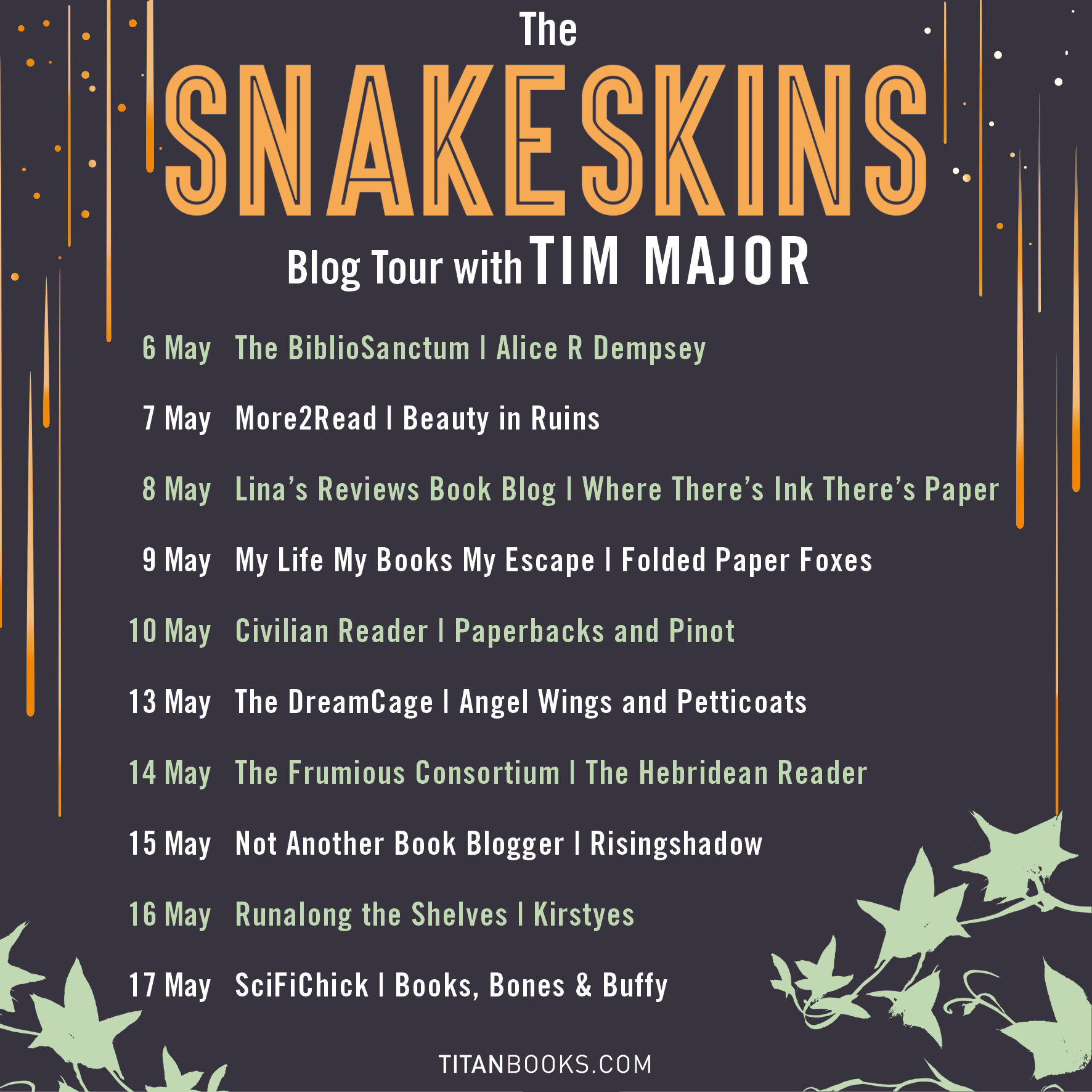
Book blogs are more my comfort zone, and there’s a lot of blog activity too. Here are some handy links to everything that’s been published so far on this two-week social media blitz:
Finally, reviews… any author’s waking nightmare. Except these are really positive! Here’s a taster:
“A heart stopping & thought provoking read, which will make you question how you would see your own identity in those circumstances & challenge your perceptions of acceptance.” (5 stars) Paperbacks and Pinot
“I read a lot of YA, yet this adult SF novel is by far one of the most convincing portrayals of burgeoning maturity I’ve ever read. … It’s a remarkably thoughtful consideration of identity and humanity, as the best sci-fi thrillers invariably are.”The Frumious Consortium
“…bizarre, and deeply resonant … glimpses of Adrian Barnes and Atwood at her very weirdest … Somehow otherworldly and yet so incredibly human, politically relevant but also touching on universal themes of identity and mortality, Snakeskins is a novel I will be thinking about for a very long time.”Folded Paper Foxes
“It’s an unusual setup for an intricate political thriller that coils in on itself, tightening the tension as it circles toward satisfyingly shocking answers.”Barnes & Noble blog
So… I’m more than happy with the ways things are going. Here’s to lots more anxiety and (hopefully) more pleasant surprises next week, as more reviews come in. I’m doing my best to collect articles and reviews on the dedicated SNAKESKINS page. Or you could just skip all that and buy a copy? Just saying.
SNAKESKINS is published today! This is my grateful and baffled and happy and anxious face.
Thanks to everyone who’s bought a copy already or shared promos or just been generally supportive, to the authors who provided blurbs, to Titan editorial and marketing, to Rose. I’ve no idea how it’ll pan out from here on in, but the book has had the best possible start in life. Thank you!
The day is almost upon us… SNAKESKINS will be published in the UK and US tomorrow!
To mark the occasion there will be a ten-day book blog tour, starting today – two blogs every day. I know, crazy!
First up today is my guest blog post at Bibliosanctum, about a SNAKESKINS soundtrack to an imagined adaptation. It includes doubles, identity issues, an isolated Britain thirty years behind ours. There are full explanations of each track choice in the article, and the soundtrack’s intended to work as a primer to the book too – no spoilers, I promise!
If you’re one of the really cool kids, there’s also an Instagram tour – follow #snakeskinstour to see all updates. The first post is a mini-review, and it’s a very positive one, phew!
Finally, one of the book blog reviews went live already, on Paperbacks and Pinot, who said that ‘Snakeskins is a heart stopping and thought provoking read, which will make you question how you would see your own identity in those circumstances and challenge your perceptions of acceptance.’













 My favourite book published this year was Candescent Blooms by Andrew Hook. It’s an outstanding, confident, often surreal collection, featuring accounts of the final days of Hollywood actors who died before their time. Despite its strong pitch, it remains difficult to describe – the stories are poetic, subjective, dizzying. Though there’s a huge amount of research in evidence, tone and language take precedence over biography. Normally I struggle to read whole collections from start to finish, whereas in this case I told myself I’d take my time, savour the richness of each story, but then raced through the whole lot in a couple of sittings, so that now they all merge in my mind and I couldn’t tell you which I loved most. It’s a huge achievement and a hell of an experience, and I recommend you get hold of a copy immediately.
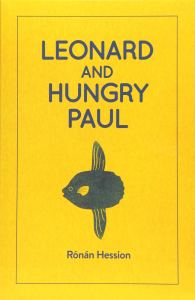 Of the other recently published novels I read this year, the one that meant the most to me was Leonard and Hungry Paul by Rónán Hession (2019). I can’t tell you how much I enjoyed this story of humble, modest people achieving humble, modest success. You might describe another of my favourites as an antagonistic twin of this book: No One Is Talking About This by Patricia Lockwood (2021), which genuinely made me laugh out loud in the first half and also cry at the end, and I can’t remember the last novel that managed that. One of the most exhilarating books I read in 2022 was By Force Alone by Lavie Tidhar (2020), casting Arthurian legend in bizarre new forms, a 21st-century riff on T H White’s already riff-packed The Once and Future King. I’m saving the second of Tidhar’s Anti-Matter of Britain Quartet novels (The Hood) for a later treat, and I can’t wait to find out which legends the final two novels will address. Other novels that I loved unequivocally were The Rotters’ Club by Jonathan Coe (2001), my first Coe, which sparked a season of reading his other linked books, and Geek Love by Katherine Dunn (1989), a big, bold carnival of a carnival novel which was Very Much My Thing even before the speculative elements showed up.
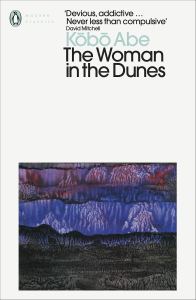 On to older novels. I was blown away by the restrained energy of Housekeeping by Marilynne Robinson (1980), and the inventiveness of the Jekyll and Hyde-inspired Two Women of London by Emma Tennant (1989) – I must get on to reading more of her work. I found The Woman in the Dunes by Kōbō Abe (1962) thrilling in spite, or perhaps because of, its claustrophobia.
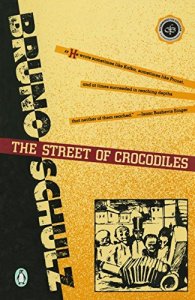 A list of wonderful novels I read this year and that I should have got around to reading much sooner includes: the amoral The Murderess by Alexandros Papadiamantis (1903), the lively Decline and Fall by Evelyn Waugh (1928), the unexpected pleasures of The Club of Queer Trades by G. K. Chesterton (1905), the proto-SF The Machine Stops by E. M. Forster (1909) and the intense and startlingly modern The Awakening by Kate Chopin (1899). Even odder, and somewhat embarrassing, omissions until 2022 were the wonderfully bizarre The Street of Crocodiles by Bruno Schulz (1934) and The King in Yellow by Robert W. Chambers (1895).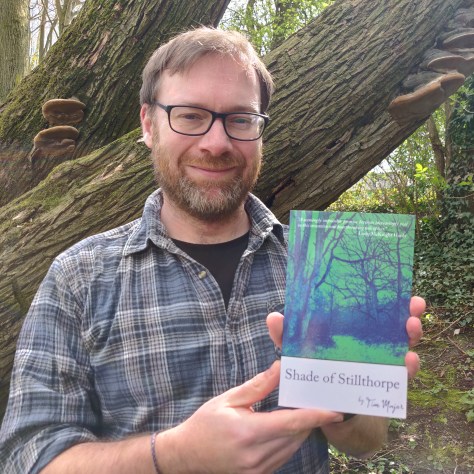





 Of more recent films (i.e. from the last decade), my absolute favourite was The Souvenir (Joanna Hogg, 2019), which I couldn’t stop thinking about for all sorts of reasons, and the knowledge that there’s an upcoming second part is tantalising. Bait (Mark Jenkin, 2019) was delightful in all respects, the best film about film that I’ve seen for a while. I found Pain and Glory (Pedro Almodovar, 2019) surprisingly affecting, particularly Antonio Banderas’ performance. The Personal History of David Copperfield (Armando Iannucci, 2019) was the most fun I’ve had with a recent film, in part due to the pleasure of spotting favourite TV character actors. I loved Aniara (Pella Kågerman & Hugo Lilja, 2018) – exactly my sort of setup, about a Mars migration that turns into an endless voyage – the intertitles signalling greater and greater timescales alone were powerful. And though I loved A Bigger Splash (Luca Guadagnino, 2015) in every respect, Ralph Fiennes’ creepy dancing remains its most memorable moment.
 I watched a lot of classic films this year, partly as a response to lockdown, but also partly because I’ve developed new habits: I no longer fret about not finishing a film in a single session, and I’ve been watching them via BFI Player and MUBI on my (admittedly large-screened) phone, often starting at 5.30am after being woken by my youngest son. Watching films like this, with chunky headphones, in bed in the dark, has been the closest simulation of a cinema setting.
 My immediate response to the announcement of the first lockdown was to panic-read substantial classic novels I’d always intended to read. Middlemarch (George Eliot, 1872) worked as intended: I found it totally absorbing and entirely reassuring. I suspect that Candide (Voltaire, 1759), Mrs Dalloway (Virginia Woolf, 1925) and Lanark (Alasdair Gray, 1981) and The Third Policeman (Flann O’Brien, 1967) will each be influential on my own writing in the coming years. My favourite horror novel was Thérèse Raquin (Émile Zola, 1867), which packed a punch partly because I didn’t realise it was going to be a horror novel. My most important reading discoveries in 2020 were the novels of Richard Yates, my favourites so far being The Easter Parade (1976) and Revolutionary Road (1961), the latter being as great a Great American Novel as The Great Gatsby. My most exciting discovery of 2020 was the Jorge Luis Borges-endorsed, proto-SF novella The Invention of Morel (Adolfo Bioy Casares, 1940).
 In terms of more recent works, my favourites were A Cosmology of Monsters (Shaun Hamill, 2019), which has one of the most absorbing first chapters of any book I’ve read, Annihilation (Jeff VanderMeer, 2014) which I can’t believe it took me so long to get around to reading, and The Wall (John Lanchester, 2019) which made me seethe with envy. I read a lot of non-fiction for writing research purposes, but the factual books I enjoyed most for ‘fun’ were High Static, Dead Lines: Sonic Spectres & the Object Hereafter by Kristen Gallerneaux (2018) and Deep Fakes and the Infocalypse: What You Urgently Need To Know (Nina Schick, 2020).
 It’s been a great year for TV drama. My wife and I binged both series of the hysterical (in all senses) Succession, I was entirely won over by the calm pace of Normal People, and the decidedly more frenetic I May Destroy You seemed to redefine the possibilities of TV drama with every episode. Staged was an impressively comprehensive and complex response to the first coronavirus lockdown, and was very funny to boot. Upright was the TV show that most upset me, offset by all the tremendous joy, and was probably my favourite TV show of the year. Armando Iannucci’s space workplace comedy Avenue 5 turned out to be far better than expected, and I hope there’ll be more to come. The most exhilarating TV I saw this year was World’s Toughest Race: Eco-Challenge Fiji, closely followed by the meticulous, gorgeous and subversive Anaïs Nin adaptation Little Birds. And, likeeveryone else, I thought The Queen’s Gambit was staggeringly good all round.
 After around eight years without videogames, purchasing a half-decent laptop this autumn has allowed me to dabble in games I’ve missed in the interim period, though anything particularly open-world or particularly recent stutters like crazy – for which I’m grateful, as I’m terrified of losing too much time to gaming at the expense of work. Still, I managed to work through Portal-esque puzzle game The Talos Principle (2014), Tomb Raider (2013) and Rise of the Tomb Raider (2015) (the latter better than the first in the new trilogy but representing an almost unsurmountable graphical challenge for my PC). I enjoyed Sherlock Holmes: Crimes and Punishments (2014) far more than expected, appreciating the slow pace. I admired a huge amount of What Remains of Edith Finch (2017), which as well as providing a compelling story, acted as a showcase for the possibilities of videogames – particularly the scene involving slicing the heads off fish on a production line whilst simultaneously guiding a prince around a kingdom whilst also learning about the fragile mental health of the factory worker in question. But the only game that I truly loved was Firewatch (2016), in which the player fulfils a patient role as a lookout in a Wyoming forest, whilst developing a relationship with your supervisor over walkie-talkie. The landscape is stunning, the nudges along the path of the narrative subtle, and the story is deeply affecting, perhaps partly because the game is over within three hours or so.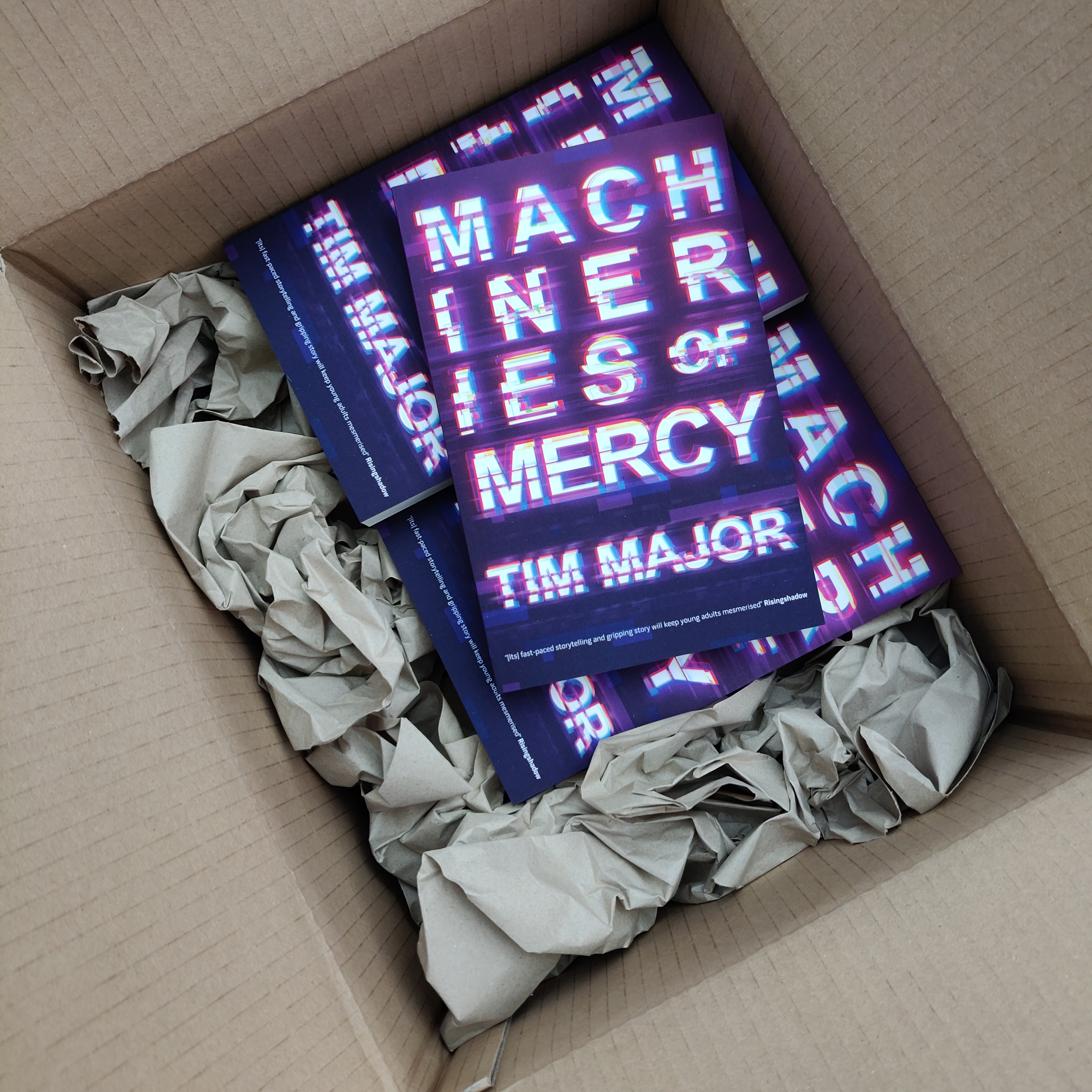


 In July 2015 I noted the following idea in a Word document: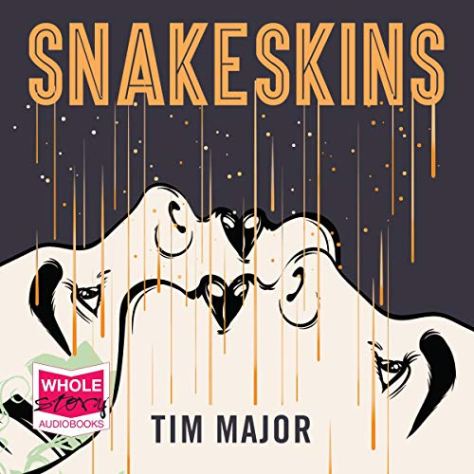
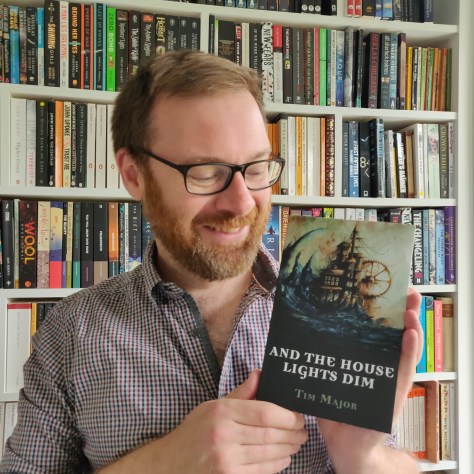 This came around fast… I’m happy to say that my first short story collection, AND THE HOUSE LIGHTS DIM, is available as of today! It’s published by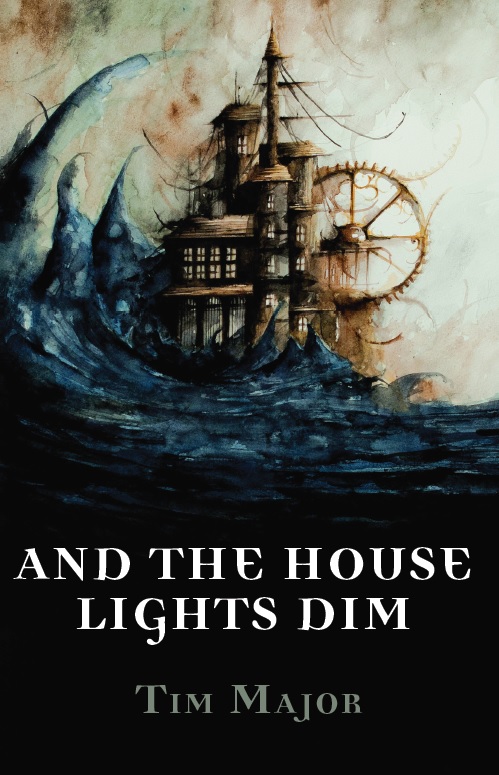



 Tim Major
You must be logged in to post a comment.