Blog
My year of needless data
About five years ago I asked my friend Charley a question: If it were available to buy, how much would you pay for all of the quantifiable data about your life up to this point?
The data would (presumably) include such numerical data as number of hours spent on the toilet, number of times spoken the word ‘shoe’ out loud, but also magically-derived but still quantifiable data like number of minutes spent thinking about sex, and so on.
At the time we both agreed that a Microsoft Excel document containing this information would be worth around £10,000. While I don’t have this sort of money, nowadays I think that £20,000 sounds more like it. Sometimes I think that if only I had access to more data about myself, I’d be able to understand myself, second-guess myself, and become the person I’d like to be. Writing a diary, blogging, logging books read and listing films watched are all ways of building up some kind of data picture about myself.
Anyway, on to more readily available data…
Books
In 2010 I kept a log of all the books I read. I like to think that I read bits and bobs from different eras and styles, but on closer inspection I’m far more conservative than I’d expected.

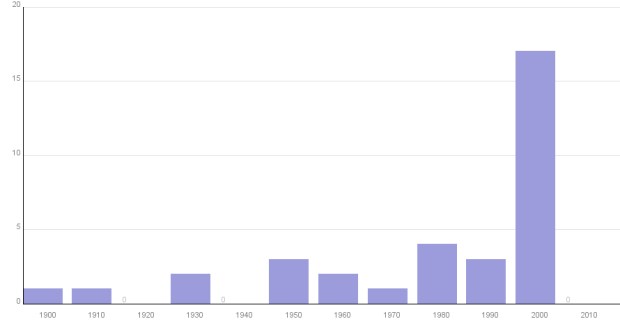
I’ve always thought that it’s crazy to assume that the best literature (or music, or whatever) is that produced in the last few years – but still, exactly half of the books I read this year were from the 2000s (17 of a total of 34). Similarly, 18 of the books I read were from the USA and 14 were from the UK.
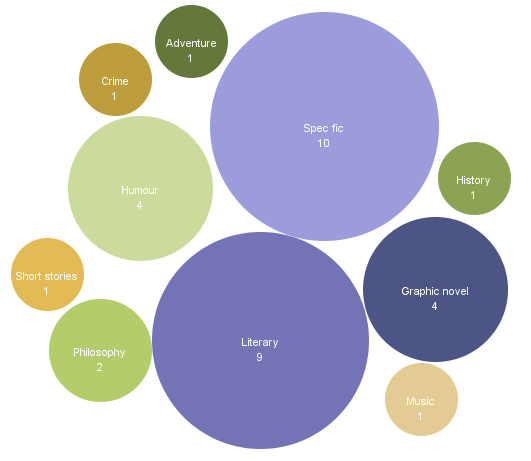
I’m more comfortable with my selection of book genres. In 2010, I made a conscious decision to read more science fiction / speculative fiction, as it’s a genre that I love but have unconsciously pooh-poohed since I was a teen.

Like the near-obsessive that I am, I’ve been rating books in 2010, too. The books I enjoyed most were Middlesex (Jeffrey Eugenides), Never Let Me Go (Kazuo Ishiguro), The Chrysalids (John Wyndham) and The Bridge of San Luis Rey (Thornton Wilder). The four books started but failed to finish were all non-fiction works.
Films
Most films that I’ve seen in the cinema this year (12) would have been made in 2009 or 2010 – but still, 48 of the 79 films I watched in 2010 were made in either the 2000s or this year.

As for films genre, it’s been drama almost all the way. Perhaps my genre tags are a bit lacking here. But still, a pleasing lack of action blockbusters last year.
This next one, I’m less proud of. I barely watched any non-English-language films in 2010.
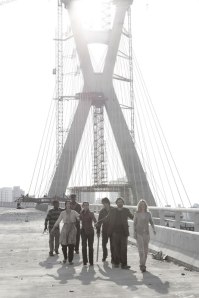
As for ratings, there were nine films I watched in 2010 that I adored. Five of these were films that I’d seen before (The Conversation, Aguirre, There Will Be Blood, Adventureland, City of God), so the four films new to me that I loved were Adam Curtis’ documentary It Felt Like a Kiss, Kubrick’s 1956 noir The Killing, Tomas Alfredson’s Swedish vampire horror Let The Right One In, and the 2010 critics’ darling, David Fincher’s The Social Network.
I went to ATP and all I got was this lousy tinnitus

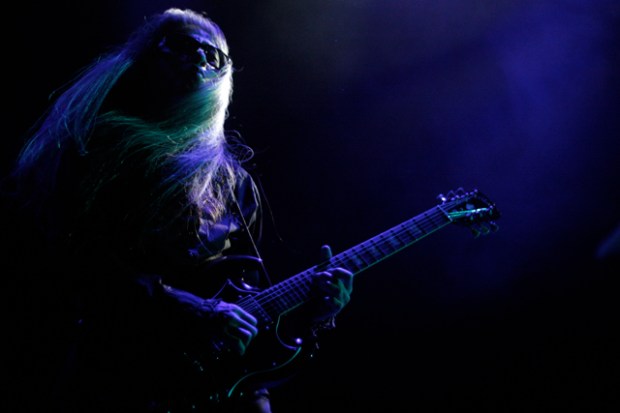
Photo by Andrew Bowman / The Liminal
All Tomorrow’s Parties’ Nightmare Before Christmas event (3-5 Dec 2010) was a terrific monster of a festival. Staying in Soviet Lynchian chalets and braving the December sleet made it all the more memorable. Growing, The Ex, Scout Niblett and Deerhoof were outstanding. Listening to the white-noise-and-wolf-howls of Keiji Haino (above), Rose and I played a game where we stood near the speakers with our eyes closed, and imagined that we had no bodies, which was surprisingly easy to achieve. Without the aid of any narcotics, I managed to convince myself that I was no more than the moisture on the end of one of my fingers. After the end of the Deerhoof gig (2am on the Sunday night), my ears rang more than usual – and the next morning then I woke up with no improvement.
The feeling was a little like postural hypertension – that is, standing up too quickly, resulting in a rush of blood to the head. I felt constantly as though I was on the brink of passing out, as though the high-pitched whine was a precursor to tunnel vision and then unconsciousness. This ringing noise lasted for exactly two weeks after the festival had ended, accompanied all this time, of course, by a thundering migraine. I’d started to become resigned to the fact that the effect may be permanent, and, while bearable, it would certainly have affected my life – not least because my patience was rather thinner than previously.
After two weeks, though, the whining subsided so that it could only be heard in silent moments, such as just before going to sleep and after waking up. The effect, lying in bed at night, is as though I’m caught in a beam of noise – as if rolling over might allow me to escape. In a way, it’s been quite a boon: for a few weeks I couldn’t sleep in past 8.30am, so have been up and about at far more productive hours than normal.
I’m still wearing my ATP wristband. I’ll cut it off when I can’t hear the music any more.
Kurt’s Humanism
I’ve been reading an account of the development of Humanism, but in Chapter 21 of Timequake, Kurt Vonnegut sums it up in just one paragraph:
Humanists try to behave decently and honourably without any expectation of rewards or punishments in an afterlife. The creator of the Universe has been to us unknowable so far. We serve as well as we can the highest abstraction of which we have some understanding, which is our community.
Resolved
My New Year’s resolution for 2011 is to write something original every day. This won’t mean writing in this blog each day – it could be an entry in my diary, or some fiction. I’m allowing myself all sorts of get-outs, so a (non-work-related) email counts, as does an interesting combination of two words.
In Timequake, Kurt Vonnegut classifies writers as either ‘swoopers’ or ‘bashers’, where swoopers write whole swathes of prose and then go back and edit, and bashers hone each sentence to completion before continuing. I realised that I fall into neither category because, although I think of myself as somebody who writes, I rarely do.
It’s been about six years since I wrote the last sentence that I was really proud of, while in San Francisco on business: ‘Californians in Alcatraz Swim Team T-shirts flap, then settle and perch to watch fishermen gut clams.’
Although I’m too lazy to search out the exact quote, Will Self once said that in order to do any writing at all, he had to become infinitely slothful and inert – then the writing would just happen as a reaction to the boredom he had created. After six years, I can no longer even fall back on this excuse.
Favourite tracks of 2010
Near-constant Spotify usage has meant that 2010 has, for me, been more about songs than albums. Or perhaps it’s not been much of a year for LPs? Either way: here’s the unordered list (although, for the record, my favourites are Run Overdrive, Late and Mandrill).
Oh, and here’s a Spotify playlist for almost all of these tracks.
Run Overdrive – Civil Civic
At a bit of a stretch, I can imagine this instrumental track as the theme to a parallel-world Top of the Pops. It’s infectious, uplifting and, for those inclined, presumably quite danceable – but it’s also a little twisted, in particular the rocket-propulsion synths that remind me of Xinlisupreme’s speaker-shredding tracks.
It’s also refreshing to hear a band comfortable without a vocalist (I really hope they don’t succumb). Come to think of it, I still haven’t had the opportunity to play this track at really high volume… I bet it’s a riot live. One of my very favourite tracks of the year, for sure.
New York is Killing Me – Gil Scott Heron
Did anyone else see this coming? ‘I’m New Here’ came from nowhere for me – Gil Scott Heron sounds bruised and weary – and good grief, his voice is incredible these days. The clicking, clapping backdrop to ‘New York is Killing Me’ leaves space for Heron’s mournful complaints. The remix featuring Nas works well, but for me Nas’ contributions dilute a terrifically sparse track.
Microlite – Trophy Wife
I’m predisposed to like Microlite as they’re an Oxford-based band, and put on a good night at the newly gig-centred Modern Art Oxford. While it’s early days and they struggled to find enough material to fill their set (a limp Joanna Newsom cover almost spoiling the fun), this track, their first single, stands head and shoulders above the rest.
Late – Ergo Phizmiz
I’d previously only heard Ergo Phizmiz tracks in collaboration with People Like Us or via Ubuweb or Free Music Archive – but here it is, a genuine Phizmiz album, available in the shops. While on most of the album Ergo does a spot-on Viv Stanshall tribute, this track summons the spirit of Syd Barrett – all late-night meaderings and childish rhymes about Boris the florist.
Bright Lit Blue Skies – Ariel Pink’s Haunted Graffiti
While ‘Before Today’ doesn’t contain a perfect track like ‘Every Night I Die at Miyagi’s’ (from ‘House Arrest’), this hits all the right notes for me. Much of 2010 has felt like the past, musically speaking, and when I hear ‘Bright Lit Blue Skies’, I’m transported to family camping holidays in France, circa 1988. Although the definition of hauntology seems to shift, I understand it as music that evokes false memories – and even on first listen I could have sworn that this had been a hit in my childhood.
On top of all of that, it’s a terrific pop song.
Ancestors – Gonjasufi
I don’t know who Gonjasufi is, but I know that his voice is ace. Over a backing similar to some recent Doom tracks, Sumach Ecks’ whispers his hesitant rhymes in a style unlike any rapper I’ve heard before. Intriguingly, Wikipedia lists his occupation as ‘rapper, singer, disc jockey and yoga teacher’.
Uncertain Memory – Grass Widow
Nothing on ‘Past Time’ quite reaches the heights of Grass Widow’s self-titled debut album. But this track, with its surf guitars and Electrelane chorus, is a winner. What on earth is the time signature here? Like Deerhoof’s ‘My Heart’ remix, ‘Uncertain Memory’ is reluctant to let the vocals die away, cutting away bars in order to preserve the flow. Add in the grandeur of the strings parts in the second half, and this is a track that keeps on giving.
Peppermint – Spectrals
Another track influenced by Phil Spector, ‘Peppermint’ filters sunny 60s pop through a grimy filter (see The Drums’ ‘Summertime!’ EP).
It’s an effortlessly hummable pop tune, just brilliant.
Bellringer Blues – Grinderman
The first Grinderman album was a mixed bag, and it was hard to shake the sense of midlife crisis from Nick Cave and co. ‘Grinderman 2’ is another story. I’ve enjoyed this album more than anything from Nick Cave since ‘No More Shall We Part’ – partly due to Cave’s ballsy confidence, but largely down to the instrumental backing. The guitars crunch and stutter and, on ‘Bellringer Blues’, reverse and slow down, creating a drunken structure that the song can only just contain.
Cave described the album as “like stoner rock meets Sly Stone via Amon Düül”, and on this album returns to his fallen prophet persona. ‘Bellringer Blues’ features Gabriel and deals swiftly with the Bible: I read that book every page / And then I put it away / Said I don’t think so / It makes slaves of all of womenkind / And corpses of the men
But it’s the looping weirdness that does it for me. Welcome back, sort-of-Bad Seeds.
Hand Covers Bruise – Trent Reznor and Atticus Ross
‘The Social Network’ was one of my favourite films of the year, and the classy production values were exemplified in Reznor and Ross’ soundtrack. ‘Hand Covers Bruise’ plays over the opening sequence, immediately dispelling any notion that a film about Facebook might be in any way whimsical. Sparse and haunted, ‘Hand Covers Bruise’ is a statement of intent. Surely Trent Reznor will now be the soundtrack composer of choice?
All Packed Up – Idiot Glee
Kentucky’s Idiot Glee is my pick of bands to watch. James Friley dodges Animal Collective copyism by referring directly back to Pet Sounds, but with Four Tet-like folktronica backings. Short and sweet, I’ve had ‘All Packed Up’ on more or less constant rotation for months.
Lightning Fossil – Prince Rama
This could almost be a lost Incredible String Band track. The banshee wail becomes less of an accompaniment and begins to lead the rhythm, until the point that the song threatens to become operatic prog folk. That this all happens in less than four minutes is astounding. Also, it gives me a mental image of Kate Bush singing with those head-throwing muppets from Labyrinth.
FM Tan Sexy – El Guincho
A bit of a surprise turnaround, ‘Pop Negro’ all but ditches the calypso plundering of 2008’s ‘Alegranza!’ in favour of a curious mixture of retro disco styles. I can almost imagine ‘FM Tan Sexy’ as an academic study of synthy 80s pop – as with Ariel Pink, it feels familiar on the first listen. Halting and bombastic, ‘FM Tan Sexy’ didn’t necessarily match my expectations of the return of El Guincho, but is terrific in its own right.
None an Island – Lorn
Another act that I know little to nothing about.
I can totally picture Doom rapping over this track, but there’s a certain glory in its sparse grind, carried by the tweeting high-pitched organ riff.
Tightrope – Janelle Monae feat. Big Boi
Outkast only really work for me in the context of Singstar. This track has all the same bolshy fun, but Janelle Monae’s vocals act as a convincing ‘fuck off’ to Duffy and the like. This track also features Big Boi’s Jemaine Clement-esque rhyming of ‘NASDAQ’ and ‘asscrack’.
Four – STLS
Apparently Lisa Schonberg and sts perform live facing each other, each playing a full drum kit. I have to see that. Four is buried at the end of the ‘Drumcore’ EP, but is the pick of the lot: the two drum kits intially compete, then phase together momentarily, forming one huge beat. Alternately shambolic and tight, ‘Four’ fills me with unbridled enthusiasm every time I hear it.
Hotel – Ergo Phizmiz
Another track from ‘Things to Do and Make’. Sitting somewhere between the Bonzo Dog Band and Madness, this is a track that’ll always put a smile on my face. A simple song of complaint about a seedy hotel (‘There’s spiders on the floor here’) with a refrain played on a detuned guitar, it contains some Flight of the Conchord-worthy endearing lyrics, including: And the manager is manic / And he may well be Hispanic / He’s obsessed with the Titanic / And his morals are appalling.
Midnight Boycow – The Sexual Objects
Davy Henderson has cited the Modern Lovers as a template for The Sexual Objects’ album, ‘Cucumber’, although I’d say there’s a Kinks influence in the mix too. There’s something really endearing about these slightly filthy and ramshackle pop songs, and ‘Midnight Boycow’ (closely followed by ‘Merrie England’) is my pick of the bunch.
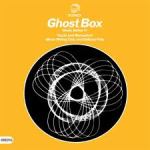
The Young People – Belbury Poly
My favourite of Ghost Box’s ‘Study Series’ EPs, this features crude synths and that ‘Look Around You’ sense of 1980s wonder.
It really feels that Ghost Box have lived up to expectations this year. And that cover artwork – just superb.
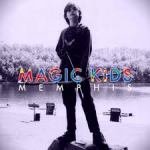
Hey Boy – The Magic Kids
Hopelessly naive indie whimsy, with a severe Brian Wilson hangup and none of Suburban Kids With Biblical Names’ self-deprecation.
It shouldn’t work so well, but it’s just lovely.
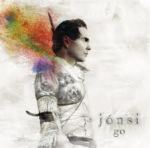
Go Do – Jónsi
Only slightly tarnished by featuring on a Dulux advert, this is a storming track from Sigur Ros vocalist, Jón Þór Birgisson.
It’s a track that somehow, in spite of all cynicism, feels genuinely other-worldly.
Marathon – Tennis
Tennis are super-cool, is that right? I fell a bit oblivious to any hype – but this track is just beautiful, a Spector girl group turning to Jackson 5 falsetto, filtered through wobbly FM. Also, just short enough to leave you wanting, immediately ready for repeat.
The Merry Barracks – Deerhoof
I’m allowed this one, because although it’ll be on next year’s album, Deerhoof Vs Evil, the band released it as a free download this year. And on the strength of this, I’m more excited about the new album than any album for an awfully long time. The loping electronic rhythms, Satomi Matsuzaki’s absentminded childish vocals… just magic.
Let’s Go Surfing – The Drums
A borderline choice given that this first appeared on the ‘Summertime!’ EP in 2009, but given that it also appeared on The Drums’ debut album this year, I’m going to allow myself this one. I’ve written about this song before, but I still love it, not least because Rose insists that the chorus is ‘Obama, I just wanna go surfing’.
Parrot in the Pie – Ergo Phizmiz
Am I labouring the point? Ergo Phizmiz’s album ‘Things to Do and Make’ is my album of the year, and picking only four highlights from it is still doing it a disservice.
Roadtrips would be drastically improved if only I could memorise the chorus to this track.
Gold – Darkstar
I’ve had Darkstar’s ‘North’ on rotation since it was released, and while debut track ‘Aidy’s Girl is a Computer’ may still be the standout track after much reworking of the rest of the album, this cover of The Human League’s ‘You Remind Me of Gold’ is a real grower. I think I may have latched onto the album more because of the lack of new material from The Notwist: Darkstar’s skittery, spidery rhythms and two-note piano melodies scratch a similar itch – but I’m really glad that I’ve given ‘North’ the time to sink in.
Take Me Back – Aloe Blacc
Without even googling for reference, I imagine that Aloe Blacc’s similarity to Bill Withers and Al Green has been much discussed. But tracks like this are a reminder that there’s no technical reason why few artists are creating this kind of raw soul.
Too Much, Too Fast – Solex vs. Cristina Martinez & Jon Spencer
This really shouldn’t have worked. The appeal of Elisabeth Esselink’s tunes have always been the charity-shop ramshackleness, and having Jon Spencer widdling all over them ought to have been dreadful. But the album, ‘Amsterdam Throwdown, King Street Showdown!’ is just fantastic – and this track in particular is excellent fun.
Female Guitar Players Are The New Black – Marnie Stern
Marnie Stern’s awfully good at playing the guitar, isn’t she? Having said that, I’ve just looked up the lyrics to this song online, and while the track sounds like an orgiastic wrestling match, it appears to be about foxes and some wind near a bridge. So, perhaps a little disappointing, but Marnie’s ten-finger tapping and the frenetic drums still win me over, foxes or no foxes.
Sing – Four Tet
Other than his wonderful collaboration with Burial (‘Wolf Cub’ – one of my most-played tracks from last year) and the live performances with drummer Steve Reid, this is my favourite Four Tet song since ‘She Moves She’ way back in 2003. The bleeping melody gives Hebden plenty to monkey around with, and over the course of nearly seven minutes becomes hypnotic. To be frank, it could be twice as long and I it probably wouldn’t outstay its welcome.
Vietnam – Crystal Castles
Crystal Castles do not need Alice Glass, and were far better before they had a vocalist. I’m not sure if this is against the common consensus. Or do people hate Crystal Castles after the hype train for the debut album? Either way, this track reduces Glass’ contribution to a series of sampled pitches, over a ‘Downward Spiral’ synth thump. I’m a total sucker for this kind of quasi-chiptune treatment of voices.
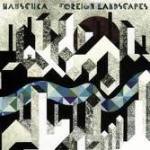
Mount Hood – Hauschka
We saw Hauschka play in St Michael’s Church in Oxford, freezing cold sitting on the pews, even wearing our winter coats. While much of his work is composed for a 12-piece orchestra, he played solo with a grand piano prepared with card, duct tape, leather, tambourines and ping-pong balls resting on the strings. With eyes closed it was almost impossible to imagine one man making so many rattling, clattering noises all at once, with the soft piano lines interspered. The most inspiring music I’ve heard live this year.
1977 – Ana Tijoux
This track makes me question what I actually get out of hiphop – I can only understand 10% of the words, but I still get a real kick out of this.
Does anyone else out there find great pleasure listening to rap in a language you don’t understand?
My Heart (Deerhoof remix) – Wildbirds and Peacedrums
Forget my earlier comment. I’m allowing myself this one anyway.
Last.fm tells me that this is the track I’ve listened to most this year, which sounds about right as there were a few days when I listened to little else.
Silver Sands – Stereolab
Stereolab’s career distilled into just over 10 minutes.
A track of two halves, this begins with sugar-tinged Krautrock before making an about-turn into Heatwave noodling territory.
Ambre – Nils Frahm
Uncomplicated and beautiful, this track buried into my brain a long while ago.
Music like this does rather make other, fussier productions seems a bit ridiculous. ‘Props’ to Thom Yorke for recommending this via Spotify.
Mandrill – Ergo Phizmiz
This is the tune that’s been stuck in my head more than any other this year. And it features easily the best collection of words from any song this year: This mandrill / he was mauvish in the chops / and delicious / I met him down the shops one day / And he said ‘How d’you do?
When the third verse begins, Ergo’s pals pull together to make the most joyous sound I’ve heard for such a long time. Seriously, this is going to sound over-the-top, but this ‘novelty’ song makes me well up with happiness.
Listen to the Spotify playlist containing most of these tracks.
My Heart – Deerhoof remix (Wildbirds & Peacedrums, 2009)
This track was sitting high in my list of favourite songs of 2010 (to be written up over the next month), until I realised that it was actually released late last year. I’d first heard the original Wildbirds & Peacedrums song as the soundtrack to a video at Oxford’s Modern Art Museum, in which a group of dancers formed a spontaneous dance routine in a warehouse and innercity areas. Unusually for me, I’d enjoyed the installation video so much I watched it all the way through twice.
It was only a few months ago that I heard ‘My Heart’ again, and it took me a while to place it. The original track is measured, bluesy and raw – although on further listening it seemed to take rather more time to cut to the chase than I’d remembered, and the second half seemed to lose itself a little. Enter Deerhoof’s remix, which leaves the vocal relatively untreated, emphasises guitar lines, but removes the coda and, in a pretty audacious move, actually removes whole bars in order to keep the vocal flowing with few instrumental gaps. This results in a far more poppy tune, despite the loping, woozy effect of the flexible time signatures. It’s by far the most accessible remix I’ve heard from Deerhoof, and turns a solid tune into something oddly hypnotic.
GetGlue is a foisting machine
In the last week or so I’ve been playing around with GetGlue, a new recommendation and social networking site that covers all media (i.e. film, TV, books, music, general topics). After my abortive research into film recommendation sites – and I really should update my earlier post, as I ended up leaving Jinni in favour of Criticker, which still has plenty of failings – this feels like it could become the site for me.
There are several main draws to GetGlue. The first seems trivial but is central – you gain virtual stickers for various activities – for example, rating 50 TV shows. These stickers show up on user profiles, working as boasts similar to Xbox achievements. There are also mentions of becoming applicable to receive ‘hard-copy’ stickers for free, but this doesn’t seem to be the big sell.
The other USP is that GetGlue distinguishes between recommendations and ‘checking in’ – i.e. letting users know what you’re currently watching, reading, listening to or thinking about. This feature’s obviously inspired heavily by Facebook updates, and indeed you can publish each comment directly on Facebook (or Twitter) – you could actually use GetGlue as a portal for social-media updates related to your likes or dislikes.
Finally, and the feature that’s got me hooked, is the ability for users to become ‘gurus’ of particular subjects, achieved through posting reviews and users voting. Guru status bestows the user with page-editing privileges and also the ability to hardwire particular recommendations to that page. The temptation to foist obscure but related books, films and music onto casual browsers is huge, I’m discovering. I’m disproportionately proud to be guru of 10 things, currently: The Last Man on Earth, The Drums’ Summertime!, Dungen, Viktor Vaughn’s Vaudeville Villain, Lonnie Donegan, The Research, Casiotone for the Painfully Alone, Electrelane’s The Power Out, The Hired Sportsmen and 13 & God.
As with my earlier comparison post, here are my thoughts about GetGlue, distilled:
Pros:
- Impressively wide catalogue due to links with specialist websites e.g. Last.fm and imdb
- Ability to add to index from selected sites
- Covers music, film, books, topics
- Clean, clear interface
- Guru status offers Wikipedia-like editing rights, plus ability to make recommendations
- Stickers encourage exploration and are strangely compelling
- Distinction between ‘checking in’ and liking things
- There’s a linked iphone app
- Links to Facebook and Twitter
Wishlist:
- User profiles by default show a Facebook-like ‘stream’ rather than a definitive overview of that person (favourites are more enlightening but are buried away)
- Favourites can’t be split into media type, so can become messy and unrepresentative
- Can’t reorder favourites or lists
- ‘Saved’ items could be made into more useful ‘to read’/’to watch’ lists, so could become a reminder tool
- The iphone app only allows you to ‘check in’ rather than rate favourite items
- Recommended items are literal-minded and uninspired (e.g. if you like an album by an artist, you’ll like other albums by the same artist), and only relate to a single item rather than a combination of items
- Inability to add extra comments to a page once you’ve reviewed – even if you’re the guru
- ‘Check in’ seems different to ‘currently reading’ etc – it’d be nice if user profiles could show media that the user is currently immersed in…
- Only three tiers of rating: ‘favourite’, ‘like’ and ‘don’t like’ (perhaps, though, this is a ‘pro’, as it’s much lessy fussy than, say, Cricticker)
- Can’t embed stream or favourites in non-Javascript blog (like this one)
- Can’t easily browse recommendations – quite limited categories (e.g. 1970s)
- This is entirely trivial, but I’d love to see the stickers feed into a meta-game or measureable tally of ‘progress’ – probably irrelevant for most people though!
You can see my GetGlue profile here.
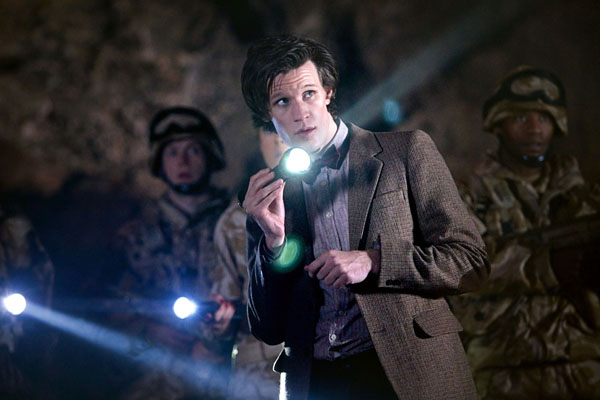
Doctor Who – The Lack of Time
I’ve been resisting this.
Since its return in 2005 I’ve followed Doctor Who, on and off. Like many fans of the ‘classic’ series, I wasn’t too sure about the form the regenerated show had taken. First Christopher Eccleston’s wild pantomime and then Russell T. Davies’ increasingly sloppy series arc plotting kept me holding the show at arm’s length.
Again, like many fans of the original series, I had high hopes for this year’s sort-of reset, with highly dependable Steven Moffat in the script editor and executive producer role, and Matt Smith as the Doctor. And, I feel that we now have what we wanted. Series 5 has far more of the hallmarks of classic Doctor Who, it appears to be gradually unravelling RTD’s more questionable decisions, and I see in Matt Smith flashes of Patrick Troughton and even (he was my Doctor) Sylvester McCoy.
But it’ll never be quite right, and I think I now see what’s wrong.
At first I thought it was just the cliffhangers. Watching the recent 2-parter ‘The Time of Angels’ / ‘Flesh and Stone’ and last week’s ‘The Hungry Earth’, it’s obvious that Doctor Who revels in leaving the audience hanging. In classic serials, much of the time in each episode was spent engineering a tantalisingly open ending (often hastily resolved in the next episode, I’ll admit). It’s a huge shame that the showrunners allow themselves this luxury in just a few stories each series.
But more and more, I feel sure that the real obstacle is the 45-minute run time for each episode. Recent, much-hyped, episodes such as ‘Victory of the Daleks’ and ‘Vampires of Venice’ have felt rushed beyond belief, allowing 20 minutes to set up the scenario, 15 minutes mid-crisis, then madly racing about to wrap up the story within the final 10 minutes.
Far more successful have been the 2-parters, for good reason: approximately 25 minutes set-up, 50 minutes crisis, 25 minutes resolution. The scripts have room to breathe and there’s time for character interaction rather than just plot-furthering.
Equally successful, in my opinion, are many of the ‘minor’ episodes in recent years. While perhaps now seen as a scene-setter for the full invasion at the end of Series 1, for me the most effective recent Dalek episode has been Rob Shearman’s punchy, lone-Dalek story, ‘Dalek’. ‘Father’s Day’, ‘Blink’, ‘The Eleventh Hour’ and ‘Amy’s Choice’ are all terrific and, I‘d say, some of the best standalone episodes that the new series has to offer. But they’re very unlike most classic Doctor Who serials: they play to the strengths of the time restriction. The number of stories in the past that restricted themselves to this time limit can be counted on one hand (I think): for example, ‘Black Orchid’, ‘The Edge of Destruction’ – both similarly curbing the ambition of the stories to fit the timescale. Conversely, many New-Who stories have appeared to cram a full 90-minute tale into half the time.
Russell T. Davies and now Steven Moffat have taken the approach of introducing series arc, presumably to counter the briefness of each episode, to allow a story to take shape over several episodes. RTD’s arcs were largely spurious – lazy signposting that led to surprise, deus ex machina conclusions; Steven Moffat’s first attempt may yet prove more coherent. As well as the series arcs, both script editors have ensured that characters, especially the Doctor’s companions, have matured and adapted to circumstances. Much of the discussion on fan forums and podcasts revolves around character relationships and revelations (‘Does Amy prefer the Doctor to Rory?’, ‘Is River Song really the Doctor’s wife?’), which is all well and good. Modern Doctor Who is excellent at exploring the mythology of the programme, and, increasingly, prodding at characters’ motivations, including the Doctor’s.
But it’s a shock to realise that what Doctor Who doesn’t do at all well any more is adventure.
Finding a Last.fm for films
I love lists. I love films. Surely there exists an online application that allows me to log the films I’ve watched, which then recommends other films I’d probably like?
Last.fm has fulfilled my nitpicky needs for music, and frankly, I would never keep a manual log of music I’ve listened to. However, I do keep a handwritten diary of films that I’ve watched (and I’m comfortable with the image you may have of me after that confession!). The downside of a handwritten record is that, in this age of remix culture and endless tweaking, I can’t analyze the list in any way. So begins my search for the ‘Last.fm for films’.
My criteria include:
- a satisfying ratings feedback system (rating films must be fast and decisive)
- ability to filter, export and display list data (to display on this blog)
- a comprehensive list of film titles
- a solid and reliable recommendation system
I’m not trying to be impartial – this is a search for the best tool for me alone. Extra points will be awarded for:
- being UK-centred or at least not wholly USA-centric
- inclusion of social features (finding people with similar tastes in order to ‘steal’ recommendations from their lists)
I tested each website using a similar technique – I added ratings for a bunch of films (most of the sites require 10 ratings before any recommendations are made). As far as possible, I rated the same films on each website (a mix of my favourites e.g. ‘Rear Window’, ‘Aguirre, Wrath of God’, ‘Bigger than Life’, a selection of non-English-language films e.g. ‘The American Friend’, ‘Il Divo’, and popular films that I disliked e.g. ‘Once’, ‘Revolutionary Road’). Judging the ease of adding the ratings and the resultant recommendations informed the bulk of these conclusions.
Click ‘Read more’ below to read the full reviews of each of the websites.
Grass Widow (Grass Widow, 2009)
For the last couple of months Grass Widow has been on my list of great bands that I failed to discover during 2009, and only came across during a trawl of Top 100 lists at the end of December. After an awful lot of repeated listens I’ve promoted the album ‘Grass Widow’ to one of my absolute favourites of 2009. Like The Drums’ ‘Summertime’, every track feels like the centre of the album. Grass Widow songs have the raw feel of first-attempt rehearsals, and evoke the naive joy of the much-missed Brighton trio Electrelane and the discordant mishmash of early Deerhoof.
They’re brilliant. And while I’m happy to have found them now, the question for me remains: how does one find out about new music these days? I sign up to plenty of blog RSS feeds, (over)use Spotify and read Boomkat newsletters – but in the absence of a trusted print music magazine or the Peel show, I still feel at a loss how to avoid missing a new band like Grass Widow.
Listen to Grass Widow on Spotify.
And while I’m ranting… I’m inordinately happy that Spotify have developed an update to their Spotify iphone app, currently with Apple for approval. The update will add Last.fm scrobbling functionality to the mobile app, meaning that my Last.fm profile should soon be a far better reflection of what I’m actually listening to. That I’m so pleased by this is, I realise, troublingly sad.
Lost John (Lonnie Donegan, 1956)
Lonnie Donegan’s 1956 recording of the traditional song ‘Lost John’ contains more wonderful moments than most artists manage in a whole career. Donegan was a lovably inclusive singer, treating his band and his listeners as part of the gang, as this intro to the song shows: ‘Now this here’s the story about an escaped convict called Long Gone Lost John / It’s got a nice chorus so if anybody wanna join in, here’s the way it goes…’ His band rattle and yelp through the tune and Donegan morphs from a jovial variety performer into a frenzied rock and roller, the recording equipment struggling to capture his rasping shouts.
The song is doubly significant to me. I was introduced to Donegan’s music when I avidly listened to, and recorded, Peel’s Radio 1 show around the millennium. Peel could hardly contain his glee when he contrived to play a Lonnie Donegan recording such as (my own favourite) ‘Ham ‘n’ Eggs’. When the singer was admitted to hospital in 2002 with heart problems, Peel visited him at his bedside, which I suspect was a pilgrimage of sorts for the DJ – Peel once remarked that in his opinion of rock and roll history, ‘Lonnie Donegan pushed the button that started it all’. When Donegan passed away in November of that year, Peel tearfully recounted the visit during one of his shows. He had sat at Donegan’s side and chatted, and together they had sung Peel’s favourite lyrics from ‘Lost John’:
Now Lost John made a pair of shoes of his own
Finest shoes that ever were born
Heels on the front, heels behind
So nobody know which way Lost John g’wine
…which, in fairness, are some of the finest lyrics I can think of too.
In the radio shows immediately following Donegan’s death, Peel could barely hold himself together. During the first show, he didn’t manage to speak in between songs and choked on his words each time he tried to talk about the singer. Even by the following week, Peel only stopped playing Donegan songs because his wife Sheila warned him not to.
When John Peel died in October 2004, the song ‘Lost John’ obviously took on an extra significance, not just because of the titular character, but because of the attachment that Peel himself had to the song and his favourite singer. To me, the song has become a celebration of both Donegan and Peel – two of my musical heroes.
You really must listen to ‘Lost John’ – click here to listen to it on Spotify. In fact, work your way through at least the first CD of Castle Music’s ‘Rock Island Line: The Singles Anthology 1955-1967’.
As the man said: ‘If anybody asks you who sung the song / Tell ‘em Lonnie Donegan been here and gone’.
Nicolas Moulin, Blindness and deserted streets
Via BLDGBLOG, I’ve just discovered Nicolas Moulin’s computer-altered images of Paris, with streets emptied of all life and the ground floors of each building sealed with concrete. You can see more of Moulin’s stunning work here.
One commenter on the BLDGBLOG post referenced the opening scenes of Danny Boyle’s ‘28 Days Later’ – but these images are perhaps even more affecting, as all traces of human life has been removed. I spent last night watching Fernando Meirelles faithful adaptation of José Saramago’s novel ‘Blindness’, and was particularly impressed/horrified at the scenes depicting the city, Sao Paulo, after the population has become blind. The streets are strewn with rubbish, but also with families, animals and bodies. While much of this speaks of death, it also shows that the city is resolutely full of life, even after the blindness epidemic has affected everyone.
I find Nicolas Moulin’s images compelling and disturbing precisely because of the lack of life, and because the comprehensive removal of all traces of humanity seems premeditated.
Spotify playlist: 30 Year Old Man (March 2010)
I’m terribly self-indulgent. This summer I’ll turn 30, and as I’m currently feeling more positive about my life than I ever have before, this playlist celebrates all the things that I’m not.
1. 30 century man – Scott Walker
2. Mr suit – Wire
3. You’re getting old on your job – Lonnie Johnson with Clara Smith
4. I’m a worried man – Johnny Cash
5. Look back in anger – Television Personalities
6. Shadows of tomorrow – Madvillian / Lord Quas
7. 50 year old man – The Fall
8. Getting old blues – Johnnie Temple
9. Working for the man – Roy Orbison
10. Dull life – Yeah Yeah Yeahs
11. Headache – Frank Black
12. Funny how time slips away – Elvis Presley & The Jordanaires & The Imperials Quartet
13. Sleepy man blues – Bukka White
14. Jack o’ diamonds – Lonnie Donegan
15. Getting old and gray – Howlin’ Wolf
16. Timothy – Henry Mancini
17. Tomorrow never knows – Jad Fair
And curse you Spotify for the lack of ‘Dignified and Old’ by The Modern Lovers.
Lunar Park and required reading
I’m currently reading ‘Lunar Park’ by Bret Easton Ellis, a book in which the protagonist is a fictionalised version of Ellis himself. I’ve read and watched ‘American Psycho’, and my knowledge of Bret Easton Ellis ends there. Lunar Park appears at first to be autobiographical, but it’s soon apparent that Ellis the narrator is an exaggerated portrayal of Ellis the author. Both Ellises are famous and successful novelists with the same bibliography. Narrator Ellis has extreme drug problems, an illegitimate child, and a self-obsessed and sulky attitude.
Given the caricatured nature of Ellis the narrator, I’ve assumed that there are lots of details in the novel that are also exaggerated or falsified. The narrator is married to Jayne Dennis, a Hollywood superstar actress who has starred in blockbuster films with Keanu Reeves. Now, I’m pretty sure that Dennis is a fictional character, but now I’m wondering about how prepared one should be to read ‘Lunar Park’. Should I read Bret Easton Ellis’ Wikipedia profile to find out whether he did indeed have massive drug problems after the publication of ‘Less Than Zero’? Should I find out who were his celebrity friends? Should I Google Jayne Dennis to determine whether she’s fictional – and if she doesn’t exist, should I try to determine whether the name is an alias for another Hollywood actress? Would my understanding of the novel be lessened if I hadn’t read ‘American Psycho’, and should I have read ‘Less Than Zero’ before starting this book?
Some fiction clearly signals whether there’s required reading. Series or sequels are usually numbered to indicate where to begin. But some novels and films are more difficult to judge. A couple of nights ago I watched Wim Wenders’ ‘The American Friend’, an adaptation of Patricia Highsmith’s ‘Ripley’s Game’. The book is the third in Highsmith’s series of novels featuring Tom Ripley, and you could certainly argue that the series is richer if read in strict order. But with Wenders’ title change, and the lack of cohesion across the various filmed versions of the novels, the required reading (or watching) for ‘The American Friend’ is far from clear. Without prior knowledge of the character, perhaps it’s possible to get through the whole film without realising that Tom Ripley is a serial killer, given that in this particular story his motives are quite ambiguous.
Should works like ‘Lunar Park’ and ‘The American Friend’ come with a required reading list, or a set of instructions? What’s the correct or default way to approach them?
Talking of instructions for fiction, I’m interested in non-linear fiction, books that require you to determine some kind of unique path through the work. Nabokov’s ‘Pale Fire’ is a good example: a quarter of the book comprises a fictional work called ‘Pale Fire’, a poem in four cantos. The remainder is an essay on the poem, and yet both of these together make up Nabokov’s ‘Pale Fire’. To read the book you have to decide whether you’ll read first the poem and then the notes in standard linear fashion, or whether you’ll dot between lines of the poem and notes relating to those lines. I’d argue that the latter is the ‘correct’ way to uncover the plot, but it’s up each individual reader to decide. The introduction to Milorad Pavic’s ‘Dictionary of the Khazars’ instructs the reader to refer to dip in and out of the fictionalised encyclopedia entries to piece together the story. Almost every page of Mark Z. Danielewski’s ‘House of Leaves’ requires the reader to decide for themselves how to progress through the fragmented text.
Anyway.
I’m not really trying to reach any conclusions, but there does seem to be a lot to be said about non-linear narratives and prerequisites when approaching fiction. As a side note, it strikes me that while there are good examples of books and, more and more, videogames with non-linear narratives, there are no non-linear films that I can think of, apart from perhaps Mike Figgis’ ‘Timecode’, at a pinch. Maybe someone should attempt to create a choose-your-own-adventure film to be ‘read’ via DVD chapter selections. Or has this been tried already?
This too shall pass – RGM version (OK Go, 2010)
This music video is really rather wonderful. Various advertisers and filmmakers have created these Heath Robinson-esque contraptions before now (and I’m a total sucker for all of them), but this one’s especially inventive. I imagine that some people will be upset about what looks like a cut at about the 2:30 mark, but I don’t think it makes a bit of difference to the overall effect.
On top of that, the fact that this video is embeddable in this blog is important. See here for an discussion of OK Go’s struggles against record company EMI to allow them to create and share their own music videos.
Mapping time travel
Take a look at this fantastic image on Information is Beautiful. While the concept – a timeline showing start and end points of time travel in film and TV – is trivial, the preparation involved is vast. Click the image below to see some of the 36 sketches that creator Alice Cho produced before the final representation was agreed.
Every Plan B magazine ever, for free
In an admirable attempt to secure its status in the history of music journalism, the team behind the now-defunct Plan B magazine are offering every single back issue in pdf format, for free. You can download it here – you’ll first need to get hold of a torrent client though.
Plan B was a pretty bold publication. It had some really fantastic aspects, and I hope it’s not disrespectful to the journalists to say that I thought the often beautiful illustrations were among its best assets. Everett True’s snarky, self-congratulatory editorials often grated with me, and his indulgence often permeated into the rest of the magazine. Having said that, Plan B was a welcome forum for new music in the years following John Peel’s death, and since the magazine closed shop last year I’ve still not found a single source for music recommendations that feels so much like home.
Hauntology and nowstalgia
‘Hauntology’ is a word that’s appeared on my radar only recently. It was originally a term coined by Jacques Derrida, linked to the similar-sounding ‘ontology’, the philosophical study of the nature of being and reality. Derrida’s idea was that the end of history would be signalled by a preoccupation with nostalgic, ‘old-time’ aesthetics. I first came across the term in The Wire magazine, used to refer to the music of artists like Leyland Kirby and Broadcast & The Focus Group who create dreamlike aural soundscapes that conjure up nostalgic versions of the past.

This reminds me of a term that I and my friends used to joke about: we used the word ‘nowstalgia’ to refer to nostalgia for the present moment. I think we coined the term when the first wave of inexpensive digital cameras were available. One summer, every social event featured a common moment, usually two-thirds through the event, when people would gather around the tiny LCD screen of a digital camera to view the images. The appeal of seeing still images of an event that was still happening was a guilty pleasure. Spending time reviewing the images actually seemed to involve removing yourself from the moment, and seeing the event through a nostalgic filter. Years later, the proliferation of camera phones and latterly direct publishing of images on Facebook means that the phenomenon is far more common but perhaps a little more unsettling.
Today’s worry: is there an outside chance that Derrida might be proved right? Is ‘nowstalgia’ just a first step into our obsession with the recent, then more distant, past?
Every Day the Same Dream (Paulo Pedercini, 2009)
I already posted about this game on my serious games blog, but it definitely bears repeating. Every Day the Same Dream is a beautiful independent game from Paolo Pedercini as an entry to the Experimental Gameplay Project. Illustrating the tedium of routine office work, the game allows few interactions – for example exchanging brief words with your indifferent wife, a homeless man, the elevator operator. You can only ‘win’ the game by searching out the few ways to break the routine of everyday working life. It’s bleak and often tedious – and it’s one of the most consistent and affecting games I’ve played in a long time.
See Paulo Pedercini’s website for links to his other works, including a machinima video about post-traumatic stress disorder filmed with the recruiting game America’s Army, and online games covering subjects such as the unethical practices of fast food corporations and child abuse by the Catholic clergy.
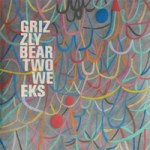
Two Weeks (Grizzly Bear, 2009)
Up until this point in this blog, I’ve tended to write about music that I unreservedly love – songs that I replay as soon as they’ve ended. ‘Two Weeks’ by Grizzly Bear falls into another category. In 2009 Grizzly Bear escaped the long shadow of Animal Collective; in the indie press there were few songs that were as widely praised as ‘Two Weeks’. I love it too – but I’m not sure it’s a keeper.
I’ll avoid asking whether it’s a good track. The question that interests me is whether we – the music obsessives and list-compilers of 2009 – will like the song in 5 years time.
The track has a swagger unknown to Grizzly Bear up to this point. The piano line and ‘whoa-oh-oh’ backing vocals are infectious. The chorus swoons. But isn’t the production a little too perfect, almost clinical? There’s nothing wrong with a guitar band sounding more like Beyonce than Pavement, but something about this track rings false – there’s an inherent smugness that rankles.
It’s hard to predict how prevailing musical tastes will change – but when I listen to this track I always have the uneasy feeling that when we move on from 2000s-era American psychedelica-tinged indie, it’s tracks like this that we’ll guiltily ridicule. The grandiose follies of Sufjan Stevens, Akron Family’s freak prog – will they in retrospect sound like the last fart of early 21st century US indie before some pared-down music style sweeps them away? At the moment my money’s on Animal Collective’s work standing the test of time, partly because they’ve evolved significantly with each release. But Grizzly Bear? Ask me in 5 years time.
The album Veckatimest isn’t on Spotify, so listen to Two Weeks at Grizzly Bear’s homepage, here.
If On a Winter’s Night a Traveller (Italo Calvino, 1979)
This isn’t the actual beginning of Calvino’s novel ‘If On a Winter’s Night a Traveller’, but it is the beginning of the first book-within-a-book, also called ‘If On a Winter’s Night a Traveller’ – so it still counts as one of my favourite opening passages of a novel.
The novel begins in a railway station, a locomotive huffs, steam from the piston covers the opening of the chapter, a cloud of smoke hides part of the first paragraph. In the odour of the station there is a passing whiff of station cafe odour. There is someone looking through the befogged glass, he opens the glass door of the bar, everything is misty, inside, too, as if seen by nearsighted eyes, or eyes irritated by coal dust. The pages of the book are clouded like the windows of an old train, the cloud of smoke rests on the sentences.
I’m Chief Kamanawanalea (We’re the Royal Macadamia Nuts) (The Turtles, 1968)
Formed in 1965 as The Crossfires from the Planet Mars, The Turtles were huge by 1967 – their biggest hit ‘Happy Together’ knocked ‘Penny Lane’ from the #1 slot in the USA. Their follow-up album, ‘The Turtles Present the Battle of the Bands’, was a concept album in which the band pretended to be a series of different groups, credited with fantastic names like The Atomic Enchilada and The U.S. Teens featuring Raoul.
While ‘Eleanore’ and ‘You Showed Me’ were the big hits, the track ‘I’m Chief Kamanawanalea (We’re the Royal Macadamia Nuts)’ is a one-and-a-half minute nugget of mad genius. The band adopt what I think is supposed to be a Hawaiian tribal war chant – but the pounding drums, whoops and call-and-response shouts come off more like the Sugarhill Gang. Later sampled by the Beastie Boys (‘Jimmy James’) and De La Soul (‘Say No Go’), it’s amazing how well it measures up against early B-Boy classics like Incredible Bongo Band’s ‘Apache’.
The transition from ‘I’m Chief Kamanawanalea’ to the sublime ‘You Showed Me’ is a vindication of The Turtles daft multi-persona concept and – is it weird to have a favourite transition between songs on an album? Because that’s mine.
Listen to I’m Chief Kamanawanalea (We’re the Royal Macadamia Nuts) on Spotify.
The Turtles Present the Battle of the Bands
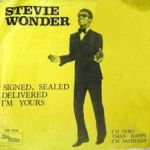
The drums from Signed, Sealed, Delivered I’m Yours (Stevie Wonder, 1970)
While it’s a fantastic song all in all, for me it’s all about the drum track. It’s so unfussy, so methodical and regular, and then so satisfying when the drums break out into a quick rattle at the close of some of the vocal lines. I’ve not been able to find out for sure who the drummer is, but Motown’s house band The Funk Brothers are usually credited so the likely candidate is Richard ‘Pistol’ Allen.
It’s amazing how much he’s able to achieve in the moments that he allows himself to escape from the standard beat, and I love the way that towards the end of the song he lets the rat-a-tatting take over little by little, threatening to transform the song from Stax-esque funk into a wild marching band.
Click here to listen to Signed, Sealed, Delivered I’m Yours on Spotify.
The lead guitar from So Not What I Wanted (Herman Düne, 2002)
David is my favourite songwriter of the Herman Düne brothers but this song by André is an absolute beauty. There are two guitar solos in this song and both are near-identical – I’ve always assumed that the solos were by David, but I’ve had trouble finding out either way.
At 02:10 André’s and Diane Cluck’s vocals drop out and the guitar solo begins – at first confident and clear, but then fading and rattling into uncertainty. As the next verse continues, the lead guitar shimmers in the background, and then at 4:38 the solo returns, this time accompanied by an insistent regular drum pattern, rising in volume gradually.
The lead guitar line’s naive simplicity and repetition mirrors André’s cracking voice and sometimes awkward French-Swedish accent. It’s one of the most perfect marriages of vocal and instrumental melodies that I can think of.


You must be logged in to post a comment.