Blog

Frankenstein and communication

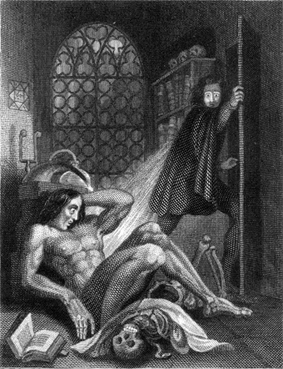
Frankenstein frontJohn Locke, in An Essay Concerning Human Understanding, describes the newly-formed mind as a tabula rasa or blank slate: ‘white paper, void of all characters, without any ideas’, and states that all knowledge derives from experience. In Frankenstein, Mary Shelley suggests that, as well as experience, the ability to communicate is crucial to understanding.

Frankenstein’s creature is initially rational but struggles to order his thoughts:A strange multiplicity of sensations seized me, and I saw, felt, heard, and smelt at the same time’. When he deduces that the sounds that the De Lacey family make are a method of communication, he describes speech as a ‘godlike science’. He masters language and reading, which he describes as a ‘wonder and delight’.

Later, the creature describes his main obstacle as the inability to communicate in the manner he would wish. He tells Victor Frankenstein, ‘I will revenge my injuries; if I cannot inspire love’. Failing to communicate with ordinary townfolk or with Frankenstein himself, the creature insists that he be provided with a female creature, the only possible companion with whom he may communicate without inspiring fear.

Shelley’s novel is defined by communication. Robert Walton’s letters to his sister form a framing device, but the tale within is transcribed from Victor Frankenstein’s own storytelling. In turn, parts of Frankenstein’s narrative are transcriptions of the creature’s own experiences. Therefore, the novel is dependent on placing trust on each storyteller in turn. Without each character’s ability to communicate fully and clearly, there could be no story.

The subtitle of the novel, ‘The Modern Prometheus’, refers to the theft of the Gods’ fire for human use. One could argue that the ‘fire’ in Frankenstein is not only the life that Frankenstein gives to his creature, but also the ability to communicate.

Submitted to Coursera as essay 04 for Fantasy and Science Fiction: The Human Mind, Our Modern World.
Coursera peer grade: Form 2 / Content 2.5

Images of weather in Dracula

Whitby abbey

In Dracula, images of weather associate Count Dracula with the forces of nature and build in intensity as he gains strength.

Initially, the unseasonal, ‘late-lying’ snow in Transylvania creates a muted effect like a ‘white blanket’ upon the land. Jonathan Harker’s coach ride is described as ‘a boat tossed on a stormy sea’, prefiguring the Demeter’s arrival in Whitby. Within the castle, Harker’s remarks on the ‘wind [that] breathes cold through the broken battlements and casements’. When Dracula interrupts the preying female vampires, Harker experiences the Count ‘as if lapped in a storm of fury’, linked to the forthcoming Whitby scene.

The day of the Demeter’s arrival in Whitby is ‘marked by myriad clouds of every sunset colour’ but with dark areas of ‘colossal silhouettes’. These images create a feverish backdrop to Dracula’s arrival. The description of the Demeter’s approach is filled with imagery linked to the Count’s threatening status: ‘dead calm, a sultry heat, and that prevailing intensity’. After appearing to the crew during a rainstorm, Dracula creates the ‘tempest’ which accompanies his arrival, producing an ‘onrushing mist’ which be later recalled during his physical transformation into a ‘pillar of cloud’.

Before Lucy is attacked by Dracula on the hilltop, the sky is clear with a bright full moon. As Mina sees Dracula, ‘heavy black, driving clouds’ obscure her view, mirroring Lucy’s swooning confusion.

At the end of the novel, snow at first reflects Dracula’s power over the elements (‘The wind came now in fierce bursts, and the snow was driven with fury’), but as the group of vampire-hunters  gain the upper hand, the snowfall recedes. Finally, the settled snow represents a return to the calmness of the beginning of the story and represents cleanliness and purity. Quincey, seeing that Mina’s scar has disappeared, says, ‘The snow is not more stainless than her forehead!’

Submitted to Coursera as essay 03 for Fantasy and Science Fiction: The Human Mind, Our Modern World.
Coursera peer grade: Form 3 / Content 2.5

Alice’s struggle for identity in Wonderland

Alice big

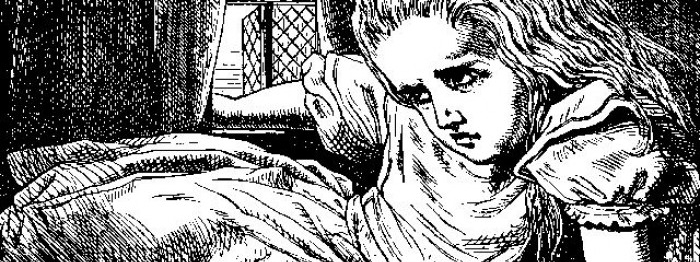
Alice struggles to maintain her identity during her adventures in Wonderland, and it is only when she has fully established her identity that she is able to leave.

Soon after arriving in Wonderland, Alice speaks to herself (‘Come, there’s no use in crying like that!’). We learn that she is fond of ‘pretending to be two people’, demonstrating an already tenuous grip on her own identity.

Alice’s changes in size further challenge her self-image. She asks herself, ‘was I the same when I got up this morning?’ and goes on to question whether she might, in fact, be another child. Both the changing body-image and reliance on whether ‘I know all the things I used to know’ show that she values external indicators of self, rather than having a hold on her identity.

Other characters challenge Alice’s identity, and she struggles to establish herself. In response to the Caterpillar’s question she replies, ‘I—I hardly know, sir, just at present—at least I know who I WAS when I got up this morning’. As before, she considers changes to her personality and body to have been imposed upon her from external sources.

Similarly, when the White Rabbit mistakes her for his maid, Mary Ann, Alice nevertheless complies with his commands. The Pigeon insists that she is a serpent, using mistaken logical arguments to prove his case and Alice is forced to defend her identity.

The arc of the story follows Alice’s growing certainty of her identity. When she first meets the Queen of Hearts she is only tentatively sure of herself: ‘My name is Alice, so please your Majesty’. In the final courtroom scene Alice scoffs at the jurors who write down their names in case they forget them (‘Stupid things!’), identifies herself clearly (‘”Here!” cried Alice,’) and then leaves Wonderland with the realisation, ‘You’re nothing but a pack of cards!’.

Submitted to Coursera as essay 02 for Fantasy and Science Fiction: The Human Mind, Our Modern World.
Coursera peer grade: Form 2 / Content 2

Punishment of spouses in Grimms’ tales

Clever Else

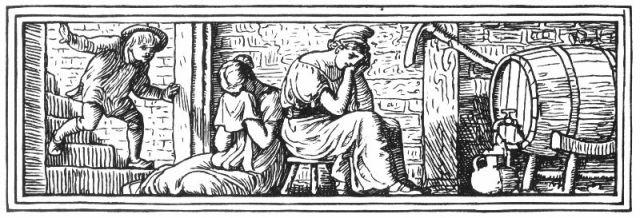
In Grimms’ tales, the perceived incompetence of a spouse is punished with a loss of identity and abandonment. This recurring theme indicates the concerns of a contemporary readership.

In ‘Clever Else’ and ‘Fred and Kate’, the husband’s worldview predominates. Both stories begin with the expectations of the new husband. Hans is assured that Else ‘does not want for brains’ but insists that she must also be ‘careful’; Fred entrusts Kate with specific tasks in readiness for his return.

The perceived failing of both wives is to approach life imaginatively rather than practically. Else’s forebodings about potential injuries to a hypothetical child at first impress others. Kate’s misfortunes are also a result of foresight, as she tries to perform multiple tasks at once.

Both stories end in the same way: after sleeping in a field the wild imagination of both Else and Kate lead each to mistrust her own identity. Hans and Fred each insist that their wife is already at home and so the true wives are abandoned, having lost their identities.

Grimm FishermanSimilarly, ‘The Fisherman and his Wife’ depicts a wife whose ambition opposes her husband’s practicality. Her granted wishes come with new identities of king, emperor and pope. These identities are ultimately stripped from her as punishment for imaginative greed, and she is returned to her original identity.

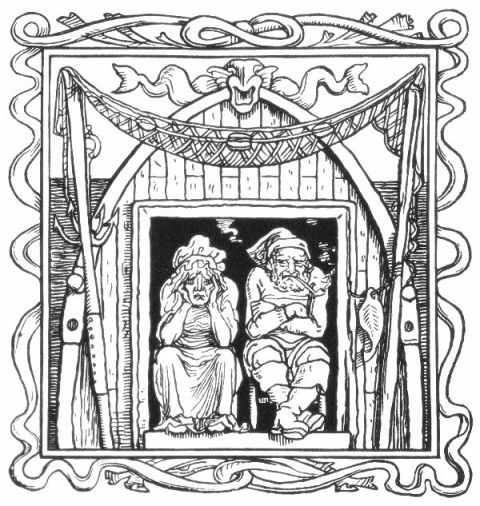
The stories suggest differing moral lessons to apply to different contemporary readers. While women are expected to aspire to be supportive wives, contemporary male readers would recognise a perceived need to reward a wife’s practicality and to prevent imaginative approaches that may lead to disaster. The stripping of identity and the abandonment of both Else and Kate may be seen as male wish-fulfilment fantasies, punishing wayward spouses. While the fisherman’s wife is not physically abandoned, the husband’s expression in Walter Crane’s tailpiece illustration makes clear that she has been shunned.

Submitted to Coursera as essay 01 for Fantasy and Science Fiction: The Human Mind, Our Modern World.
Coursera peer grade: Form 2 / Content 2

The things I most enjoyed in 2012

End-of-year lists are always self-indulgent, but this is more self-indulgent still. I wanted to capture all the things that were new to me this year that summed up what I most enjoyed in 2012. I realise that this is only really of interest to me.

Albums

Feelies

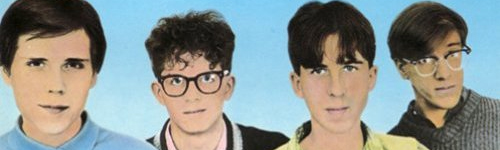
Transverse (Carter Tutti Void, 2012) was the single album of 2012 that stands alongside my favourites from other years. I missed New History Warfare Vol 2: Judges (Colin Stetson, 2011) and An Empty Bliss Beyond this World (The Caretaker, 2011) in 2011 but they became firm favourites this year – Colin Stetson for Tube journeys and The Caretaker as a background to writing. Biokinetics (Porter Ricks, 1996) became my soundtrack on countless rainy train journeys, a heartbeat layered on top of the hum of travel. World of Echo (Arthur Russell, 2001) gradually became less an album heard than an album felt. My go-to album for relaxation this year was the reissued UFO (Jim Sullivan, 1969). And Crazy Rhythms (The Feelies, 1980) and Midnight Cleaners (The Cleaners From Venus, 1982) were the two albums that made me upset at time wasted before having heard about them – my favourite pop albums of 2012.

Live music

Boredoms

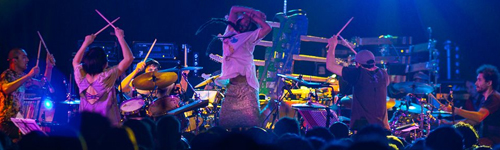
The American Contemporary Music Ensemble’s performance of Jesus’ Blood Never Failed Me Yet (Gavin Bryars) at All Tomorrow’s Parties was one of the most perfect things I’ve ever experienced. Boredoms at the same ATP festival was one of the bravest and maddest, featuring five drummers and a tree of guitar necks hit with a stick.

Films

Shout

I loved working through Les Vampires (Louis Feuillade, 1915), influential in technical respects but with its own weirdly dreamy qualities. The imagery has stayed in my mind longer than any other film. The Shout (Jerzy Skolimowski, 1978) was my hidden treasure of 2012, perfectly tailored to everything I like about films, and a great companion piece to Berberian Sound Studio (Peter Strickland, 2012). The latter was perhaps not the best-crafted film released in 2012 (surely The Master), but the one I responded to the most enthusiastically. I thought my high expectations for F for Fake (Orson Welles, 1973) would make it a disappointment, but it was totally surprising despite the fact I expected surprises. The same applies to That Obscure Object of Desire (Luis Bunuel, 1977), especially the first 15 minutes or so, with a remarkable story structure. The Silence (Ingmar Bergman, 1963) was an epiphany, the first Bergman film that I’ve had an emotional reaction towards and predating David Lynch by 20 years. The Bespoke Overcoat (Jack Clayton, 1956) and Certified Copy (Abbas Kiarostami, 1990) featured the most sympathetic performances, within beautifully humanist films. And Vampyr (Carl Theodor Dreyer, 1932), performed with a live soundtrack by Steven Severin, was the trippiest film experience, with Rose and I half-awake with woozy colds.


Books

LovedOne

I’m pickier with books than films, perhaps due to time investment. I’ve liked and/or appreciated lots of books this year. Conrad’s Heart of Darkness, Collins’s The Moonstone and Goethe’s The Sorrows of Young Werther come close, but the only book that made me bubble over with enthusiasm was The Loved One (Evelyn Waugh, 1948), a perfect and perfectly concise novel.

TV

Carlos

Carlos (Olivier Assayas, 2010) was the most compelling thing I saw on TV this year, making a case for longer treatments of complex events than films can offer. It also had the best soundtrack. The Olympics opening ceremony (Danny Boyle, 2012) was the broadcast that made me happiest, possibly due to watching it with a hangover and letting the spectacle wash over me. Sherlock: A Scandal in Belgravia (2012) felt like the best kind of ‘event’ TV fiction, and among the best scripts that Steven Moffat has yet produced. Black Mirror: The Entire History of You (2012) was the TV episode most tailored to my interests – fingers crossed for more Twilight Zone for the C21st. Breaking Bad Season 4-5a (2011-2012) was the most moreish TV experience once the show broadened out in scale, having earned our sympathy for the characters. The Thick of It Season 4 Episode 7 (2012) was the most surprising TV episode, using comedy characters to hint at something huge and dreadful just off-screen.


Theatre

SergeyBoris

The puppet show Boris and Sergey’s Vaudevillian Adventure (Flabbergast Theatre) at the Edinburgh Fringe made me feel like a child and made my face hurt from smiling and laughing.

Art

Saville

It’s rare for visual arts to get me in the guts. The Jenny Saville retrospective at Modern Art Oxford did just that. And the Speed of Light night-hiking/neon joggers/sound art performance at the Edinburgh International Festival was an event that was at once hilarious and baffling.

Favourite tracks of 2012

Sometimes I Forget You’ve Gone by Dirty Three (my favourite track of the year and more beautiful every time) / 5 by Dean Blunt & Inga Copeland (piped direct from my childhood, filtered through all the tape decks I ever owned) / Only in My Dreams by Ariel Pink’s Haunted Graffiti (hauntology without irony) / Ghost Hamlet by Daphne Oram, Daz Quayle and Andrea Parker (quietly invasive) / Too Tough to Die by Neneh Cherry & The Thing (accumulating towards superb frenzy) / Wisteria of Albion by Time Attendant (1980s CBBC nostalgia with undertones of Zarch on the Acorn A3000) / Ungirthed by Purity Ring (silences overwhelming melodies) / V2 by Carter Tutti Void (thuk thuk thuk thuk thuk thuk thuk thuk) / Epic by Au & Colin Stetson (Steve Reich-style minimalism, maximised) / Stupid Things (EYE remix) by Yo La Tengo (YLT eclipsed by EYE, like Paul Simon’s ‘The Obvious Child’ played on a ZX Spectrum) / Radar (Michael Mayer remix) by Hauschka (fragile, tiny techno) / Genesis by Grimes (how modern, commercial  synthpop should sound, IMHO) / Brats by Liars (dirty dancefloor) / Christian Rocks by Fenn O’Berg (Fennesz, O’Rourke and Rehberg transform Boston’s ‘More Than a Feeling’ into disorienting, doom-laden drone)

Click below for the Spotify playlist.

Favourite albums of 2012

2012 has been dark. Weather and hobbies have kept me indoors far more than usual. Music has performed a different function this year, too. I’ve preferred albums to hover somewhere below the conscious, as a backdrop to plotting and writing stories.

While there are albums that have proved most effective at blocking out the outside world, they haven’t all become favourites in the normal sense. The three albums that I’ve loved most this year have one thing in common: collaboration. They all take simple forms which become convoluted and unpredictable through introducing chaotic elements.


The big three

CarterTuttiVoidAlbumFront5001Since April I’ve had Carter Tutti Void’s album Transverse on constant rotation. There’s something beguiling about it, with an appearance of little going on but actually serving as a template for the listener to imagine all sorts of hidden melodies. That it’s a live performance is staggering. I wish I’d been there.

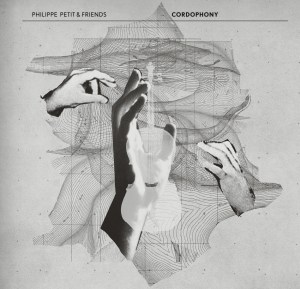
PP&F-CordophonyPhilippe Petit’s Cordophony is either an album that went under the radar for most music publications, or it’s one that just appeals specifically to me. In 45 minutes it covers a vast spectrum, short soundtracks to all sorts of imagined scenes. According to the press release, Petit plays ‘processed acoustics/field recordings/foundsounds + electronics + turntables & glass manipulations + percussions + synths/piano + balloons’ and there are 17 other musicians involved, including Nils Frahm. The album is a swirling mix of cello, electric harp, vibraphone, tibetan bowls, flutes, gongs and prepared piano, but sounds like something from another world.

BLACK-IS-BEAUTIFUL-575x575Dean Blunt and Inga Copeland’s ‘Black is Beautiful’ is another shimmering oddity. More a collection of sketches than songs, it gives the impression of flicking through radio stations. This is my understanding of what hauntology should be – I could convince myself that I’d heard any number of these pieces in my childhood, complicated by the inclusion of an unlabelled cover of Donnie and Joe Emerson’s 1979 track, ‘Baby’. Totally alien and totally familiar.

The rest of the top ten

Ariel PinkMature Themes, by Ariel Pink’s Haunted Graffiti, didn’t capture the attention of the music press in the same way as 2010’s Before Today. But it’s a really strong record and the move to less a lo-fi production might make it endure longer. It’s a terrific mix of styles, sounding like Beefheart, Zappa and Gong. The title track and ‘Only In My Dreams’ are perfect pop, ‘Early Birds of Babylon’ surprises me each time I hear it, and there’s another cover of Donnie and Joe Emerson’s ‘Baby’, making a nice link to Blunt and Copeland’s album.

Purity ringI’m not sure what kind of status Purity Ring’s Shrines has by popular consensus, but it’s the electropop album I’ve been waiting for for a long time. Megan James’s vocals are sharp, memorable melodies but it’s Corin Roddick’s backing work that makes it. The pitchshifted, choppy samples remind me of a more clubby take on The Knife’s Silent Shout. His synths saturate the album, often overwhelming the vocals. The effect is like examining intricate artworks with the low summer sun blinding your eyes.

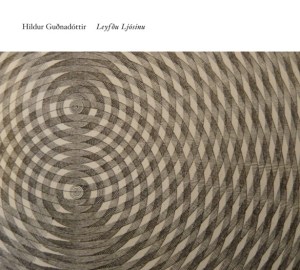
HildurCellist Hildur Gudnadottir’s album Leyfdu Ljosinu is a single 40-minute track, recorded live with no post-production. It’s staggeringly beautiful.

Dance classics 1&2The best albums often don’t fit neatly into particular genres. Dance Classics Vols I & II from NHK’Koyxen don’t match my normal tastes, and yet I’ve listened to them both endlessly in the second half of 2012. Something about these short, skittery bursts really puts me in some kind of flow state.

Liars-WIXIW1On its release, I fully expected Liars’ WIXIW to top my list of 2012 favourites. Seeing them perform live in Berlin cemented my love for the band’s new direction. The standout track, ‘Brats’, is still the most anarchic, infectious thing imaginable.

actress_RIP_1329831774_crop_500x500Unlike the immersive Splazsh, Actress’s R.I.P is a weird collection of vignettes. On some listens they can seem insubstantial, on others they seem to stretch out, hinting at something far broader. A really eccentric but compelling album.

seerThe Seer by Swans is a late entry to my top ten. I’d struggled for a long time to get around to devoting full attention to the 2-hour opus, in the knowledge that it would be demanding and no kind of background to any other activity. It’s an amazing album, huge in ambition, and it’s hard to believe it’s an album release and not a retrospective of a lifetime’s work. I suspect I’ll love it more and more with time.

Honorable mentions

  • Tim Hecker and Daniel Lopatin – Instrumental Tourist
    Beautiful drones. This is what I write to.
  • Au – Both Lights
    Colin Stetson’s addition to the lineup makes a great band greater. At it’s best, it sounds like Animal Collective playing Steve Reich.
  • Fieldhead – A Correction
    Not as firm a favourite as 2009’s They Shook Hands for Hours, but still sublime.
  • Andy Stott – Luxury Problems
    Hypnotic and overwhelming.
  • Fenn O’Berg – In Hell
    Another terrific collaboration. ‘Christian Rocks’ and ‘Omuta Elegy’ are outstanding.
  • Mouse On Mars – Parastrophics
    The most fun, and funniest, album of the year.

The Sorrows of Young Werther (and Alan)


I’ve just finished reading Johann Wolfgang von Goethe’s 1774 blockbuster hit, ‘The Sorrows of Young Werther’. It’s a far more slight and breezy novel than I’d expected and is the first novel in a while that I’ve finished in just a couple of sessions. The bulk of the book is structured as letters written by Werther, mainly to his friend Wilhelm, whose replies we aren’t shown. The final third features an ‘editor’ who steps in to provide other characters’ viewpoints. At a glance it’s (SPOILERS!) a tragedy about a young man who falls in love with a girl, Lotte, who is unavailable who doesn’t return his love. He pines for her, then he kills himself.

But here’s the thing. I read the first two-thirds of the book, until the ‘editor’ steps in, as a broad comedy. I think if I had taken Werther’s account at face value, I would have rejected him and his self-indulgent whinings entirely. I was genuinely surprised when the editor’s comments seemed to validate the majority of Werther’s views. But treating Werther as an unreliable narrator made the book a huge amount of fun for me.

For instance, take the September 10 entry. Lotte says,

“Whenever I walk by moonlight, it brings to my remembrance all my beloved and departed friends… but shall we know one another again, what do you think?”

Werther appears to misunderstand her, thinking she’s referring to the two of them meeting after death. It’s a classic misunderstanding and I laughed out loud.

I’ve read elsewhere that the instances where Werther’s grammar breaks down demonstrate his grief. But read this passage:

“And what grieves me, is, that Albert does not seem delighted as he—hoped to be—as I—thought to be—if—I am not fond of dashes, but it is the only way of expressing myself here—and I think I make myself sufficiently clear.”

To me, it illustrated Werther’s pomposity and his tendency to over-egg sentences with extra clauses and tangents. It seems as though he’s lost his way until he even becomes distracted by his own punctuation, and the final ‘I think I make myself sufficiently clear’ is laughable.

Werther is utterly melodramatic – admittedly, by modern standards. His adoration of Lotte reminded me a great deal of Adrian Mole’s over-the-top fixation on Pandora Braithwaite. In fact, after the initial meeting at the dance, Werther often goes for days without describing the woman he says he adores, and she becomes almost invisible in the middle section of the novel. Instead, Werther concentrates solely on her effect on himself. He seems absorbed with his capacity for love and pain.

I’ve just finished reading the fictional autobiography of Alan Partridge (‘I, Partridge: We Need to Talk About Alan’) and the levels of egomania are pretty comparable, as are the paranoiac revisions and qualifications. It’s a terrific companion piece to ‘The Sorrows of Young Werther’. Werther’s continual closing comments about his own suffering seems as needy and self-serving as Partridge’s repeated closing statement, “Needless to say, I had the last laugh”.

I understand that I was probably reading the novel ‘wrongly’ and had mistaken a serious 18th century portrayal as a modern pastiche. But I wouldn’t have it any other way – my enjoyment was largely based on the fun I had trying to glimpse the truth beyond Werther’s rantings. This article gives an interesting account of some of the parody versions of ‘The Sorrows of Young Werther’ after its blockbuster success (plus Werther merchandising and clothing!). But as far as I’m concerned, the original was already a side-splitter.

Favourite tracks of the first half of 2012

The new music I’ve been listening to this year has been pretty dark. I’ve been spending more of my free time writing over the last few months and have tended towards music that seems to provide a good backdrop. Here’s a Spotify playlist featuring almost all of these tracks.

Dirty Three – Sometimes I Forget You’ve Gone
My favourite track of the year by a good distance. Almost unbearably beautiful.

Halls – Lifeblood
No Radiohead album this year, no problem.

Bullion – Say Arr Ee
Arthur Russell for C21st.

Au – Epic
With the addition of Colin Stetson on sax, Au mine territory more usually occupied by Steve Reich.

Grimes – Genesis
Every time I’m told about electro-pop artists in the charts, I want them to sound like this.

Burial – Kindred
Perhaps undeserving of the internet meltdown, but still as good as Burial gets.

Sven Kacirek – Cars & Nightingales
‘Scarlet Pitch Dreams’ continues Kacirek’s explorations into weirdy muted percussion.

Mirrorring – Silent From Above
Far from the most immediate track on the Tiny Vipers / Grouper collaboration, but it really sneaks up on you.

Daphne Oram, Daz Quayle, Andrea Parker – Ghost Hamlet
I’m not sure where the work of the BBC Radiophonic Workshop’s Oram ends and Quayle and Parker’s tinkerings begin, but this is heavy, beautiful stuff.

Julia Holter – In the Same Room
Refreshingly straightforward shimmering pop.

Double Helix – Voyages
All tracks can be improved with the addition of samples from ‘Jason and the Argonauts’.

Carter Tutti Void – V2
Unbelievable chunky thumps – completely hypnotic.

Slant Azymuth – Helical Scan
The clear standout track from Demdike Stare’s and Andy Votel’s collaboration.

Fenn O’Berg – Christian Rocks
Christian Fennesz, Jim O’Rourke and Peter Rehberg spend ten minutes summoning the devil and then remix Boston’s ‘More Than a Feeling’.

The Notwist – Blank Air
Really looking forward to hearing this in context on the upcoming album.

SP-X – The Escape
Terrific minimalist techno taken from the excellent EP, ‘Stalker’.

Les Marquises – Sound and Fury (Fieldhead remix)
The only new Fieldhead track so far this year, but excited for the new album.

Liars – Brats
It’s difficult to pick a single track from WIXIW, but this wins for getting the best reception when I saw them live in Berlin.

Spotify playlist

Favourite albums of the first half of 2012

Favourite albums released between January and end of June 2012:

  • Philippe Petit & Friends – Cordophony
  • Liars – WIXIW
  • Au – Both Lights
  • Carter Tutti Void – Transverse
  • Actress – R.I.P
  • Hildur Gudnadottir – Leyfdu ljosinu
  • Sven Kacirek – Scarlet Pitch Dreams

Closely followed by:

  • Grass Widow – Internal Logic
  • Belbury Poly – The Belbury Tales
  • Mirrorring – Foreign Body
  • Grimes – Visions
  • Dirty Three – Toward the Low Sun

Favourite EPs:

  • Burial – Kindred
  • Grouper – Violet Replacement Pt. I: Rolling Gate
  • Grouper – Violet Replacement Pt. II: SLEEP
  • SP-X – Stalker

Amazing older albums, new to me this year:

  • Gavin Bryars – The Sinking Of The Titanic / Jesus’ Blood Never Failed Me Yet
  • The Feelies – Crazy Rhythms
  • Make Up – In Mass Mind  /  Sound Verite
  • Exuma – Exuma, the Obeah Man  /  Exuma II
  • Jim Sullivan – U.F.O.
  • Porter Ricks – Biokinetics
  • James Brown & The Famous Flames – James Brown Live At The Apollo, 1962
  • Kim Jung Mi – Now
  • Paul McCartney – RAM
  • Thelonious Monk – Underground

Favourite films released in 2011

Black Swan (Darren Aronofsky, USA)
At first glance, ‘Black Swan’ appears similar to Aronofsky’s previous film, ‘The Wrestler’, with its shaky documentary style and focus on a single struggling performer. But soon enough the film reveals itself as an out-and-out horror film with a fresh treatment of genre tropes (transformation, mirrors and doubling). Perhaps what seals it as not only my favourite film of the year, but my favourite cinema experience, is that I saw it amid a well-to-do North Oxford audience who’d been terribly misled. Many of them were ballet aficionados who saw ‘Black Swan’ following a screening of the Bolshoi Ballet’s ‘Swan Lake’, and seemed utterly unprepared for Aronofsky’s nightmare film, which resulted in an electric tension in the cinema.

The Tree of Life (Terence Malick, USA)
Watching the credits at the end of ‘The Tree of Life’, I felt less like I’d finished watching a film, and more like coming to after a protracted daydream. I struggled at the start, where the structure of the film comprises of tiny snippets of footage, but lost any scepticism during the ‘creation of life’ sequence (and felt that the dinosaurs fitted in perfectly well). After that point the pacing slows and the story becomes more accessible, I think, and I was totally won over. The ending on the beach may have enraged some critics but I thought it was wonderful and that it didn’t compromise Malick’s vision at all.

True Grit (Ethan and Joel Coen, USA)
‘True Grit’ contained some of my favourite suspense sequences that I’ve seen in any film this year. Jeff Bridges may have been wonderful, but I think it’s Hailee Steinfeld that steals the show, and it was great to see Matt Damon tackle something out of his normal range. After ‘True Grit’ and ‘No Country for Old Men’ (and the teeth-grinding awfulness of ‘Burn After Reading’), I’m starting to dread the Coens’ return to comedy.

Rango (Gore Verbinski, USA)
It was the involvement of the Coen’s cinematographer, Roger Deakins, as visual consultant that tipped me off that ‘Rango’ might be a treat. The film pastiches are accurate and funny and all the western signifiers are in place, but I wasn’t prepared for the tightness of the script. All of the key elements are laid out within the first twenty minutes, whereupon the rest of the film plays out satisfyingly. It makes ‘Toy Story 3’ seem rambling and incoherent in comparison. And the creature designs are so gruesome and gormless that it’s hard to imagine anyone involved believed that they were really making a children’s film.

Win Win (Thomas McCarthy, USA)
Yet another reason to hate Thomas McCarthy, director of ‘The Station Agent’ and ‘The Visitor’, respected actor starring in the fifth season of ‘The Wire’ among other things, and by all accounts a very nice man. There was no easy way to promote this midlife crisis/wrestling/parenting tale, but it’s a real shame that more people didn’t get to see this at the cinema.

Tyrannosaur (Paddy Considine, UK)
From the brutal opening sequence to its bleak ending, ‘Tyrannosaur’ is hard to watch, but the moments of humour lift the film from gratuitous misery. Olivia Colman has deservedly garnered lots of praise – her character is introduced with apparent whimsy recalling Colman’s ‘Peep Show’ persona but then changes out of all recognition – but Peter Mullan’s Joseph is equally compelling, in particular in any scenes without dialogue where his suffering is most apparent.

Point Blank (A Bout Portant) (Fred Cavayé, France)
This is the only film on this list that I’ve seen more than once, and just thinking about it makes me eager to see it again soon. At 84 minutes, it’s one of the punchiest action thrillers I can imagine. There may be some plot twists that challenge credulity, but this is a fantastic rollercoaster ride as Gilles Lellouche’s main character becomes trapped in a violent world, making bizarre choices that always seem perfectly logical in context.

Troll Hunter (André Øvredal, Norway)
Another action film that really delivers. Øvredal surprises us by laying out all his cards on the table almost immediately, as it becomes apparent that the trolls aren’t going to be shrouded in mystery, but seen up close throughout. The pacing is surprisingly nimble and the film gives viewers everything they could possibly hope for, with humour, scares, a variety of trolls and some fantastic chase sequences.

The Ides of March (George Clooney, USA)
It’s not quite up there with ‘Good Night and Good Luck’, but ‘The Ides of March’ at least proves that Clooney is dependable at delivering considered, mature political thrillers. Ryan Gosling comes into his own, and the support cast is fantastic, particularly Paul Giamatti and Philip Seymour Hoffman. We saw this at the Nitehawk Cinema in Williamsburg and even the horrendous hotdogs with George Washington sauce couldn’t detract from this excellent film.

Beginners (Mike Mills, USA)
Like ‘Win Win’, this is another film that must have caused headaches for the marketing department. The pre-release emphasis on Christopher Plummer’s character, an elderly father who comes out as gay, suggested an entirely different film. The true focus is on Ewan McGregor’s Oliver, to whom his father’s attitude is just another factor in his wavering indecision about his own life. Mills fills the film with curious touches which add up to create an intimate portrait of his lead character and produce a romantic comedy that feels natural and reaffirming.

Just outside of my top ten of films released in 2011:
Tinker Tailor Soldier Spy (Tomas Alfredson, UK)
Submarine (Richard Ayoade, UK)
Rise of the Planet of the Apes (Rupert Wyatt, USA)
Source Code (Duncan Jones, USA)

And some notable, high-profile disappointments. All of these films make me shiver slightly to recall them:
The Skin I Live In (Pedro Almodovar, Spain)
Midnight in Paris (Woody Allen, Spain/USA)
Hanna (Joe Wright, USA, UK, Germany)
The Fighter (David O. Russell, USA)

There are various films released in 2011 that I haven’t yet got around to seeing, including Lars Von Trier’s ‘Melancholia’, the Dardenne Brothers’ ‘The Kid with a Bike’, Terence Davies’ ‘The Deep Blue Sea’, Steven Soderbergh’s ‘Contagion’, Alexander Payne’s ‘The Descendants’, David Cronenberg’s ‘A Dangerous Method’, Steve McQueen’s ‘Shame’, Asghar Farhadi’s ‘A Separation’ and particularly Michel Hazanavicius’ ‘The Artist’, which I’m really excited about.

Favourite tracks of 2011

Click the image above for a Spotify playlist featuring all of these songs.

Isabel – Baxter Dury
I love Baxter Dury’s album, ‘Happy Soup’ as much as I did last year’s ‘Things To Do and Make’ by Ergo Phizmiz. Dury’s vocals have a sloppy, sub-rehearsal quality, he mutters, he’s cynical and he sounds wonderful. ‘Isabel’ is probably my favourite song of the year, mainly for the chorus: Isabel’s sleeping / Isabel’s sleeping / I think my mate slept with you when you were in Portugal. There are at least three other tracks on the album that are standouts, too.

Lonely In Your Arms – Deep Sea Arcade
Excellent jangly surf pop.

Satellite – The Kills
I first listened to ‘Blood Pressures’ in my now-deceased Ford Ka. The speakers were barely operational and the music was being fed from my iphone to the radio via FM transmitter. The door kept vibrating with the farting motion of the ragged speakers and it sounded like nothing on Earth. One of my favourite moments in any track this year is one minute and twenty-three seconds into ‘Satellite’, where the thumping guitar winds down to an abrupt silence – for just a moment it feels that the track ends, making the remaining three minutes a joyous lap of honour.

Future Crimes – WILD FLAG
This will keep me going until the reformed Electrelane finally record some new material. WILD FLAG’s self-titled album is rock-solid and raw.

If I Keep On Loving You – Let’s Wrestle
Straightforward indie pop and all the better for it.

Shark Ridden Waters – Gruff Rhys
Andy Votel’s sampling adds a kitsch, comic element that, in retrospect, seems to have been missing from the majority of Gruff Rhys’ solo work. I only wish that the final sampled chorus had been used more throughout the track – other than that, it’s blissful pop.

FFunny FFrends – Unknown Mortal Orchestra
Unknown Mortal Orchestra’s music sounds like it’s been recorded on C-90 cassette and then retrieved from a puddle. A bizarre slice of grungy funk through destroyed speakers.

Midnight Wave – Two Wounded Birds
More surf pop, this time even more indebted to Dick Dale.

Waveforms – Django Django
Oh, I love this. Beta Band vocals against DIY, skittery beats and 303 mayhem.

Mindkilla – Gang Gang Dance
Another of my absolute favourites this year. More than any other track on this list, this is the one that’s been drawing me back again and again. And surprisingly, I found that ‘Eye Contact’ was the perfect album to use as a backdrop for November’s novel-writing frenzy. Who’d have thought it?

Hipster – Monky
I love the chiptune vibe here. If I was a DJ, you’d all be dancing to this.

Don’t Play No Game That I Can’t Win – Beastie Boys featuring Santigold
It was a bit of a surprise to find this catchy dub pop buried in the Beasties’ ‘Hot Sauce Committee Part 2’. It definitely benefits from pushing the Boys down in the mix and the bassline is infectious.

Please Don’t Take Him Back – Bearsuit
Bearsuit straddle the line between catchiness and annoyingness throughout ‘The Phantom Forest’. This song is one of the more conventional but still catches them at their best.

Be a Doll and Take My Heart – Herman Dune
I still haven’t really got over the disappointment of ‘Strange Moosic’, in which David Herman Dune’s freewheeling lyricism is cut back to endlessly looping choruses. ‘Be a Doll and Take My Heart’ is lovely, albeit far less special than the brothers are capable of being.

There’s Nothing in the Water We Can’t Fight – Cloud Control
Is this great or awful? Last.fm tells me that this is one of the tracks I’ve listened to the most over the last six months, so it’d be hypocritical not to include it, even though Cloud Control is the worst band name ever.

Now the Smile Comes Over In Your Voice – The Wave Pictures
In an opposite trajectory to Herman Dune, The Wave Pictures have upped their game this year. Now that they’re signed to Moshi Moshi they’ve achieved a cleaner studio sound that befits them and sounds far closer to their live shows, but Dave Tattersall’s focus on British mundaneness remains intact.

Lotus Flower – Radiohead
‘The King of Limbs’ is the Radiohead album I’ve been hoping for since ‘Kid A’. I may be in the minority here, but with this release, Jonny Greenwood’s soundtracks and Thom Yorke’s coming out as a dubstep DJ, I think that Radiohead have never been in better shape.

Death Major – 13 & God
This track is more heavily weighted towards Anticon’s Doseone than the Notwist’s sweet choruses and features one of the best raps I’ve heard this year.

The Merry Barracks – Deerhoof
This appeared on last year’s list as a pre-release single, but is worth including here now that ‘Deerhoof vs. Evil’ is on Spotify. It’s a shame the rest of the album couldn’t live up to this glorious mess.

A Candle’s Fire – Beirut
This song does little to further Beirut’s sound and even sounds familiar on first listen. But it’s absolutely joyous, all the same.

Teenagers in Heat – Caged Animals
Childlike and wonderful, with a chorus that endears itself to me by sounding a little like ‘Tim Major’s in heat’.

Ping – Hauschka
More than any other Hauschka album, this captures the excitement of one of Volker Bertelmann’s live performances. It’s a rush of staccato rhythms and rattling, often achieved by placing a bundle of ping pong balls into the grand piano to be bounced up and down on the strings. Like Battles’ ‘Mirrored’, the effect is of machine-like intricacy, but ‘Salon des Amateurs’ somehow manages to remain soothing throughout. ‘Ping’ is one of my top tracks of the year.

It’s Choade My Dear – Connan Mockasin
Is this as lovely as it seems? I just looked up the word ‘choade’ and now I feel queasy.

Balance Her in Between Your Eyes – Nicholas Jaar
Chosen as a representative of the excellent album, ‘Space is Only Noise’. Once again, this woozy, hypnotic album turned out to be an excellent writing aid.

Abu Dhabi – Rough Fields
In its own odd way, this is probably the most beautiful song on this list. The listening conditions need to be perfect, but if you get it right this can be transcendent.

by this river – Alva Noto and Ryuichi Sakamoto
‘summvs’ is another of my favourite albums this year, even though I still don’t have much of a handle on it after many listens. This cover of Brian Eno’s song is the most accessible track on the album. I really love the high-pitched tone that’s used as a kind of punctuation mark.

Spotify playlist: Tim’s favourites of 2011

NaNo November 11: That went quickly

It all went in a blur. I’ll take stock about what went right and what went wrong (likely to weigh heavily on the latter), but for now I’ll take a break from writing. In the meantime, these are the albums that accompanied my 23-day flurry of novelling:

Actress – Splazsh
Alva Noto & Ryuichi Sakamoto – summvs
Animal Collective – Fall Be Kind
Animal Collective – Feels
Atlas Sound – Parallax
Burial – Burial
Burial – Street Halo EP
Ellen Allien & Apparat – Orchestra of Bubbles
Gang Gang Dance – Eye Contact
Gang Gang Dance – God’s Money
Hauschka – Foreign Landscapes
Little Wings – Black Grass
Magnetic Fields – 69 Love Songs
Mark Hollis – Mark Hollis
Mazzy Star – Among My Swan
Mazzy Star – She Hangs Brightly
Mose Allison – The Collection
Nicholas Jaar – Space Is Only Noise
Serge Gainsbourg – Vu de l’Exterieur
Studio 54, May 2, 1977 playlist
The Boats – Sleepy Insect Music
The Boats – Words Are Something Else
Thom Yorke – The Eraser

By far the most often-played album was Nicholas Jaar’s ‘Space Is Only Noise’, followed by Gang Gang Dance’s ‘Eye Contact’. It was a real surprise that Gang Gang Dance proved so conducive to writing and now the album feels rather hard-wired into my mind.

NaNo November 11: The real thing

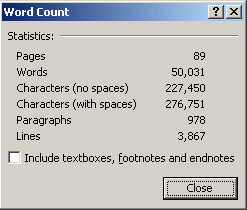
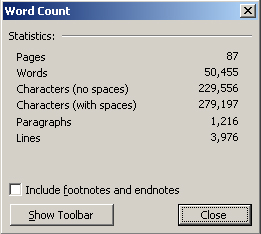
I’ve just reread my previous posts, from all the way back in March. It’s useful to see how my attitude to my previous novel attempt changed over time. It’s also a little frustrating to realise that so much time has passed and I’ve neither continued to write fiction nor even read my 50,000 word draft. I’d thought of the exercise as an ice-breaker to kickstart my writing after years of one-day-I’ll-get-around-to-it pretence, and I suppose that on that score it was an achievement.

I’m in the midst of a real, registered NaNoWriMo challenge at the moment. Three days in, I can sense differences between this approach and February’s attempt.

Firstly, I’m working on an idea, The Pale Shadow, that’s been in the back of my mind since late September. Last time I only gave myself three days’ planning time, but this time I’ve been working on notes, on and off, for a month. I’m not sure I’ve plotted in any greater depth, but I’m hopeful that it’s allowed some of the rough edges of the world I’ve created to be smoothed out.

It’s also a different kind of plot. One of the biggest problems I came across last time was that I planned the first half of the novel and hoped that the rest would fall into place whilst writing. It never did, of course, so this time I’m hoping to counter the issue by writing an episodic story. I’m hoping that this will allow me to plan smaller arcs in much more detail and then reach stopping points where I can be sure that plot strands have been tidied up. I’m also intending to use these regular endpoints as breathing space where I’ll force myself to plan the next episode in detail rather than just plunging in.

Another issue I had last time was introducing too many characters. I don’t think that dialogue is my strong suit, but it was particularly a problem when juggling lots of speakers. Also, last time I wavered between characters, occasionally abandoning them and feeling wistful about relegating characters I enjoyed to the background. So, this time around I’m dedicating myself to two central characters and that’s that. No room for confusion there, I’d hope.

It’s 3rd November today, day three of the challenge, and it’s all going pretty well. I’ve found time to write 2500 words each day so far, although I’ll not let myself take the headstart for granted, as I’ll need the gained time for extra planning later. I’m finding that the pace is less breakneck than on my previous attempt, to the extent that my narrator’s back story has filled all my time so far, more than 10% into my wordcount. I love the thought that I might actually want to cut words rather than pad out, if I were to get as far as a second draft!

My narrator is about to meet the central character. It’s a nervewracking moment for me, as the novel really hinges on the mystery of this character. Perhaps that’s why I wrote this blog post instead of continuing with the novel…

NaNoWriMo: All done, only minor disappointment

As you can see from the image, I’ve finished the 50,000 word project! I reached the wordcount yesterday morning, four days ahead of the 30-day target. Now I’m feeling a mix of celebration (with champagne last night, although I did protest) and minor disappointment. The final couple of thousand words were shocking – not so much in terms of quality, but I was racing breakneck towards the finish line and introduced action scenes that were dispensed with in record time. I didn’t even let characters speak in case it slowed me down. And, most disappointingly, I ended on a cliffhanger after all, leaving the story open for a second volume that I (currently) have no interest in writing.
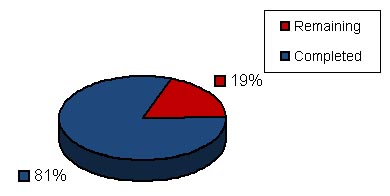
I still feel that this project will help me to write more, and more speedily, in future. But, around the halfway mark I felt that the novel on was salvageable, despite the loose ends and non sequiturs. But now it seems that if I were to tidy it up, I’d have to totally rewrite the final third.

So, lessons for the future.

In a speedwriting project of this nature, I was naïve to think that the final part of the plot would somehow fall into place. While I introduced new segments throughout, the basic plot milestones remained the same and the fear of a lack of direction was made worse due to having no endgame to end for. So I need to plan out possible conclusions, before I start.

Similarly, more than four days planning are needed at the beginning. Anyway, that was one of the most exciting parts of the whole project, so I think it’s ok to wallow in the plot and character outlines for at least a fortnight.
Fewer characters, next time. I introduced characters, sent them packing, had missing people return, and so on. All of this would have been ok if I hadn’t also seen fit to introduce a whole city full of supporting characters, only some of whom I had the energy to flesh out.

But one aspect that really worked for me was missing out complicated or research-driven parts of the plot, carrying on when I had momentum. I just put notes in square brackets, to come back to later, and I don’t think that harmed the writing at all. One main character was labelled [*ladyname] for several days.

So, that’s one new year’s resolution dispensed with, and it feels good. I think that I’ll have to set similar daily targets if I start editing the novel – but for now, I think I’ll allow myself a week off and them maybe start mind-mapping another idea.

NaNoWriMo: limping into the final stretch

Last night I passed the 40,000 word milestone, and I’ve just over a week of my novel-writing month to go. The last few days have been hard. During the last week there were two days where I scraped in at my minimum daily count of 1667 words, and on one day I only managed 700.The novelty of the task has certainly worn off and, though there are still aspects that I’m really enjoying, I’m really looking forward to stopping.
The actual process of writing is still going quite smoothly, though – the issue now is one of plotting. Too many times I’ve sat at my computer and started to daydream about plot events, which I should have defined before attempting to write. In the early days, I’d been happy to mull over plot events in idle moments, but now it takes a conscious effort to drag myself back to planning mode. On days when I’ve defined a lump of story beforehand, filling in the details is still really enjoyable. Next time (next time!) I attempt a novel, I’m determined to plan more thoroughly beforehand, and I’ll allow myself non-writing days throughout the process, in order to keep plotting ahead.

A few days ago I convinced myself that the story was close to wrapping up. But that was largely a cowardly decision to defer the plot point that was originally to be the central strand of the novel – in fact, I’d begun to believe that the whole segment might be a good basis for a followup novel. This morning I came to the decision that i) I was just trying to avoid writing a section that cries out for more research, and ii) I can’t bear the idea of stringing this story out for more than one book. So I’m going to spend the last 10,000 words ploughing ahead, trying to wrap everything up decisively, however hurried it may be.

I had an idea for a different story last week and yesterday I began searching for reading material on the subject. Is there a chance that I’ll continue writing? If so, no matter how the current novel turns out, this project has been a total success.

NaNoWriMo: halfway through

Has it really only been a week since I last posted about my novel-writing progress? Last night I hit the 25,000 word milestone and I’m a little over one day ‘overbudget’. It’s been surprisingly painless, most days, to find two hours in which to write and only on a couple of occasions have I sat at my computer, unsure how to continue.

There have been moments of despair, though. I’ve now used up all of the plot elements that I’d prepared in the four-day burst before I began writing. As the known plot markers grew thinner, I panicked a couple of times. The lowest point was when I was seriously considering making Sir Christopher Wren the central villain. Last night I actually jumped straight to the reveal that I’d assumed would be in the finale, so the novel has suddenly opened up into uncharted territory. Even now, I have no ending in mind, but I’ve at least decided on the direction that the third act will take at first.

I’m still enjoying the process enormously. Even though I’ve had to be a little antisocial at times, everyone’s been very understanding about my need to disappear for a couple of hours each day – in fact, my social life has been a little busier than normal rather than less so. While the moment-to-moment process of writing has occasionally felt a little hollow (given that I’m not scrutinising or rereading anything I’ve read, it’s likely to be a stream of rambling piffle), the fact that, this month, the main activity I am doing is writing still feels worth celebrating.

Rose is already bracing herself for more of this kind of behaviour, as I’ve started trying to convince friends to join me on a real NaNoWriMo project in November. I’ve become convinced that, if only I’d had two weeks’ preliminary planning instead of four days, I’d be flying along at a terrific rate.

NaNoWriMo: 10,000 words in

I started my novel-writing month a day later than expected, on Tues 8th February. As the sole participant of this unscheduled challenge I see that as my prerogative, although now I’m determined to stick to the rigid 30 days.

The first week has been an interesting experience. I’d felt that the first act had been fairly tightly plotted in my mind-mapping sessions. But, as it’s transpired, a swiftly written novel likes to untether itself from expectations. Frequently, characters have ended up in unexpected surroundings, plot points have been revealed far sooner than I’d anticipated, and whole new events have unfolded without planning. NaNoWriMo forum members have talked about ‘characters leading the way’ – I rather see it as the desperation of writing quickly produces shortcuts and forces odd associations in the brain to become meshed within the story.

One of the biggest challenges so far has been to reign in the plot. I keep threatening to reach milestones far too early. This feels like good experience – I think I tend to rush through stories, and while it can at times feel like ‘padding out’, I expect that on rereading it’ll all still feel breakneck. We’ll see, because I’m determined not to reread any of the story until the 30 days are up. Even then, I think I’ll need a break before I face up to what I’ve created…

The 1667 words per day is proving perfectly workable. I’d banked a full day’s extra wordcount in order to take a day off on Saturday, on a London visit to celebrate Rose’s birthday. I’ll aim to build up an extra few hundred words per day as I go on, too.

So, in summary: this is an excellent project. I’m aware that I’m producing some turgid rubbish at times, but actually getting to the 10,000 word mark this evening – far more words than I’ve written in total in the last three years – was exhilarating.

The Interminable Suicide of Gregory Church (Daniel Kitson)

I saw Daniel Kitson a couple of years ago, when he hosted a charitable comedy gig in aid of orangutans. He’d arrived late and then seemed unsure how to tackle his duties, interpreting them variously as exploring the confines of the orchestra pit, lying down, staying on stage for far too long and eventually hurling chocolate bars into the crowd at nose-bruising altitudes. He was a shambles, but gloriously so.

His new performance, The Interminable Suicide of Gregory Church, shows Kitson in his element. I use the word ‘performance’ because I can’t think of a neater term – it has all the trappings of a stand-up gig, but the structure of a one-act shaggy dog story. Wandering onto the stage before attaching his microphone, Kitson begins his tale by stating ‘The rest of this isn’t true, I made it up. But this bit is absolutely true.’ Then follows his story of discovering 25-years’-worth of correspondence between an irascible old man and the people that irk him.

Kitson’s summarisation of the 30,000-plus letters takes the form of considered research: he refers to a notebook for exact quotes and describes the limitations of his knowledge about Gregory Church. He also weaves in his (Daniel Kitson’s) own life, as he claims to have read the letters over a two-year period – many of the contained revelations are framed by the circumstances in which he read them.

He’s a unique performer. Kitson’s delivery is at breakneck speed, punctuated only by freezes caused by his stammer, or by his getting distracted by people in the audience. He portrays himself as a shambling amateur, yet the sheer volume of content that he’s memorised suggests otherwise. And his story, although seeming aimless at first, becomes coherent, plausible and sweet. Once his tale is told, he removes his microphone and delivers a heartfelt and moral summary, barely audible, forcing the audience to lean in towards him.

It’s the most affecting performance I’ve seen in ages. The structure reminded me of Jorge Luis Borges’ trick of conjuring whole lives and works from imaginary references and scholarly debate about fictional fictions. With Daniel Kitson’s affable and shambolic delivery, smuggled under the pretext of being stand-up comedy, this technique is incredible and, by the end, it barely matters whether the letters existed or not.

Writing a novel in a month

Since New Year, I’ve fretted about not writing. My resolution to write something original each day has been a help – although it’s been derailed slightly into diary entries, blog posts and long-overdue emails.

I’d heard about the National Novel Writing Month (NaNoWriMo) a while ago, through a friend. The principle is that each November, any number of would-be novelists club together for mutual support, and aim to each write a complete 50,000-word rough draft of a novel in just 30 days. The emphasis is on quantity over quality, skipping over difficult research and unsuccessful passages in a blind rush to reach the word goal. As a procrastinating self-doubter, I like this idea very much.

November is too far away for my possibly-shortlived enthusiasm to wait, so I’m going to go it alone. Without the NaNoWriMo community to back me up, I’ve mentioned the project to several people in order to have a useful sense of guilt if I’m falling behind. I’ll use this blog as a way of publishing my wordcount failures – or even successes – too.

The most helpful piece of advice so far has been to allow myself only one week’s planning time, and to choose an entirely new story idea rather than a pet project. In one fell swoop, this has freed me up enormously. I’ve several story ideas knocking around, all of which I feel too precious to mistreat in a month’s frenzied typing. I came up with a new story idea on Tuesday, and by Thursday night I’d written plot notes and created a mind map using the Freemind open source software (the first time I’ve successfully used this type of planning tool – it’s been perfect). On Saturday I scouted some potential writing spots (Costa and the Oxford central library) and created another map, this time showing plot events in a rough order.

My novel-writing month starts tonight. In theory, I need to write 1667 words per day. I’m already feeling my nerve faltering, with anxiety about an overly complex plot and a potential inability to give each character a distinctive voice. But then I remind myself that the aim is to break down the normal criticality and just produce something complete. Perhaps it’d be helpful to think of it as ‘typing’ rather than ‘writing’…

Videogames I played in 2010 – retail games

2010 was a year in which I noticed a change in my attitude to videogames: I became more interested in the principles and mechanics behind videogames rather than particular titles themselves. Increasingly, I used games as time-fillers, distractions and OCD tasks rather than as prime-time entertainment. Also, I completely tired of game narratives.

Here are some unordered thoughts about some boxed games I played last year:

Fallout New Vegas (Obsidian Entertainment)
I love Fallout 3. I love it to bits. I’ve played through the mammoth story three times, to the concern of my girlfriend. Ropey textures: fine. Bugs and glitches: no problem. VATS targeting system: A-OK. So why does New Vegas, with an identical engine, feel so off?
The locations are part of the problem. Fallout 3 had some amazing central locations, including Megaton, the Jefferson Memorial and the Museum of Technology, each of which felt distinct and full of specific perils. New Vegas feels disconnected and even the Vegas Strip itself seemed bare. I’d expected each of the hotels to be rich with detail, but they felt like a slog. I also spent frustrating sessions trying in vain to climb mountains that were stubbornly inaccessible, ruining the open world vibe.
I think I’ll mainly have to chalk it up to fatigue, though. While I’d be happy to explore the familiar world of Fallout 3 again, New Vegas felt like an oddly vague callback.

Demon’s Souls (From Software)
As many reviewers have noted, this is a stubbornly cruel but wonderful game. However, after two months of irregular play, I finally hit the wall – I think I’d need to dedicate an unreasonable amount of time to progress much further. Despite (or perhaps as a result of) the difficulty, you’re never in doubt that the game is beatable, if only you STOP MAKING STUPID MOVES. The most fun I had were in the early levels, before the structure of the game is made apparent. I spent hours creeping around corners, shield raised, terrified of whatever might spring out from darkened corners. To learn all the nooks and crannies and later play those same levels with supreme confidence felt wonderful.
Also, Demon’s Souls contains a pleasing absence of story. I am fighting skeletons and demons because they are there. That is all.

Assassin’s Creed: Brotherhood (Ubisoft)
I’ve already reviewed this game in an earlier post. Amazingly, I rarely felt lethargic playing this title, and even the cutscenes and nonsense plot held my attention.

Batman: Arkham Asylum (Rocksteady Studios)
This game was understandably adored last year. It captures the mood of the comics well and the combat is satisfying. My attitude to the main story was so-so: it was what it was. But the game came alive for me during the optional hunt for secrets scattered about the open world. This, I think, says something about my gaming type. I’m aware that most of the games I become most engrossed in are those that fuel my collector / OCD impulses.

Heavy Rain (Quantic Dream)
I got to the party scene and my save game became corrupted, losing my progress. I’ll play this again, but I’m saving my reactions until I’ve finished a full playthrough. For the record: more like this, please.

Borderlands (Gearbox)
Seriously, stop it. Another lengthy, humdrum game enlivened by collector fixation. Mostly, I appreciated the absence of cutscenes or explanation, but the bulk of the game did rather boil down to collecting and upgrading weapons. But – Krom’s Canyon was probably the most enjoyable single bit of level design I played this year.

The rest of the boxed titles I played in 2010 (Prince of Persia: The Forgotten Sands, Split Second, Modern Warfare 2, Lego Harry Potter Years 1-4, Sports Champions, New Super Mario Bros Wii) were just, you know, fine.

So, conclusions… well, reading this list makes me sigh. I feel I’ve misused videogames in 2010 and turned some top-grade entertainment into simple fetch quests. The notion of fun doesn’t really enter into my experiences of most of the above titles – rather, I played most of them as a furrowed-brow distraction technique in place of doing things I really ought to be getting along with. I’m unsure whether this is partly down to the collection of often generic titles – many of them feel like polished versions of older games – or whether I’m starting to lose the love.

Assassin’s Creed: Brotherhood (Ubisoft)

Far from the expansion pack that many expected, this is the definitive Assassin’s Creed game so far. It’s as beautiful as the series has always been, and the character animation is superb – but this time Ubisoft have layered dozens of game types on top of the basic quests. As many reviewers have noted, it’s easy to become happily waylaid in sidequests, en route to main story locations – in fact, this is the only game I can remember where I’ve begun to rinse the remaining sidequests immediately after completing the main story.

The city-building metagame, now presented as part of the open world rather than a discrete interface, appealed to my completionist tendencies and the effect on the game world was tangible. The brotherhood metagame, where you send fellow assassins on remote quests for loot rewards, was less successful. It’s all too easy to ignore the text descriptions of quests and to see assassins as resources to be apportioned out – I’d expect this element of the game to be improved in later sequels.

One of my biggest criticisms in the first AC game was that it encouraged lazy play rather than elaborately stealthy assassinations. Importantly, many of the key assassinations in this third title are framed in ways that invite imaginative approaches: by rooftop, from hidden positions within crowds, and using smoke bombs and poison to dispose of targets. Even though my occasional frustration led me to take the easy route at times, the introduction of a ‘100% sync’ bonus for completing a quest in a particular manner should ensure that I’ll be aiming to up my game later.

The story is, as always, tosh – at least, in terms of the nuts and bolts of dialogue, exposition and so on. But Brotherhood’s strongest narrative suit is the blending of the contemporary world (Desmond and his assassin-sympathising techies) and his ancestors’ memories. Leaping around Ezio’s mansion as modern-day Desmond was a strange thrill that’s far more affecting that anything contained in the script proper. Like many open world games, Brotherhood’s most enduring moments are non-scripted. My revelation was early in the game as I discovered the ruined Colosseum, clambered to the top of the one remaining full wall, and surveyed the glorious view.

Spoilers! Don’t read this paragraph if you’re planning to play the game.
There was, though, one story element that really surprised me. Ezio’s quest is to rescue Lucrezia Borge’s lover, Pietro Rossi: he’s taken the role of Jesus in a Passion play, but Cesare Borge has ordered Micheletto to stab and kill Rossi as an ‘accident’ during the rehearsal within the ruins of the Colosseum. As Ezio, the player steals and wears a Roman soldier costume and infiltrates the rehearsal, kills Micheletto and rescues Rossi, who has also been poisoned. Taking Rossi to a nearby doctor to be cured involves the player guiding this Roman soldier, as he carries a bloody and limp Jesus rescued from the cross, slowly out of the Colosseum. While, of course, both game characters are acting these parts, the image is striking. It’s one of those moments (like the Tibetan village scene in Uncharted 2) where the player is invited to dwell on the details with only a small amount of agency in the onscreen actions. It’s one of the most interesting scenes I’ve seen in a game all year and raises all sorts of questions about subject matter that could, one day, be addressed by videogames.

Reading list 2011

2011 is, in terms of reading, off to a good start. I’m two novels in, just over one week into the year. Here’s a list of the books that I’ll try to make sure I read in 2011. I think this list of 13 ‘must-reads’ leaves plenty of room for impulse purchases, new publications and recommendations.

Candide (Voltaire, 1759)
After a conversation about humanism, my dad insisted that I read this. What sealed the deal was finding and buying the beautiful new Penguin edition with a cover designed by Chris Ware – one of the most enticing books I’ve seen in a long time.

Freedom (Jonathan Franzen, 2010)
I’ve been in near-feverish anticipation of this book since The Corrections – and the reviews upon publication last year were stellar. And yet, I was still a little too stingy to shell out for the hardback, so this will have to wait until the paperback comes out in April.

Blood Meridian (Cormac McCarthy, 1985)
I read and loved The Road, and this is shorter than committing to McCarthy’s entire Border trilogy. Everyone I know who’s read this recommends it, and everyone else seems intent on reading it.

The City and the City (China Mieville, 2009)
This has been on my shelf for six months and is one of the books I’m most looking forward to reading. I normally try not to read book blurbs too closely, so while my expectations involve detectives and parallel worlds, I still don’t know quite what to expect.

Doctor Faustus (Thomas Mann, 1947)
Taissa and I have made a pact to run a two-person book club in which we’ll read weighty novels that we wouldn’t otherwise get around to reading. This was her suggestion, but I’ve had my eye on it for a decade or so. I’ll probably read this one in parallel with easier, shorter novels.

How I Escaped My Certain Fate (Stewart Lee, 2010)
I’ll certainly finish this one, as I’ve already started it. Sure, it’s ‘only’ a comedy memoir, but Lee’s deconstruction of his work (mainly in the form of lengthy footnotes) is considered and serious, while the transcripts of his stand-up shows are typically genius.

Flow (Mihaly Csikszentmihalyi, 1990)
I meant to read this last year. Csikszentmihalyi’s ‘flow’ principle (people are most effective when they’re tackling tasks involving a balance between familiarity and challenge)  is often quoted with respect to videogame design. I imagine it’s appropriate reading for my day job which involves, among other things, commissioning educational interactive resources.

Lucky Jim (Kingsley Amis, 1954)
I know not a thing about this novel but Kingsley Amis seems like an author I should have read. The edition that my dad lent to me has a funny caricatured cover, so appears accessible.

Our Town (Thornton Wilder, 1938)
I read and was blown away by Wilder’s The Bridge of San Luis Rey at the end of 2010. I then followed it up with Timequake, in which, coincidentally, Kurt Vonnegut waxes lyrical about a performance of Our Town. Must find and read a copy of this soon.

Nights at the Circus (Angela Carter, 1984)
Carter’s The Magic Toyshop was great, but felt like a young novelist flexing her muscles. Nights at the Circus is the novel I’d meant to read first, and the one that people at my book club most recommended.

A Universal History of Infamy (Jorge Luis Borges, 1935)
I think this is the one work by Borges that I’ve not yet read, and I found a copy in Wigtown just before new year. I’ll probably put off reading this as long as I’m able, because this will be an indulgent treat.

Disgrace (J M Coetzee, 1999)
Recommended by Chris as the best novel he read in 2010. I know almost nothing about the book, but that recommendation is good enough for me.

Human Diastrophism (Gilbert Hernandez, collected 2007)
I read the first collection of Palomar comics, Heartbreak Soup, a few days ago. It was a fantastic experience (reviewed on Goodreads here), and this follow-up collection is the graphic novel I’m most looking forward to reading this year.

What I read in 2010

I saw a similar list on the blog Worlds in a Grain of Sand, and couldn’t resist. These are the books I read in 2010, in the order I read them.

The Victorian Chaise-Longue (Marghanita Laski, 1953)
A young mother recuperates from tuberculosis in 1950s London, lying upon a Victorian chaise-longue, and dreams, or perhaps becomes, Milly in 1864. Little in terms of mechanics is explained, but the view of Victorian society from a 20th century perspective is fascinating.

I Am Legend (Richard Matheson, 1954)
Far closer to the fantastic 1964 film adaptation, The Last Man on Earth, than the 2007 turkey. The final act makes a huge amount more sense in the novel, linked to a double-meaning in the title. If more modern vampire films could use the more routine elements of this novel as an influence, they’d be better for it.

City of Glass (Auster/Karasik/Mazzuchelli, 1994)
Firstly, Paul Auster’s original story (part of the New York Trilogy) is one of the finest and most concise short stories I’ve read. The surprise is that this comic adaptation retains almost all of what is striking about the text. The additions – wordless explorations into recurrence of patterns and images – add an aspect that’s now fused with the original story in my memory.

Telling Tales (Melissa Katsoulis, 2009)
A great account of literary hoaxes and swindles. My favourite were the cases where the hoaxers produced their finest work under a pseudonym, whilst attempting to mock the establishment.

5 is the Perfect Number (Igort, 2003)
A classy affair. Igor Tuveri’s style is pretty spare and the characters are treated coldly, but I enjoyed this graphic novel about a workaday Mafia hitman.

Apples (Richard Milward, 2007)
Richard was in the year below me at secondary school – this novel charts teen relationships in a rundown suburb of nearby Middlesbrough. The dialogue is spot on (Irvine Welsh contributed a cover comment to Richard’s followup, Ten Storey Love Song) and it’s easy to see why this talk-heavy analysis of teen idiocy was adapted for the stage.

The Lovely Bones (Alice Sebold, 2002)
My first book club title of the year, and certainly a novel I wouldn’t have read in other circumstances. Perfectly neat and all, but other than the character of the father, it didn’t lodge in my mind.

Castle Waiting (Linda Medley, 2006)
A mainly feminist reinterpretation of fairy tales, this graphic novel is rambling and full of heart. Perhaps not as special as the beautiful cover promises, but a cosy experience all the same.

Lunar Park (Bret Easton Ellis, 2005)
I had an enjoyable struggle with the amount of foreknowledge that Ellis expects of his readers, and the first third of the book had me hooked. But I quickly tired of (character) Ellis’ self-obsession, and the recurring images (the Terby, the peeling walls of the house) felt hammered home. The novel may have been intended as a parody of Stephen King-style thrills, but I felt that it fell for its own joke.

Fup (Jim Dodge, 1983)
A happy way to spend an hour or so. This wafer-thin novel features stars a man who believes he is immortal, and a duck. It’s wry and warm.

20th Century Eightball (Daniel Clowes, 2002)
A collection of Clowes’ early comics, this is far less assured than the only other of his works I’ve read, Ghost World. It’s fun, but there’s little to hold together this collection of short strips.

The Riddle of the Sands (Erskine Childers, 1903)
Good grief, this one dragged. I bought it on the strength of its being included in Penguin’s Read Red series of adventure stories (I wouldn’t have got round to reading the excellent Prisoner of Zenda without this series). At first, it lived up to it’s billing as an early espionage thriller, but soon became bogged down with minutiae about tides and boatcraft. Left a bitter taste and slowed down my year’s reading.

The Reader (Bernard Schlink, 1997)
Following up The Riddle of the Sands with this ponderous novel (another book club choice) was bad luck. To be fair, I would have resented it far less had I not seen the Kate Winslet stinker of an adaptation a few months previously. The view of post-war German attitudes to Nazism was fascinating, but the relationships were not.

Purple Hibiscus (Chimamanda Ngozi Adichie, 2003)
Another book club pick, which I’m embarrassed about: I rarely read female authors, and had never read a book by an African novelist – so the only way I would have read this was through coercion. I’m really glad this was picked – it was perfectly accessible and the account of post-colonial Nigeria was captivating.

The Unlimited Dream Company (J G Ballard, 1979)
Another novel that I laboured over, although this time it probably wasn’t the fault of the book. This story of a would-be pilot crashlanding in Shepperton, only to become trapped by unknown forces, was a real surprise to me. I’ve not read any other Ballard, and was impressed/baffled by the levels of woozy sexual fantasy. Unlike anything I’ve ever read.

Neuromancer (William Gibson, 1984)
Another author I’d been meaning to read for ages, and this book seemed a sensible place to start. The sci-fi tropes may now be overused, but still felt fresh, and the plot was pleasingly light and action-packed. Compare this with another novel with a similar heritage, Snow Crash – I tried listening to the audiobook of that book and its clunky, meandering prose completely put me off. I’d like to read either the sequels to Neuromancer, or Pattern Recognition, in 2011.

Ubik (Philip K Dick, 1969)
The only Dick novel I’ve read, other than Do Androids Dream of Electric Sheep?, and it was a relief to read his work without it being overshadowed by images from a film adaptation. The humour was unexpected, more like Douglas Adams than highbrow sci-fi.

Never Let Me Go (Kazuo Ishiguro, 2005)
Another defiantly speculative-rather-than-science fiction novel. Never Let Me Go felt effortless, its female characters were wonderfully drawn, and the sense of impending doom was palpable. I felt a terrific amount of frustration with the characters inability or lack of desire to get to grips with their situation, even once they’re fully aware of their fate. My memory of this novel is of a vague, thick atmosphere, as hazy as distant schooldays.

Oryx and Crake (Margaret Atwood, 2003)
I read and loved The Handmaid’s Tale last year, and while this is a bit less distinctive, it’s a solid post-apocalyptic tale with some snarky humour. I’m looking forward to reading the sort-of followup, The Year of the Flood. Margaret Atwood’s books are the ones I immediately think of when trying to pin down a definition of speculative fiction, as opposed to science fiction. The big ideas are there, but she doesn’t get bogged down in technical detail.

The Chrysalids (John Wyndham, 1955)
I recently bought a bunch of Penguin John Wyndham editions with the beautiful 1970s illustrated covers, so I’ll be ploughing through them in 2011. But the edition of The Chrysalids was a later one, with a singularly unhelpful cover (to describe it would spoil the plot, by deduction). Rather than ruining the story, this left me completely unprepared for the turn of events and, in fact, resulted in one of the most rewarding reading experiences I had all year. I have my thoughts on a different outcome to the plot that I would have preferred, but having that kind of strong opinion about a novel was inspiring in itself.

Middlesex (Jeffrey Eugenides, 2002)
I adored this book. I love hunting for the Great American Novel as much as anyone, and this was the best contender I’d read since Michael Chabon’s Kavalier and Clay. Middlesex ought to feel overblown, with several main themes: Greek families, American immigration and hermaphroditism – but it’s a flowing experience. A couple of episodes perhaps too neatly tie in with important events in US history, but on the strength of this novel, I’m anticipating Eugenides’ next book as much as Jonathan Franzen’s Freedom.

Tales of Natural and Unnatural Catastrophes (Patricia Highsmith, 1987)
I’m a sucker for Patricia Highsmith, but this was the first of her non-Ripley books I’ve read. These gloomy short stories are all about beginnings – Highsmith constructs a nightmarish or upsetting scenario, lets the consequences play out for a handful of pages… and then stops abruptly, apparently uninterested in conclusions. A strange contrast to the environment in which I read these stories, my head leaning against an upturned canoe after trips down the River Wye.

Linger Awhile (Russell Hoban, 2006)
I used to be in a band called The Hired Sportsmen, named after the children’s book Captain Najork and the Hired Sportsmen by Russell Hoban. Our singer rang Hoban (who was at the time quite ill), who agreed – with some bewilderment – to us using the name. It was only after this point that we discovered that Hoban was, in fact, a prolific author of magic-realism novels. Since then I’ve read Riddley Walker and Amaryllis Night and Day – the latter of which is one of the most lovable books I’ve read in the last five years. I also love Hoban because, of all of the writer’s rooms photographed in the Guardian Review section years ago, his was the only one which was a total pigsty. Linger Awhile is the most frivolous of Hoban’s books that I’ve read (Hollywood cowgirl is raised from the dead, subsequently becomes a vampire), but the leaps in logic and non sequiturs are wonderful.

Herland (Charlotte Perkins Gilman, 1915)
I came across this title in lists of proto-science fiction novels, and had expected the story of a lost land populated only by women to be a fun curiosity. But this Jules Verne-style exploration tale deals with big issues, and the arguments about the probably success of a female-only society are, while hugely biased, pretty convincing. Even more interesting is the story of Gilman herself: feminist, divorcee, child-abandoner – and editor of The Impress, a feminist journal to which she was the sole contributor.

A Long Way Down (Nick Hornby, 2005)
Although I enjoyed High Fidelity when I was about 15, it feels that both Nick Hornby and I are unsure whether his writing style can be adapted to mature fiction. The tone wavers between whimsical and navel-gazing, neither of which tend to feel appropriate for this story of four would-be suicides. A book club pick.

Scoop (Evelyn Waugh, 1938)
I’m embarrassed to say that I took ages to get through this one. I loved the Fleet Street and rural episodes, but the bulk of the book, with reporters stationed in a civil war-torn African state, left me cold. Still, I’m determined to read Brideshead Revisited this year.

And Then There Were None (Agatha Christie, 1939)
I hadn’t read an Agatha Christie book since my early teens, and this felt like a real palate-cleansing treat. Most impressive was Christie’s abruptness – it felt sometimes that she could condense what might be a chapter’s worth of exposition into a sentence. Less appealing was her tendency to sketch back stories with just one single image per character, repeated ad nauseum. I paused before the epilogue and tried to convince myself that each of the ten characters in turn had been the murderer, and all seemed equally valid. Expecting a forehead-smacking revelation, I was disappointed with the outcome.

The Magic Toyshop (Angela Carter, 1981)
I’d expected magic realism similar to Jeanette Winterson’s books, but this story of orphaned children, an authoritarian father figure and swan rape was incredibly bleak. I’m still not sure I fully understand the significance of sizeable portions of this book.

A Canticle for Leibowitz (Walter M. Miller Jr, 1960)
Back to my default, this is another post-apocalptic story, but with a difference. Each of the three books follow the events surrounding an abbey: in the first book the monks gather relics of the destroyed civilization and attempt to canonize Leibowitz, an ordinary engineer; in the second book the abbey protects the relics and redevelops pre-existing technology; in the third book the abbey witnesses the second rise of civilization and an impending nuclear war. It’s wryly funny and skippy for such a long book but packs a punch – definitely recommended.

The Bridge of San Luis Rey (Thornton Wilder, 1927)
Wow. I’d thought this novel sounded neat: five people fall to their deaths from a bridge in Peru and a priest researches each life to understand why God chose them to die. But each of the stories is totally engrossing, each character so idiosyncratic and appealing, I just raced through this short book. Page for page, the most impressive work I’ve read this year.

Timequake (Kurt Vonnegut, 1996)
I can’t get enough of Kurt Vonnegut, and, as with Nabokov, I’ve taken to rationing myself so I don’t get through them too quickly. This novel is barely fiction – Vonnegut tells the story of a temporary contraction of the universe which sends everyone ten years back in time, doomed to make exactly the same decisions all over again. But really this conceit is an excuse for Vonnegut to hold forth on his favourite topics: humanism, family and his alter-ego, Kilgore Trout. Since reading this book I’ve regularly been espousing Vonnegut’s wisdom to poor Rose.

I’ve missed out the four books I’ve yet to finish. All are non-fiction: The Rest is Noise by Alex Ross (absorbing account of modern classical music, but I got distracted making companion playlists); The Great Philosophers edited by Frederick Raphael; Teach Yourself Humanism by Mark Vernon; and an analysis of Jorge Luis Borges by Beatriz Sarlo.

I’ve already agonised over my choices of books in an earlier post. Suffice it to say that I didn’t read as much as I’d have liked to, and my to-read list is still longer than the list of books I’ve ever read.